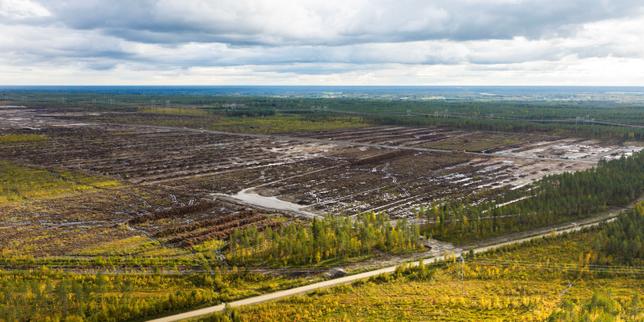
In the central Finnish municipality of Muhos, contractors cleared roughly 250,000 trees—spanning nearly 150 hectares of boreal forest—without securing the required environmental and zoning permits, paving the way for a planned Google data center. The unauthorized logging, executed on land sold to the tech giant by the state-owned forestry enterprise Metsähallitus, has triggered a political firestorm in Helsinki and raised uncomfortable questions about how European governments bend regulatory rules to attract hyperscale infrastructure.
The chainsaws moved in long before the ink on the regulatory approvals was dry. That is the core friction at the heart of the Muhos controversy. While Big Tech routinely markets its Nordic expansion as a triumph of sustainable engineering, the physical reality on the ground often looks like an industrial land grab operating on an accelerated timeline that local oversight cannot match.
The Anatomy of a Regulatory Bypass
To understand how a quarter-million trees vanish without a valid permit in one of the world’s most heavily regulated democracies, you have to look at the mechanics of European industrial policy. For the past decade, Nordic nations have aggressively courted hyperscalers. The pitch is straightforward. Finland offers cool ambient temperatures that slash cooling costs, an abundance of carbon-free electricity from hydro and nuclear sources, and rock-solid political stability.
In exchange, municipalities like Muhos—a quiet town of fewer than 9,000 residents near Oulu—are promised massive capital injections, construction booms, and long-term property tax revenues. When a company with the balance sheet of Alphabet expresses interest in building a regional hub, local officials rarely want to be the ones slowing down the paperwork.
In the Muhos case, the land transaction involved Metsähallitus, the state-owned enterprise responsible for managing Finland's state-owned land and water areas. The site was earmarked for industrial development, specifically a massive data center campus. However, under Finnish law, the transition from commercial forestry to industrial construction requires specific zoning exemptions and environmental assessments, particularly when clearing vast tracts of land that affect local hydrology and biodiversity.
The clearing went ahead anyway.
Local environmental authorities and regional state administrative agencies were effectively presented with a fait accompli. Once 150 hectares of pine and spruce are flattened and the stumps are ripped from the peatland, a fine or a stern administrative reprimand cannot put the forest back. In infrastructure development, asking for forgiveness rather than permission is a calculated financial strategy. A delay of six months on a multi-billion-euro data center project costs tens of millions of dollars in lost compute capacity. A municipal fine for premature land clearing, by contrast, is a rounding error.
Why Helsinki is Sweating
The political fallout in Finland goes well beyond a simple zoning violation. It strikes directly at the credibility of the Finnish government’s environmental governance and the dual mandate of Metsähallitus.
Metsähallitus occupies an inherently conflicted position in Finnish society. On one hand, it is tasked with protecting biodiversity and managing national parks. On the other, it operates as a profit-driven timber and real estate developer expected to generate annual dividends for the state treasury. When a state entity facilitates a land deal that results in illegal deforestation for a foreign tech conglomerate, opposition lawmakers have an easy target.
The embarrassment for Helsinki is compounded by Finland’s vocal stance on European Union environmental regulations. Finnish politicians have spent years lobbying Brussels over EU forest policy, arguing that national authorities—not European bureaucrats—are best equipped to manage Nordic woodlands sustainably. The Muhos incident undermines that exact argument. Critics across the political spectrum point out that if state-affiliated deals cannot even follow domestic permitting laws, claims of superior national stewardship ring hollow.
Furthermore, the incident exposes a glaring asymmetry in how environmental rules are enforced. A private Finnish landowner clearing a fraction of that acreage without a permit faces swift legal consequences and frozen forestry subsidies. When the end beneficiary is a trillion-dollar American technology firm bringing foreign direct investment to a rural region, regulatory enforcement suddenly becomes hesitant, fragmented, and retrospective.
The Hidden Carbon Ledger of Hyperscale Growth
Google has long positioned itself as a climate leader among global corporations, operating on a pledge to run all its data centers and campuses on 24/7 carbon-free energy by 2030. Finland is a cornerstone of that strategy. The company already operates a massive, heavily publicized facility in Hamina, on the southern coast, where it converted a former paper mill and uses seawater from the Gulf of Finland for cooling.
Hamina was an easy public relations win because it repurposed an existing brownfield industrial site. Muhos is the exact opposite. It is a greenfield development carved directly out of living boreal ecosystem.
Boreal forests are among the most critical carbon sinks on the planet. Unlike tropical rainforests, where most carbon is stored in the above-ground biomass of the trees themselves, northern forests lock away staggering amounts of carbon in their soil and peat layers. When heavy machinery strips away the tree cover and drains or disturbs the underlying earth to pour reinforced concrete foundations, that sequestered carbon begins to oxidize and release into the atmosphere.
Consider the math of this trade-off. Even if a data center runs entirely on Finnish wind and nuclear power from day one, it begins its operational life with a massive embodied carbon debt. This debt includes:
- The immediate loss of carbon sequestration capacity from 250,000 growing trees.
- The release of soil carbon disturbed during grading and excavation.
- The massive emissions generated by manufacturing tens of thousands of tons of concrete and steel required for the server halls.
- The lifecycle emissions of the servers, backup diesel generators, and cooling infrastructure housed inside.
Tech companies rarely highlight these upfront ecological costs in their glossy sustainability reports. Instead, the narrative focuses almost entirely on operational emissions—the electricity consumed once the servers are plugged in. By separating operational efficiency from physical land-use impacts, hyperscalers maintain a pristine green image while executing heavy industrial extraction on the ground.
The AI Gold Rush and the Compression of Time
To understand why these shortcuts are happening now, you have to look at the structural shift inside the data center industry over the past 36 months. The explosion of generative artificial intelligence has fundamentally altered the economics and timelines of digital infrastructure.
Five years ago, a data center was built to handle predictable growth in cloud storage, video streaming, and enterprise software. Today, Alphabet, Microsoft, Meta, and Amazon are locked in an existential arms race to build massive compute clusters capable of training and running frontier AI models. In this environment, time-to-power and time-to-market are the only metrics that matter.
A standard regulatory review in Western Europe can easily take two to four years. Environmental impact assessments, public comment periods, archaeological surveys, and grid connection studies move at the deliberate pace of democratic governance. For a tech giant racing to deploy next-generation tensor processing units before a rival captures market share, a three-year wait is unacceptable.
This creates immense pressure down the supply chain. Land developers, state agencies, and local contractors are pushed to prepare sites as rapidly as possible so that construction can begin the exact second final permits are granted—or, as in Muhos, slightly before.
The result is a systemic collision between Silicon Valley’s "move fast and break things" ethos and European environmental law. When that collision occurs in a rural municipality desperate for economic revitalization, the local environment almost always absorbs the impact.
The Grid and Land Squeeze Across the Nordics
Muhos is not an isolated administrative glitch. It is an early warning sign of growing resource friction across Northern Europe. For years, the Nordics were viewed as an infinite frontier for energy-intensive industries. That illusion is fading fast.
Across Sweden, Norway, and Finland, local communities and traditional industries are pushing back against the rapid proliferation of hyperscale projects. The complaints follow a consistent pattern:
- Grid Congestion: Massive data centers consume as much electricity as mid-sized cities. In several Nordic regions, grid operators have had to warn that allocating gigawatts of capacity to server farms threatens power availability for green steel manufacturing, battery plants, and local housing.
- Minimal Long-Term Employment: While construction requires thousands of workers for a brief window, an operational data center is largely automated. Once the servers are running, a facility spanning hundreds of thousands of square feet might employ fewer than 50 to 100 full-time staff.
- Land Fragmentation: The sheer footprint of modern data center campuses—often requiring buffer zones for security and future expansion—carves up vast stretches of forest and reindeer herding territory, threatening biodiversity corridors.
In Norway, public backlash recently erupted over a TikTok data center consuming power capacity that a local ammunition manufacturer needed to expand production for European defense. In Ireland, EirGrid effectively placed a moratorium on new data center connections in the Dublin area after server farms began consuming over a fifth of the entire nation's electricity.
Finland has largely avoided this level of public revolt until now because its grid is relatively strong—bolstered by the Olkiluoto 3 nuclear reactor—and its population density is low. Yet the unauthorized felling of a quarter-million trees in Muhos has pierced that complacency. It forces Finnish citizens to ask whether their forests and national grid are being treated as a cheap utility for American tech monopolies.
Who Actually Takes the Blame
When a scandal like this breaks, corporate accountability dissolves into a labyrinth of subcontracting. Tech giants rarely buy raw land, clear trees, and pour concrete with their own employees. Instead, they rely on an intricate web of state intermediaries, real estate holding companies, engineering consultancies, and regional logging contractors.
In Muhos, the defense mounted by the involved parties relies heavily on procedural ambiguity—claiming misunderstandings over which specific forestry notifications applied to the site versus industrial zoning permits. Under Finnish forestry law, commercial thinning or clear-cutting often requires only a routine notification to the Finnish Forest Centre, a process that takes days. Converting that exact same land into an industrial construction zone requires rigorous municipal zoning approvals.
By treating the initial phase of a data center build as routine commercial forestry, developers can exploit a regulatory gray zone. The trees come down under the guise of standard timber harvesting, and by the time environmental watchdogs realize the land is actually being prepped for concrete foundations, the forest is already gone.
Whether Google executives in Mountain View explicitly ordered contractors to bypass Finnish zoning laws is almost beside the point. When a multinational corporation sets aggressive delivery schedules and structures contracts that reward speed above compliance, corners get cut on the ground. Plausible deniability is built into the modern infrastructure supply chain.
The Price of a Green Stamp
If European governments want to prevent their environmental regulations from becoming optional guidelines for the world's richest companies, administrative wristslaps will not suffice. In Finland, environmental groups and legal scholars are already pointing out that the penalties for unauthorized land clearing are hopelessly outdated when applied to megaprojects.
Real deterrence requires hitting the one asset hyperscalers actually care about: time.
If unauthorized clearing automatically triggered a mandatory, non-negotiable two-year moratorium on any construction permits for that specific parcel of land, the financial incentive to clear first and apologize later would vanish overnight. No project manager would risk a 24-month freeze on a multi-billion-euro compute cluster just to save three weeks on tree felling.
Until regulators adopt penalties that carry genuine operational pain, the dynamic in places like Muhos will remain unchanged. Big Tech will continue to publish glossy pledges about carbon neutrality and biodiversity protection, local governments will continue to roll out the red carpet for foreign capital, and the chainsaws will keep running ahead of the paperwork.