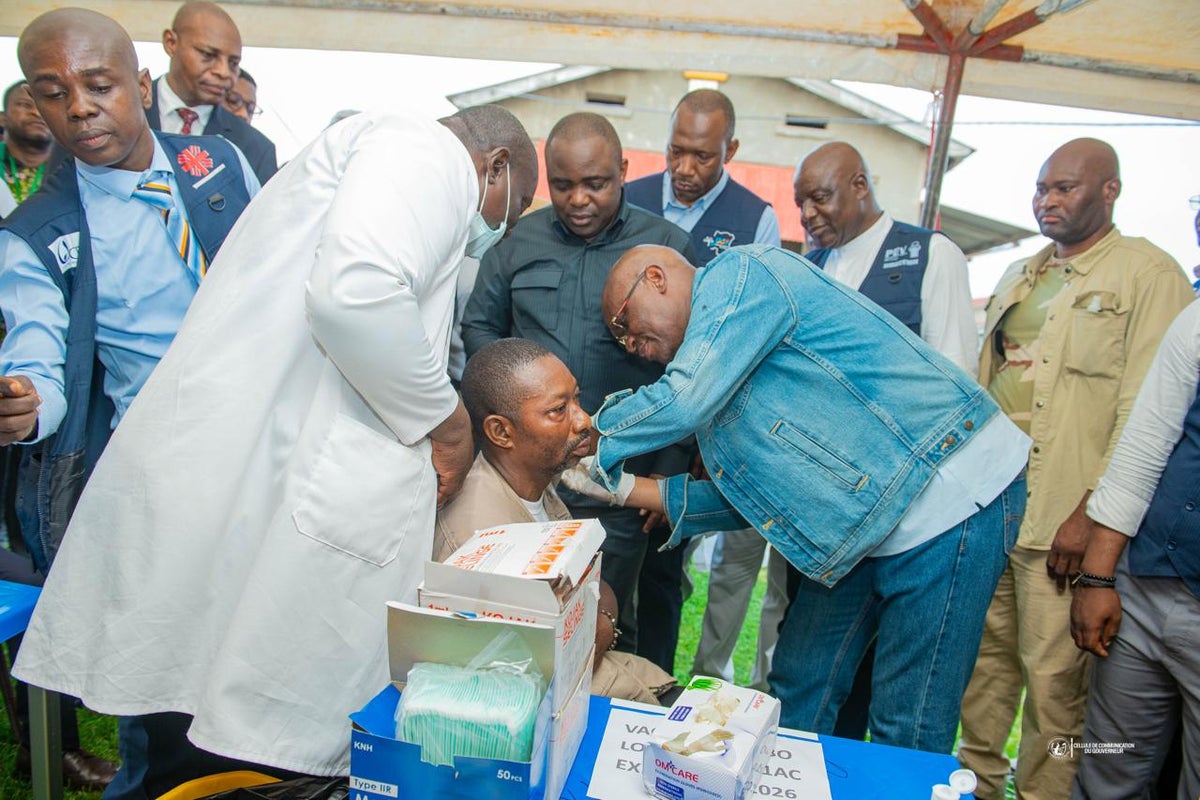
The latest Ebola outbreak in eastern Democratic Republic of Congo has officially breached sixty health zones, expanding rapidly into two previously untouched sectors as response teams run out of margin for error. Decades of reporting from conflict zones taught me one unchanging rule: a virus does not move faster than official bureaucracy, but bureaucracy always clears the path for the virus. Sixty zones now sit in the crosshairs of an epidemic that health authorities struggle to contain, constrained by fractured security apparatuses, deep-seated community mistrust, and a weary international funding pipeline.
When an outbreak spreads across administrative boundaries in a militarized zone, the mathematics of containment change completely. Epidemiologists track reproduction numbers and transmission chains, yet the real velocity of the disease is dictated by checkpoints, ambushes, and rumors. For a different look, read: this related article.
The Anatomy of a Breakdown
Public health operations in eastern Congo face an impossible paradox. To stop transmission, responders must isolate the sick, trace every contact, and perform safe burials. Every single one of these interventions violates traditional cultural practices and invokes historical trauma. Decades of structural neglect and violent conflict involving dozens of armed groups mean that foreign medical workers arriving in biohazard suits look less like saviors and more like occupying forces.
When a community distrusts the state, medical directives become suspect. When health zones report new infections, the immediate reaction from populations is often concealment rather than cooperation. Families hide symptomatic relatives inside residential compounds to avoid forced quarantine or transfer to distant treatment centers. This dynamic turns private homes into transmission hubs. Related insight regarding this has been published by Healthline.
Epidemiological models fail in these environments because they assume a compliant population and a functioning infrastructure. Neither condition exists here. Roads are frequently impassable, telephone networks are unreliable, and medical facilities lack basic sanitation utilities. A single nurse operating a rural clinic without running water or reliable electricity bears the weight of an entire provincial defense system.
Logistics in a War Zone
Moving supplies through North Kivu and Ituri requires negotiations that resemble military campaigns. Convoy movements are subject to militant ambushes, extortion at informal roadblocks, and sudden flare-ups of active combat.
- Cold Chain Failures: Vaccines requiring ultra-low temperature storage degrade rapidly when transport vehicles are stalled for hours by security delays.
- Supply Line Severance: Key transit corridors routinely close due to rebel activity, cutting off personal protective equipment and diagnostic reagents.
- Personnel Attrition: Frontline health workers face constant physical threats, leading to high burnout rates and staffing shortages in critical red zones.
These logistical nightmares mean that the official case count represents only a fraction of the actual burden. Surveillance systems rely on people walking into clinics or community reporters passing along signals. In areas where populations flee active fighting into the forest, entire clusters of disease go entirely unrecorded until mortality spikes demand attention.
The Financial Shortfall
International donors suffer from epidemic fatigue. The global public health apparatus lurches from one emergency to another, funding intense responses only after a crisis achieves catastrophic velocity. By the time emergency appropriations clear legislative hurdles and reach implementation partners on the ground, the virus has already outpaced the response.
Local responders receive a fraction of the resources channeled through sprawling international agencies. Grassroots organizations that understand local dialects, tribal dynamics, and regional geography often operate on shoestring budgets while large international contractors absorb overhead costs. This misallocation creates friction on the ground. Community leaders watch millions arrive on paper while local clinics run out of basic antibiotics and rehydration salts.
Breaking the Cycle
Containing this outbreak requires abandoning top-down command structures in favor of decentralized, community-led response models. Local leaders, traditional healers, and youth networks must hold decision-making power rather than serving merely as conduits for foreign directives. Until health authorities address the underlying security fears and political grievances that drive communities to resist intervention, the virus will continue to find new zones to conquer. The sixty affected areas are not just statistical points on a map; they are symptoms of a systemic failure that standard medical interventions alone cannot cure.