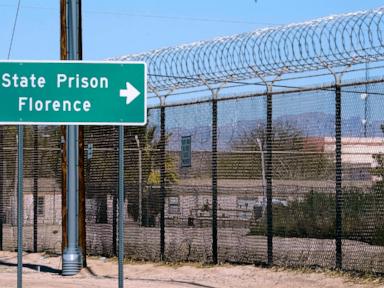
十四 years of broken promises will push any federal judge to the breaking point. That is exactly what happened in Jensen v. Thornell, the landmark civil rights class-action lawsuit that has exposed deep, systemic failures inside Arizona's correctional facilities. When the U.S. District Court decided to strip state officials of their power and hand control of prison medical operations over to an independent receiver, it wasn't an isolated knee-jerk reaction. It was the culmination of over a decade of ignored court orders, massive contempt fines, and preventable patient deaths.
Yet, state leaders refused to go quietly. They fought back through every legal channel available, taking their fight all the way to the Supreme Court before securing a temporary eleventh-hour reprieve from a federal appeals court.
How a Simple Lawsuit Turned Into a Constitutional Showdown
The roots of this crisis stretch all the way back to 2012, when the ACLU filed a class-action lawsuit on behalf of thousands of incarcerated people in Arizona. The core allegation was straightforward and severe: the medical and mental health care delivered within Arizona state prisons violated the Eighth Amendment prohibition against cruel and unusual punishment.
Prisoners reported extreme delays in seeing doctors, diagnostic errors, and a severe shortage of qualified medical staff that routinely forced nurses to act outside their scope of training to handle complex conditions. Rather than going straight to trial, the parties initially agreed to a settlement in 2014. The state pledged to meet more than 150 specific health care performance metrics.
They never hit them.
Decades shifted, political administrations changed, and millions of dollars rolled out the door in court-imposed contempt fines, but the baseline reality inside the facilities barely budged. By 2021, U.S. District Judge Roslyn O. Silver threw out the failed settlement and sent the case back to trial, ultimately ruling that the state's ongoing constitutional violations warranted the nuclear option of a receivership.
The Receivership Fight and the High-Stakes Appeals
To steer the overhaul, the court appointed Annette Chambers-Smith, the former head of Ohio's prison system, to take complete control of Arizona's correctional healthcare apparatus. The price tag for her salary, office expenses, and administrative team was mandated to come straight out of state funds.
State corrections officials, backed by legislative leaders, balked. They hired high-profile appellate legal talent, shelling out hundreds of thousands of dollars to argue that a federal takeover would create chaos, disrupt agency budgets, and strip local officials of authority they were actively trying to fix.
The state's legal team pushed emergency stay requests through the district court and up to the Ninth Circuit, and even petitioned Justice Elena Kagan at the U.S. Supreme Court to freeze the transition. That Supreme Court bid failed, clearing an immediate path for the receiver to step in.
However, the legal war didn't end there. Just as the takeover was set to launch, a federal appeals panel stepped in with a last-minute order that partially hit the brakes, offering the state a narrow procedural win. The court recognized that the state's interest in managing its own budget and workforce carries legitimate weight, setting up expedited oral arguments before the Ninth Circuit.
Why This Case Matters for the Future of Corrections
This battle touches on a fundamental principle of American constitutional law: outsourcing prison operations to private vendors does not shield the government from its constitutional duties. States cannot contract away their obligation to provide safe, humane conditions of confinement. When private or state-run systems fail to meet minimum constitutional thresholds over a span of fourteen years, federal courts possess the ultimate authority to step in and wrench the steering wheel away.
Critics of the receivership argue that unelected receivers usurp democratic control over state budgets. Advocates for the incarcerated counter that waiting fourteen years for basic human rights is an absolute failure of the justice system.
As the legal teams prepare their final arguments, the core issue remains unresolved. Arizona's correctional leadership insists they are implementing internal reforms and injecting new money into the system to fix the historic backlog. Meanwhile, court-appointed monitors and civil rights attorneys maintain that oversight is the only way to protect vulnerable human beings from preventable harm. The outcome of the upcoming Ninth Circuit hearings will dictate whether outside experts finally take charge or if the state retains one last chance to clean up its own house.