All eight people aboard a twin-engine Cessna 441 charter flight were killed when the aircraft went down near the Cape Newenham Long Range Radar Site in western Alaska. Operated by Anchorage-based Security Aviation and chartered by the U.S. Army Corps of Engineers, the flight departed Ted Stevens Anchorage International Airport into a punishing environment where logistics lines are measured in survival metrics rather than convenience.
Initial reports from the National Transportation Safety Board (NTSB) indicate that the aircraft attempted an initial landing at the private military airstrip during heavy fog, executed a missed approach, and lost contact while maneuvering to circle back. Two pilots and six passengers—including two U.S. Army Corps of Engineers employees—perished in the wreckage. Yet, reducing this tragedy to a simple headline about weather or pilot error ignores the structural realities governing aviation in America’s last frontier.
The Anatomy of Isolation
Flying in western Alaska means operating outside the safety margins standard in the contiguous United States. Radar coverage is sparse, weather reporting stations are hundreds of miles apart, and cellular communication is virtually nonexistent.
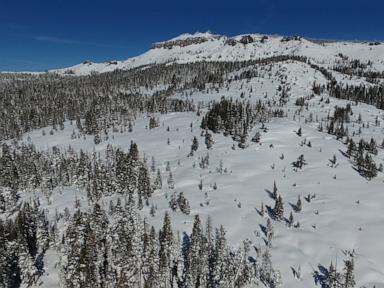
A pilot flying out of Anchorage crosses mountain ranges and coastal shelves where localized microclimates shift within minutes. Fog banks roll off the Bering Sea unpredictably, swallowing gravel strips and military outposts alike.
"These individuals were dedicated professionals carrying out a vital mission in a demanding environment."
— U.S. Air Force Lt. Gen. Robert Davis
The Cape Newenham facility sits roughly 450 miles west of Anchorage. It is part of a legacy radar network originally built during the Cold War to monitor northern air corridors. Maintaining these remote sites requires a constant flow of civilian contractors, engineers, and supplies, turning routine administrative transport into high-stakes bush flying.
The Hidden Pressures on Charter Fleets
Commercial air carriers in Alaska carry a unique burden. They bridge the gap where major commercial airlines cannot tread, serving as the literal lifeline for military installations, native villages, and scientific outposts.
Security Aviation relies heavily on aircraft like the Cessna 441 Conquest II, a pressurized turboprop designed for high-altitude, long-range utility. It is a capable machine, but it is bound by the same physics that dictate every accident in the region. When an airframe is pushed into marginal visual flight rules (VFR) or complex instrument approaches at unpaved, remote strips, the margin for error evaporates.
Investigators from the NTSB and the Federal Aviation Administration (FAA) face an arduous trek just to reach the crash site in the rugged western terrain. They will pull flight data recorders if equipped, analyze maintenance logs, and reconstruct the final radio transmissions.
Every accident investigation in this region eventually confronts an uncomfortable systemic truth. The infrastructure supporting aviation safety in rural Alaska has lagged behind the demands placed upon it. Ground-based navigational aids remain outdated in many areas, forcing reliance on satellite-based tracking systems that can still leave blind spots in deep valleys and coastal fog banks.
As the NTSB begins the meticulous process of mapping the wreckage and examining the sequence of the missed approach, the families of the two pilots and six passengers begin the long wait for answers. The flights to Cape Newenham will resume because the radar sites must be manned and the installations maintained. The planes will lift off from Anchorage into the gray expanse, bearing the quiet weight of an industry operating on the absolute edge of human capability.