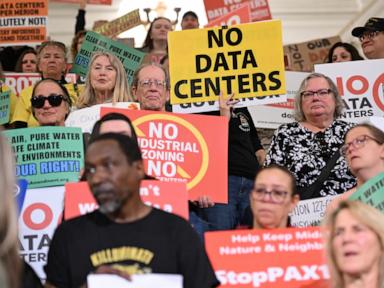
Tech giants are offering bigger payouts and rare glimpses into operations because data center proposals are stalling across small towns, rural counties, and suburban wards. Residents are pushing back over strained electrical grids, drained aquifers, and opaque tax deals that leave schools and roads starved of expected revenue. Promises of cash and transparency are an attempt to buy quiet consent before zoning boards slam the door.
Having covered infrastructure battles for more than twenty years, I have seen this routine play out with steel mills, chemical plants, pipelines, and big-box distribution hubs. The names on the corporate letterhead change, yet the choreography stays remarkably familiar. A developer arrives with glossy renderings, projections of construction jobs, and assurances that local life will barely change. At first, city councils hear mostly about economic windfalls. Then neighbors start reading the fine print on power allocation and water permits, and the mood shifts from polite curiosity to outright hostility.
Data centers sit at a particularly volatile intersection of modern life. They are physical monuments to intangible habits—cloud storage, streaming video, enterprise software, and increasingly power-hungry artificial intelligence clusters. To the people living beside a proposed campus, however, those abstract digital services translate into concrete local trade-offs: giant cooling towers humming through the night, diesel backup generators lined up like a small army, and utility bills creeping upward while local governments lock in multi-decade tax abatements.
Why Local Resistance Turned Fierce So Fast
For years, data center developers operated largely below the radar of everyday citizens. Projects often landed in industrial parks or unincorporated parcels where zoning allowed heavy infrastructure with minimal fuss, and local officials welcomed capital investment that promised property tax growth without putting children in local classrooms. Because data centers employ relatively few permanent workers once built, towns viewed them as low-maintenance taxpayers.
That calculation broke down as projects grew larger and clustered together. A hyperscale campus today is not a quiet windowless warehouse tucked behind a highway interchange. It can span hundreds of acres, draw tens or hundreds of megawatts of continuous electricity, and require millions of gallons of water during peak cooling periods. When several large facilities target the same region or grid corridor, the cumulative burden becomes impossible to ignore.
Residents began asking basic questions that developers had rarely faced in public forums. Where will that power come from during a summer heat wave or a winter cold snap? Will municipal water systems ration supply or raise rates for households if an industrial user draws heavily from local sources? Why should a multi-billion-dollar corporation receive years of property tax exemptions while a local school district struggles to fund basic maintenance?
Utilities added fuel to the tension. Across several power regions, regional transmission operators and local utilities began flagging surging load forecasts tied directly to data center expansion. When grid planners warn of delayed coal or gas plant retirements, higher transmission upgrade costs, or tighter reserve margins, everyday ratepayers start wondering whether they are subsidizing someone else's server racks. Even where rules require large loads to pay for dedicated grid upgrades, costs often ripple across broader rate structures or slow down broader electrification goals.
What Bigger Checks Actually Buy in Host Communities
Faced with stalled rezonings, moratoriums, and vocal town halls, companies are adjusting their playbook. Offering more money to host communities is the most direct lever available, and it takes several forms beyond standard property tax payments. Developers increasingly propose direct community benefit agreements, payments in lieu of taxes structured to start sooner, funding for local infrastructure like roads or substations, and grants for schools, parks, or emergency services.
On paper, that looks like a reasonable compromise. A cash-strapped county gets predictable revenue without waiting years for complex assessment formulas to settle, and local leaders can point to tangible improvements for constituents. In practice, money solves some objections while exposing others.
The Trap of Upfront Cash and Long-Term Costs
A check written to a municipality does not automatically erase concerns about resource scarcity. If a town accepts a generous community contribution but later faces water restrictions during a drought, residents will not feel placated by a new playground or a repaved road. Infrastructure strain is physical and ongoing, whereas a one-time payment or targeted grant can feel finite.
Tax incentives create another friction point. Many jurisdictions grant abatements or exemptions on equipment and property taxes to attract high-value facilities. Critics argue that local governments sometimes give away too much value upfront based on rosy projections, only to discover that the net fiscal benefit is smaller than advertised once public services, road wear, and utility extensions are factored in. More generous host packages help narrow that gap, yet they can also look like hush money if negotiations happen behind closed doors right before a vote.
Why Permitting Delays Hurt More Than Higher Bids
Money cannot buy time when local trust is already broken. Zoning boards answer to voters who show up at meetings angry about noise, land use, and secrecy. Even a substantially sweetened financial offer can fail if residents believe the process is rigged or rushed.
From a corporate standpoint, delays are expensive. Supply chains for high-voltage transformers, switchgear, and specialized cooling gear already stretch out over long lead times. When a site gets tied up in litigation, environmental review, or political pushback, capital sits idle and deployment schedules slip. Raising financial offers is often faster and easier for a company than redesigning a project's water or power profile from scratch.
Why Secrecy Backfired and Where Transparency Hits Limits
Secrecy has long been baked into data center site selection. Companies routinely use shell entities or non-disclosure agreements during early land acquisition and utility studies so competitors cannot scoop up parcels or drive up land prices. Local officials often sign NDAs too, trading early visibility into potential investments for confidentiality.
That habit made sense when projects were smaller and rarely sparked public outcry. Today, secrecy breeds suspicion. When residents learn through rumors or leaked documents that a mystery buyer is locking up farmland or negotiating a massive power hookup, they assume the worst. Even benign details—like which company is actually behind the project or how much water it plans to use—become flashpoints when withheld until the eleventh hour.
What Fewer Secrets Looks Like in Practice
Promising fewer secrets means sharing more information earlier in the process. Some developers and local leaders are moving toward earlier public disclosures of project sponsors, clearer estimates of water and electricity demand, open discussions of noise modeling and generator testing schedules, and more transparent terms around tax incentives and community agreements.
To see how this plays out, consider a hypothetical mid-sized municipality reviewing a large data center proposal. In a low-transparency scenario, officials negotiate behind closed doors for months, announce the project weeks before a zoning vote, and release vague power numbers. Residents erupt, demanding a moratorium. In a higher-transparency approach, the project team discloses its identity earlier, publishes clear water and power projections alongside independent engineering assessments, hosts open technical briefings, and negotiates community terms in public view. Friction does not vanish completely, because real trade-offs still exist, yet people feel less ambushed.
The Real Boundaries of Corporate Candor
Complete transparency has limits, and pretending otherwise invites cynicism. Proprietary rack layouts, specific cybersecurity architectures, exact vendor pricing, and sensitive grid-security details are not going to be published for public consumption—nor should critical security layouts be broadcast openly. Competitive real estate dynamics also push companies to guard certain plans until land rights are secured.
There is also a credibility problem. A promise of fewer secrets only works if disclosures are plainspoken rather than buried in dense technical jargon or selective talking points. If a company touts "transparency" while withholding key water-use assumptions until after approvals are granted, skepticism hardens into conviction that the openness is merely public relations.
The Overlooked Bottlenecks Beneath the Surface
Much of the public debate focuses on headlines—big checks, dramatic town halls, and eye-catching power numbers—while missing quieter structural pressures that shape whether deals hold together.
One overlooked factor is local administrative capacity. Small towns and rural counties frequently have part-time officials, lean planning staffs, and limited legal or engineering budgets. When a sophisticated development team arrives with complex power agreements, environmental studies, and tax incentive structures, local leaders can be outmatched. Extra money or community funds can help if earmarked for independent technical review, yet uneven bargaining power remains a persistent flaw in local dealmaking.
Another quiet tension involves grid bottlenecks and generation mix. A data center does not exist in a vacuum on the electrical map. Even if a company signs a clean-energy purchase agreement on paper, physical electrons still flow through shared transmission lines and regional balancing areas. If local transmission is congested or dispatchable capacity is tight, adding massive continuous load can force awkward compromises—such as leaning longer on existing fossil generation or accelerating transmission buildouts that face their own siting battles.
Water is similarly nuanced. Cooling technologies vary widely, from evaporative cooling towers that consume significant water to closed-loop or air-cooled systems that use far less water while often consuming more electricity, especially in hot weather. Treating all data centers as identical in their water footprint obscures real engineering differences, just as ignoring seasonal drought conditions misses local reality.
| Tension Point | What Companies Offer | What Communities Worry About | What Actually Determines Outcome |
|---|---|---|---|
| Public finances | Higher payments, grants, road or school support | Abatements eroding long-term tax value | Net fiscal balance after public service costs |
| Information flow | Earlier disclosures, open briefings, fewer NDAs | Hidden deals, late surprises, vague promises | Candor, plain language, and timing before votes |
| Power & water | Infrastructure upgrades, efficiency commitments | Higher utility bills, grid strain, water shortages | Local grid capacity, water supply, cooling design |
| Local governance | Community benefit packages and partnerships | Unequal leverage and rushed approvals | Local review strength and enforceable terms |
Where This Pushback Leaves the Industry
Bigger payouts and fewer secrets are pragmatic adjustments, not a silver bullet. They address real grievances—unfair tax giveaways and alienating secrecy—without magically expanding transmission lines, refilling reservoirs, or soothing neighbors who simply do not want industrial scale next door.
If tech giants and developers treat generosity and openness as genuine standards enforced in binding agreements rather than tactical concessions used only when a project hits turbulence, more communities may find workable terms. If they treat them as marketing polish to get past a tough zoning hearing, the backlash will only harden into stricter ordinances, longer battles, and higher costs for everyone.
Watch how binding and enforceable those promises turn out to be once the shovels hit the dirt.