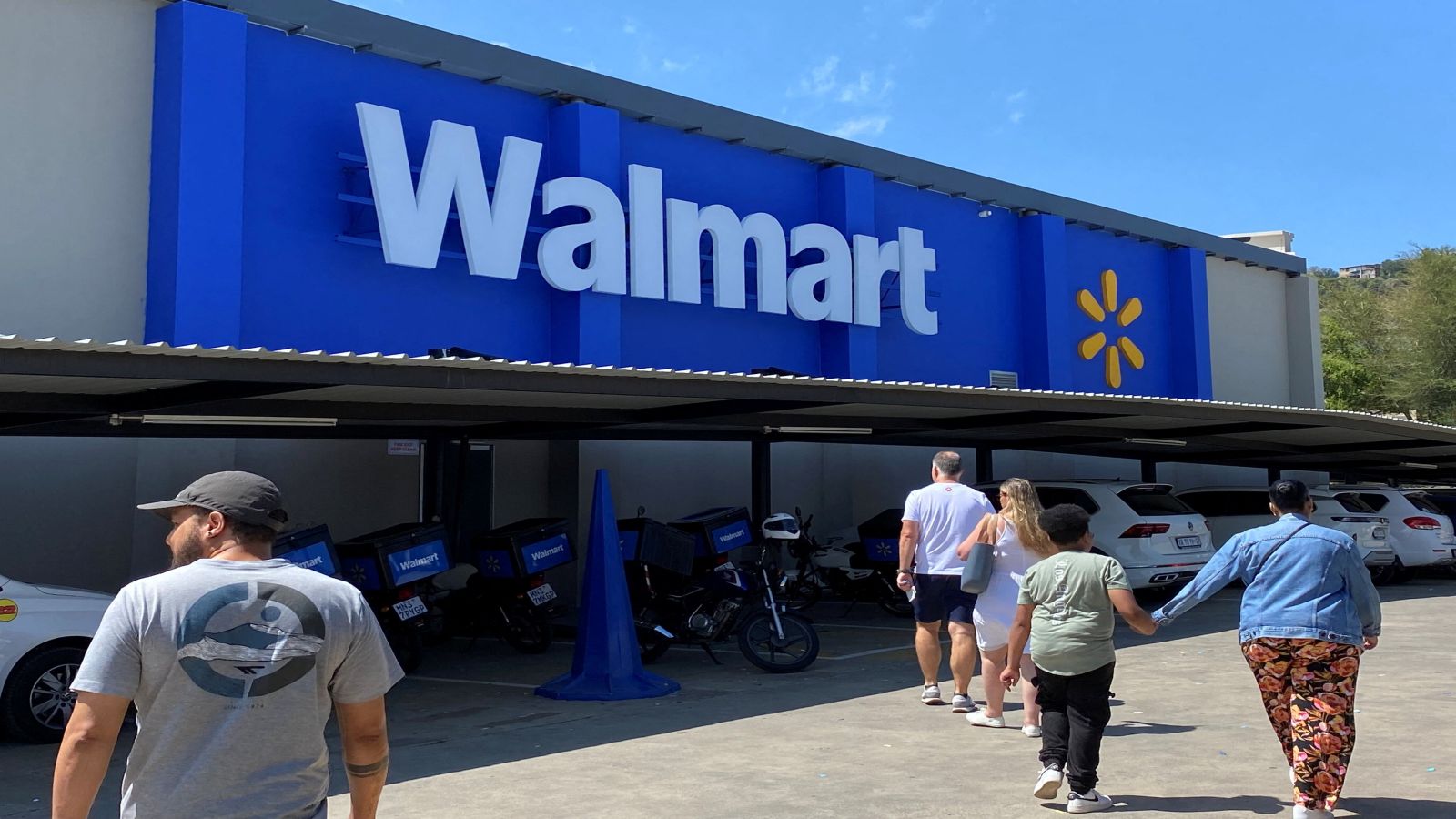
President Donald Trump claimed credit this week for sweeping price reductions at Walmart, asserting the retail giant slashed costs on thousands of items at the direct request of his administration to celebrate America’s 250th birthday. Walmart countered almost immediately with a corporate press release that completely omitted any mention of the White House, attributing the discounts entirely to standard seasonal promotional strategies. This public messaging collision exposes a deeper friction between a presidency desperate to show progress against stubborn inflation and a retail behemoth protective of its supply chain autonomy. The administrative narrative falls apart under basic financial scrutiny, revealing how corporate margin cycles, agricultural calendars, and midyear consumer shifts dictate retail pricing far more than political pressure from Washington.
The Anatomy of a Political Claim
The narrative sparked on Monday afternoon when the president took to social media to announce that Walmart would be dropping the price of ground beef by nearly 15%, alongside dramatic cuts to soda, produce, and summer essentials. He praised the enterprise as a patriotic corporation acting in concert with federal efforts to lower the cost of living. For a White House facing mounting public dissatisfaction over an annual inflation rate that has climbed to 4.2%, the announcement was a calculated attempt to project economic leverage. The timing is bound directly to the upcoming November midterm elections, where control of Congress hinges almost entirely on voter sentiment regarding grocery bills, utility expenses, and the daily cost of survival.
Walmart’s official communication, issued hours later, painted a starkly different picture. The retailer detailed significant markdowns at both its flagship stores and Sam’s Club locations, reducing items like fresh sweet corn to $0.25 an ear and slashing 24-packs of Coca-Cola and Pepsi products down to $9.97. Yet, the corporate statement framed these rollbacks explicitly as part of a recurring summer value campaign designed to capture consumer spending during the peak backyard barbecue and road trip season. Corporate spokespeople refused to comment on the president’s assertion of administrative intervention, effectively creating a wall of silence between Bentonville and the West Wing.
This is not an isolated piece of political theater. A year ago, the administration attempted a similar maneuver when Walmart discounted its annual Thanksgiving holiday meal basket, claiming it as a victory for federal economic policy. Independent tracking later revealed the basket had simply been altered to feature smaller portion sizes and a heavier reliance on private-label store brands rather than a structural deflation of food costs. The pattern shows a recurring strategy of adopting corporate promotional cycles as executive victories, capitalizing on the public's lack of familiarity with the operational mechanisms of big-box retail.
The Actual Mechanics of Retail Pricing
To understand why the administration’s claim of direct influence is hollow, one must look at how Walmart actually negotiates its inventory pricing. Retail cost reductions of this magnitude are not decided during a weekend phone call with a politician. They are the result of multi-month procurement cycles driven by immense volume buying power. Walmart functions as a monopsony in several domestic consumer categories, meaning its purchasing power is so vast that it can effectively dictate wholesale prices to its agricultural and manufacturing suppliers.
When Walmart decides to lower the price of ground beef by 15%, it is capitalizing on long-term supply arrangements or demanding margin concessions from meatpackers who cannot afford to lose access to Walmart’s shelves. Ground beef has become a highly visible battleground for food inflation. Department of Labor data from May indicated that ground beef prices had surged 12% year-over-year, driven by prolonged droughts that depleted domestic cattle herds to their lowest levels in decades. Walmart's decision to cut beef prices is a defensive market-share play, sacrificing short-term margins on a high-velocity loss leader to draw cash-strapped families into stores where they will buy higher-margin general merchandise.
The same operational logic applies to seasonal produce and soft drinks. The deep discounts on sweet corn and red cherries align perfectly with peak domestic harvest windows, a time when agricultural supply is at its highest and wholesale costs naturally bottom out. Soft drink promotions are similarly predictable, mirroring identical marketing campaigns run by the chain during previous summer quarters. These discounts were already live on store shelves a week before the president’s social media post went public, confirming that the operational wheels were turning long before the administration sought to take credit.
The Macroeconomic Reality
The political urgency to claim credit for corporate price cuts is intensified by a shifting macroeconomic environment that has defied administration predictions. The economic momentum the president inherited has been complicated by aggressive trade policies and geopolitical disruptions. A series of unilateral tariffs imposed in 2025 forced major retail operations to restructure their international logistics, adding upward pressure on consumer prices. The outbreak of conflict involving Iran in late February 2026 further strained global supply lines, causing energy costs to spike and feeding directly into the transportation expenses of domestic food distributors.
While an interim ceasefire has recently allowed oil tankers to pass through the Strait of Hormuz safely, lowering fuel costs slightly, core inflation remains sticky. The administration has frequently engaged in public spats with corporate executives over these numbers. In mid-2025, the president publicly demanded that Walmart "eat the costs" of rising import duties rather than passing them on to shoppers, pointing to the company's multibillion-dollar profitability as proof that it could absorb the hit.
Walmart's business model, however, thrives in high-inflation environments. As middle-class household budgets stretch thin under a 4.2% inflation rate, consumers engage in trade-down behavior. Shoppers who previously frequented premium regional grocery chains migrate to Walmart in search of marginal savings. This shift helped boost the company's recent quarterly earnings, proving that market forces, rather than government mandates, dictate how the company positions itself in the eyes of the public.
The Limits of Executive Pressure
Modern presidents possess an array of rhetorical tools, but their actual ability to modify the retail price index through executive fiat is practically non-existent outside of emergency wartime price controls. The White House has sought to use antitrust pressure as a indirect lever, highlighting a recent Department of Justice settlement with major egg producers over alleged price coordination. While such regulatory enforcement can penalize anti-competitive behavior over a multi-year horizon, it cannot force an immediate change in the price of a gallon of milk or a box of laundry detergent at a local supercenter.
Corporate executives answer to a board of directors and public shareholders, not to social media accounts or political advisers. Walmart’s priority is protecting its long-term market dominance and ensuring its supply chain remains insulated from political instability. Publicly validating the president's claim would set a dangerous corporate precedent, signaling to Wall Street that the world’s largest retailer alters its core pricing structures based on political requests rather than fiduciary duty and data analytics.
The silence from Bentonville is its own form of commentary. By ignoring the political noise and focusing exclusively on the consumer value proposition, the corporate leadership preserves its neutrality while continuing to reap the reputational benefits of the price cuts. The consumer cares about the final number on the register receipt, not the political origin story attached to it. Ultimately, the summer price reductions are the product of cold corporate calculation, a strategic maneuver by a retail giant weaponizing its scale to capture a budget-conscious American public during an extended period of economic anxiety.