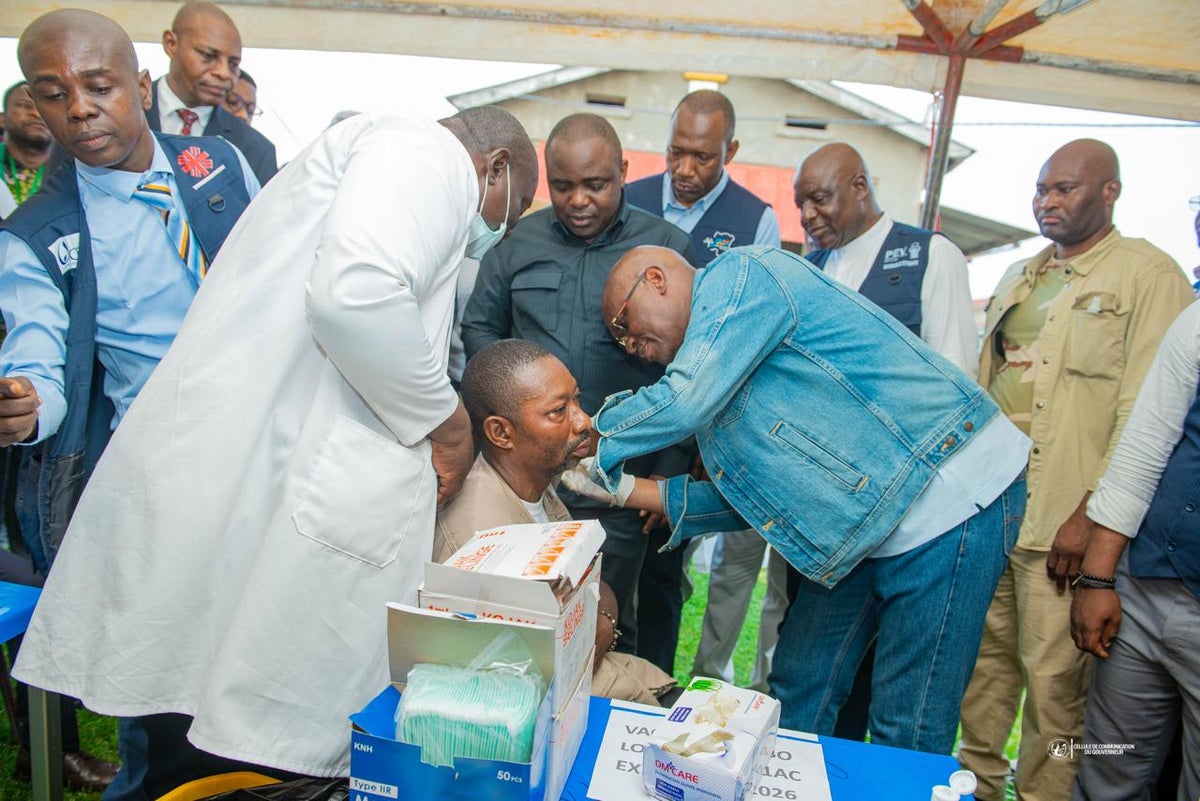
The death toll has crossed the grim milestone of 3,000 fatalities in the Democratic Republic of Congo, driven by over 6,100 confirmed cases of the Bundibugyo species of Ebola. This epidemic is spreading faster than any recorded predecessor in the region. Numbers on a spreadsheet, however, obscure the mechanical failures of containment and the deep structural vulnerabilities that allow a rare filovirus to outpace international public health machinery.
An outbreak is never merely a biological event. It is a stress test of governance, logistics, and human trust.
The Strain Without a Shield
Most modern medical countermeasures target the Zaire species of the virus. The current outbreak in Congo's eastern provinces is caused by the Bundibugyo ebolavirus, an elusive pathogen with no fully approved vaccines or specific clinical treatments. Existing stockpiles meant for Zaire strains offer at best incomplete cross-protection, leaving health authorities scrambling to distribute emergency doses of vaccines like Ervebo to frontline workers as an imperfect stopgap.
This mismatch creates a dangerous therapeutic vacuum. When clinicians enter isolation wards without targeted antiviral interventions, they manage symptoms through supportive care alone: hydration, electrolyte balancing, and fever management. Supportive care works wonders in a modern intensive care unit. In a conflict-torn eastern province with shredded infrastructure, it often translates into a high case-fatality rate.
The Geography of Insecurity
Public health interventions rely on stability, yet the epicenters of Ituri and North Kivu operate under the shadow of chronic armed conflict. Armed groups carve up territory, trade routes shift by the week, and displacement camps swell with families fleeing violence.
Disease surveillance depends on tracking chains of transmission. When communities are repeatedly displaced, contact tracing breaks down entirely. People move, symptoms manifest miles away from the initial point of infection, and health workers find themselves chasing shadows across an operational area the size of France.
Consider a hypothetical contact tracer attempting to follow twenty potential exposures in a zone controlled by rebel militias. The logistical reality involves impassable roads, ambushes, and a complete absence of cellular connectivity. Traditional epidemiological playbooks assume a functioning state apparatus. In eastern Congo, that apparatus is fractured.
The Anatomy of Distrust
Epidemics die when communities embrace intervention. This epidemic burns because communities often reject it. Decades of institutional neglect, combined with the traumatic disruptions of safe burial protocols that prevent families from honoring their dead according to cultural traditions, have bred profound skepticism.
When response teams arrive in protective gear resembling hazardous materials suits, they frequently encounter hostility rather than cooperation. Rumors fill the vacuum left by transparent communication. Youth groups have attacked burial teams, striking healthcare workers have walked off the job over unpaid hazard wages, and parents weigh the risk of sending children back to classrooms where sanitation infrastructure remains rudimentary at best.
Trust cannot be mandated by decree. It requires local leaders, decentralized communication, and tangible support that addresses basic survival needs alongside viral containment. When a community's primary concern is daily violence and starvation, a distant pathogen competes poorly with immediate threats until it strikes inside a household.
The Cost of Late Recognition
Official timelines point to mid-May as the formal declaration of the public health emergency, but retrospective analysis by epidemiologists suggests the virus circulated undetected as early as January. Those lost months permitted the pathogen to establish deep roots across six provinces.
Roughly sixty percent of fatalities continue to occur outside formal treatment centers. Patients seek care late, dying in homes or communities where secondary transmission chains multiply unchecked. Until surveillance catches cases before symptoms turn severe, the curve will refuse to bend.
International donors recently pledged tens of millions of pounds and dollars to bolster surveillance and treatment access, but money spent on logistics cannot instantly manufacture secure roads or trained personnel. The trajectory of this epidemic will not reverse because of announcements in foreign capitals. It will turn only when the response meets the chaotic reality on the ground with localized adaptation, absolute transparency, and security guarantees for the workers holding the line.
Congo's Ebola outbreak shows no signs of slowing as deaths top 3,000
This video provides additional context on the accelerating transmission rates and the severe logistical hurdles facing medical teams on the ground in the Democratic Republic of Congo.


