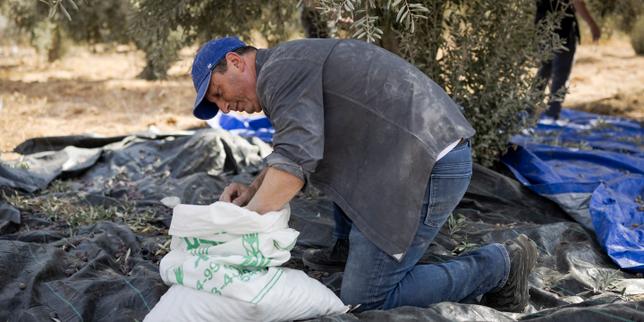
The olive groves of the West Bank are an unlikely battleground for a New York political primary, yet the dusty terrain outside Nablus has become a crucible for the American Democratic party. When prominent New York Jewish progressives travel to Palestinian orchards under military occupation to declare "Not in my name," they are not simply engaging in foreign policy activism. They are executing a high-stakes domestic strategy designed to test the limits of progressive coalition-building back home. This crossover between district-level campaigning and overseas solidarity reveals how deeply foreign policy now dictates local electoral survival in American politics.
The Geography of Political Calculus
Campaigning overseas is an old trick in American politics. For decades, New York politicians routinely made trips to Israel to reassure conservative and centrist donors of their unwavering support for the state. That traditional itinerary was simple, predictable, and tightly scripted.
What is happening today in the hills of Cisjordania completely upends that playbook.
Progressive candidates are bypassing traditional photo opportunities with foreign officials. Instead, they stand beside local Palestinian farmers facing land loss, settler violence, and harvest disruptions. This strategy is tailored specifically for a primary electorate in New York that increasingly views domestic racial justice and international human rights through the exact same lens.
The move is calculated. It directly addresses a growing demographic of younger, left-leaning voters who demand that their representatives project their values globally. But it carries enormous risk. By making the West Bank a central stage for a local campaign, candidates immediately draw fire from established party apparatuses and political action committees ready to spend millions to protect traditional diplomatic consensus.
The Fractured Progressive Base
The strategy exposes deep fault lines within urban Democratic constituencies. For generations, the New York progressive movement relied on a unified coalition where Jewish labor activists, civil rights leaders, and urban liberals worked side by side. Foreign policy was often kept on the back burner to preserve domestic alignment.
That truce has broken down completely.
The Conflict Over Identity and Values
Candidates attempting to bridge this gap find themselves navigating contradictory expectations. On one side are voters who view solidarity with Palestinian farmers as a moral baseline for any self-identified progressive. On the other are long-time constituents who see these trips as deliberate provocations that ignore genuine security concerns and alienate traditional community institutions.
The tension is immediate on the ground.
When a New York politician walks through an olive grove in the West Bank, every gesture is analyzed under a microscope. A photo standing next to an uprooted tree sends a clear signal to grassroots donors in Brooklyn, but it also triggers automated fundraising blasts from opposing political action committees in Washington. The candidate is no longer just running for a congressional or state seat. They are acting as a lightning rod in a national debate over the future of American foreign policy.
The Financial Pressure Machine
Money follows the friction. The moment a candidate steps outside the boundaries of conventional foreign policy guidelines, the financial dynamics of the race shift overnight.
Opposing organizations deploy vast reserves of capital to fund primary challengers. Super PACs flood local airwaves with mailers and digital ads focused not on foreign affairs, but on local infrastructure, crime, or economic management, attempting to paint the candidate as out-of-touch with everyday district needs. Meanwhile, the candidate relies heavily on small-dollar, grassroots contributions generated by national digital campaigns that celebrate their foreign policy stance.
This dynamic transforms local elections into nationalized proxy wars. District residents often find their local concerns eclipsed by a broader battle for control over the party's ideological core.
Beyond the Photo Opportunity
Critics often dismiss these overseas visits as performative political theater. The reality is far more complex.
For Palestinian farmers in the West Bank, the presence of American elected officials or high-profile candidates offers a rare form of political insulation. The presence of international cameras can temporarily delay demolition orders, deter local violence, or bring temporary media attention to disputed land claims.
Yet the structural realities on the ground remain largely unchanged after the campaign buses leave.
Harvest seasons pass, military checkpoints stay in place, and legal disputes over land ownership drag on through military courts for years. Candidates who use these visits to bolster their progressive credentials back home face legitimate questions about long-term accountability. If the visit yields political capital in New York but produces no legislative or policy shifts in Washington, the exercise risks devolving into moral posturing.
A Systemic Redefinition of Local Representation
What this movement signals is the final collapse of the old adage that political friction stops at the water's edge.
Voters today do not compartmentalize local governance and global ethics. A candidate's position on real estate development in Queens is now linked to their view on military aid packages in the Middle East. Both are seen as expressions of how power, capital, and human rights should be balanced.
This shift creates a brutal environment for politicians seeking middle ground. Strategic ambiguity, long the preferred tool of seasoned diplomats and elected officials, no longer functions when every voter carries access to real-time updates and campaign footage. Candidates are forced to choose a side long before they reach office.
The campaign in the olive groves of the West Bank is not an anomaly. It is the new baseline for urban political contests across the United States. As national coalitions continue to reshape themselves around fundamental questions of international policy, the distance between an orchard in Cisjordania and a voting booth in New York has collapsed entirely.