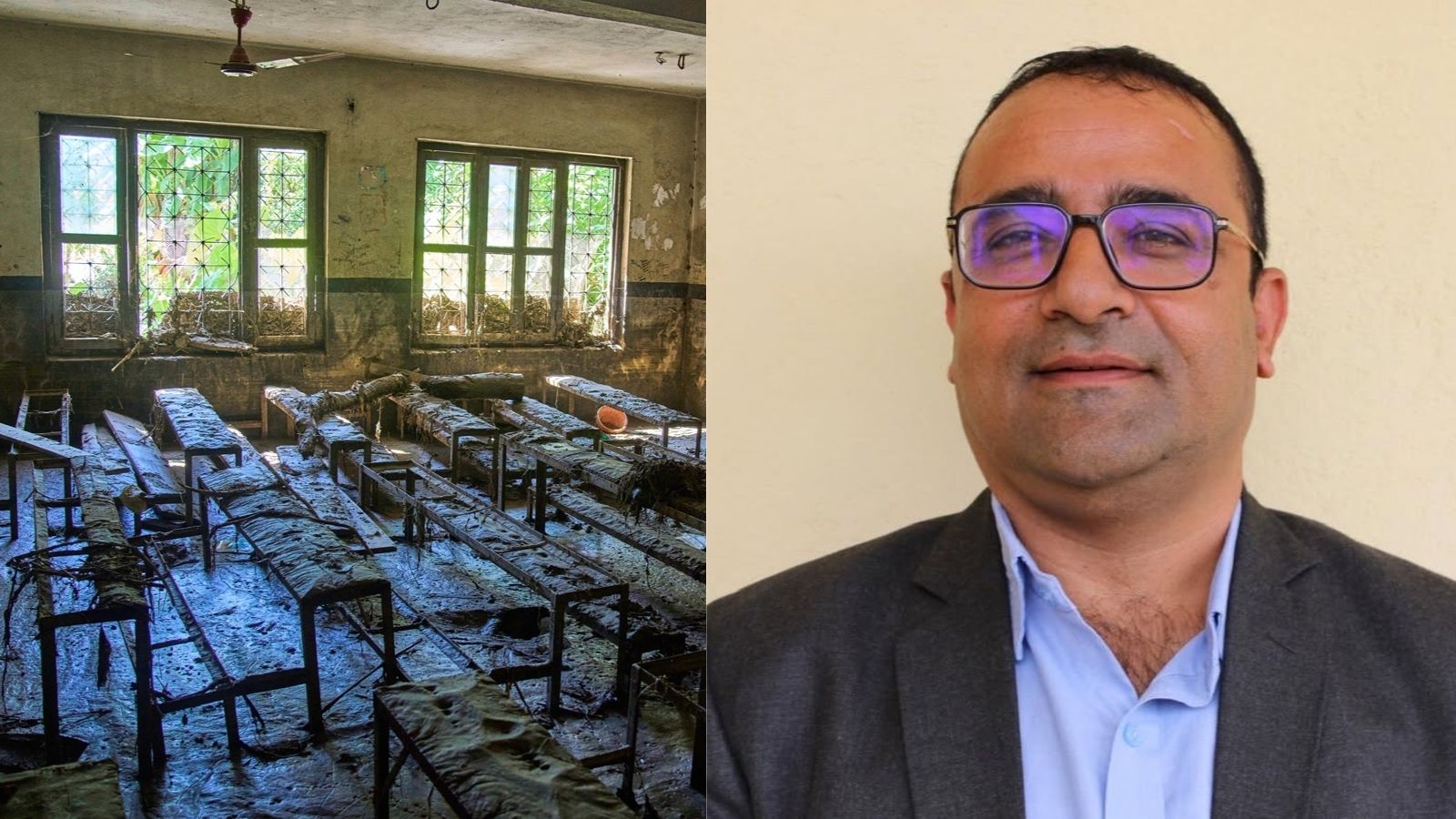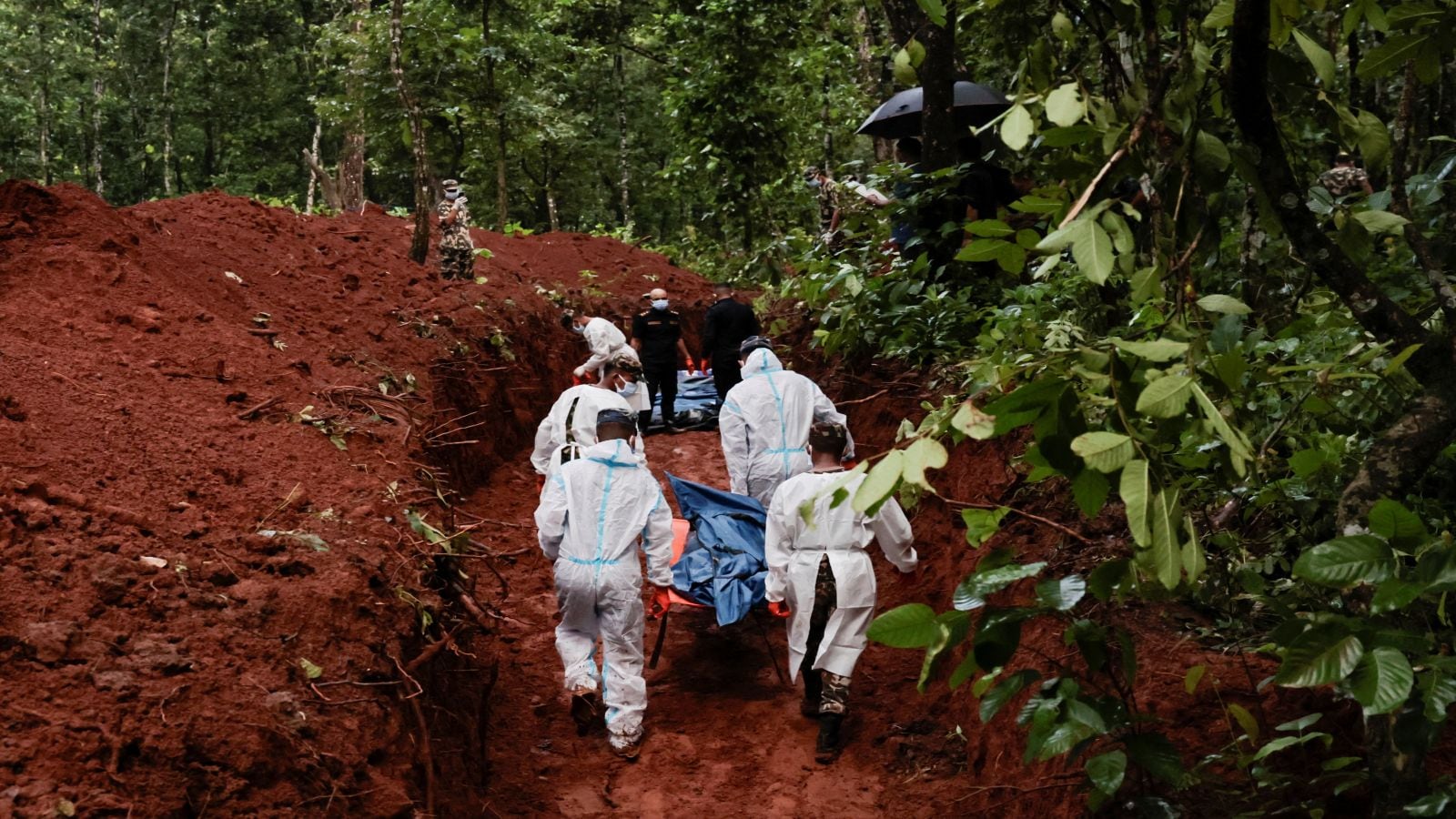
The ground in Chitwan's Devghat forest does not usually hold the dead. For generations, this riverside sanctuary served as a morning-walk destination and a sacred confluence for the living. Today, it accommodates the overflow of an administrative catastrophe. Following catastrophic flash floods that swept down from the upper Himalayan valleys of Rasuwa and Nuwakot, local authorities faced a grim logistical wall. Hospitals could not store the volume of incoming bodies, and morgues across central Nepal quickly ran out of capacity. Out of hundreds of recovered remains, only a tiny fraction could be visually recognized. The rest became part of an emergency mass burial protocol in the forest soil, engineered to stave off public health contamination while attempting to preserve future chances of identification.
To understand how Devghat became a temporary burial ground, one must examine the absolute collapse of basic municipal infrastructure when confronted with regional scale disaster. The floods did not stay where they started. Torrents originating near the border tore through settlements, carrying victims downstream across multiple districts before depositing their remains hundreds of miles away in Chitwan and the Nawalparasi regions. Local health facilities, built to handle routine regional care, suddenly found themselves overwhelmed by corpses arriving in fragments.
Medical coolers failed under the sheer volume. Refrigerated morgues in Chitwan district possessed a collective holding threshold of barely fifty bodies at any given moment. When the death toll mounted into the hundreds, district officials had no functional alternatives. Leaving bodies in tropical ambient temperatures invited rapid decomposition and severe biological hazards. The decision to utilize the open forest spaces of Devghat was born of desperation rather than policy preference, highlighting a chronic lack of disaster preparedness for mass-casualty recovery operations in South Asia's riverine corridors.
The Mechanics of Forensic Tracking Under Duress
Burying hundreds of unidentified people creates an ethical and legal nightmare for surviving families. Without a body, grieving relatives cannot secure death certificates, insurance payouts, or closure. Recognizing this, security forces and forensic teams scrambled to institute a standardized protocol before laying the victims to rest in the soil of Devghat and nearby municipal plots.
Every single set of remains underwent a mandatory recording sequence. Police and forensic technicians collected biological markers, including DNA samples intended for laboratory matching in Kathmandu. Technicians captured detailed photographs of scars, tattoos, distinctive clothing, and personal jewelry, assigning each anonymous entry a permanent reference number. Authorities even introduced digital tracking measures, including online databases and QR codes, allowing families scattered across distant provinces to cross-reference physical descriptions against recovery logs.
Yet, the sheer violence of the water made these methods secondary to the harsh physical reality. Many bodies recovered from the turbulent currents were incomplete, forcing officials to catalog individual limbs and fragments as separate tracking entries to ensure thorough forensic accounting. While the physical graves are temporary and designed for future exhumation if DNA claims succeed, the speed of the operation exposed the thin line separating order from chaos during extreme weather events.
Systemic Vulnerabilities Along the Himalayan Slopes
The tragedy at Devghat is not merely an isolated logistics failure. It exposes the widening gap between recurring climate-induced catastrophes and regional disaster response capabilities. Glacial shifts and intense monsoon cloudbursts have intensified structural risks across Himalayan drainage basins, yet downstream communities remain dangerously exposed to sudden inundations.
When early warning systems fail or fail to connect isolated mountain hamlets with lowland districts, evacuation times shrink to zero. People swept away in Rasuwa end up buried anonymously in Chitwan because regional administrative borders fracture the chain of custody for missing persons. Coordination between local municipalities, provincial police, and federal health ministries often stumbles over bureaucratic delays, leaving frontline officers to improvise solutions with dry ice, plastic sheeting, and shovels.
The quiet paths of Devghat will eventually return to the living. The markers placed above and below the soil will be checked against incoming genetic samples as families slowly piece together the fate of their missing kin. Until municipal authorities invest in permanent, high-capacity regional forensic hubs and robust cross-district tracking networks, the next monsoon will threaten to turn public parks back into open graves.