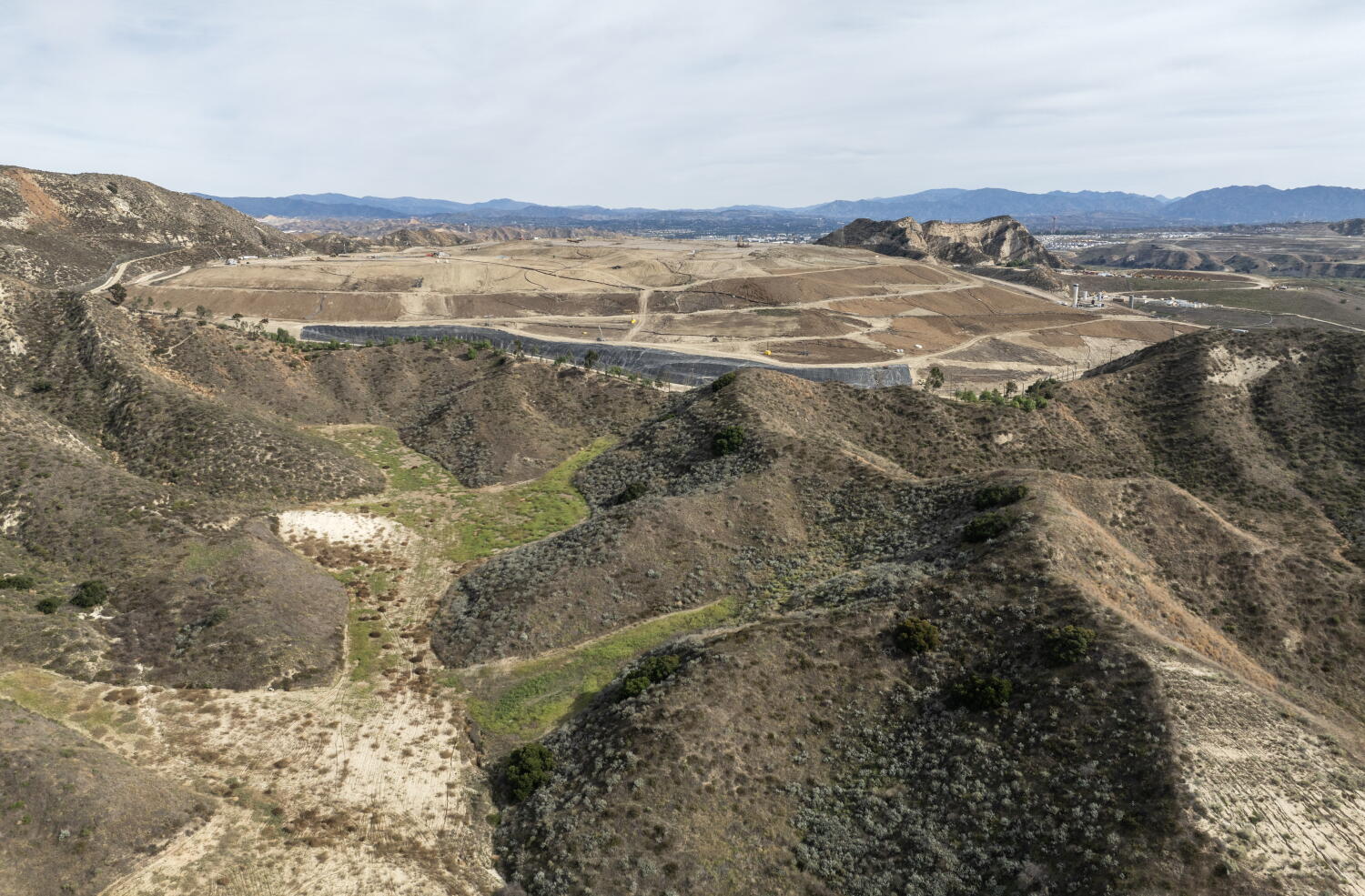
Residents living near Castaic’s Chiquita Canyon Landfill are suffering from severe headaches, chronic dizziness, and persistent wheezing because a subterranean chemical reaction is cooking buried trash and venting toxic gases directly into their neighborhoods. The California Attorney General and multiple state agencies have filed a sweeping lawsuit against the facility's operator, Waste Connections, alleging that the company allowed an underground "elevated temperature landfill" event to spiral out of control, violating state environmental laws and creating an acute public health emergency.
The litigation strips away years of corporate assurances. For months, families in Val Verde, Hasley Canyon, and Castaic reported waking up to the suffocating stench of rotten eggs and industrial solvents. Children developed nosebleeds. Adults struggled to catch their breath in their own living rooms. Regulatory filings confirm that the landfill is not merely smelling bad; it is actively off-gassing benzene, a known human carcinogen, alongside massive volumes of hydrogen sulfide and dimethyl sulfide.
The Mechanics of a Subterranean Disaster
To understand why a modern, heavily regulated California landfill is behaving like a toxic volcano, you have to look beneath the surface cap. Landfills are engineered to decompose organic matter slowly in an anaerobic environment. When operators fail to properly manage moisture, leachate, and gas extraction, that biology breaks down.
A subsurface reaction takes hold. It is not a traditional open-flame fire, though the consequences are just as destructive. Instead, it is an exothermic chemical cascade occurring deep within a 30-acre section of the older, unlined waste mass. Temperatures underground have surged past 200 degrees Fahrenheit, far exceeding the normal biological threshold of 130 degrees.
Heat changes everything in waste management. As the garbage cooks, it generates immense internal pressure and forces thick, acidic liquid known as leachate upward through the soil cover. Simultaneously, the extreme heat melts and warps the high-density polyethylene pipes designed to capture methane and other gases. When the vacuum system fails, those gases take the path of least resistance. They push straight through the dirt cap and drift down the canyon floor into residential cul-de-sacs.
Why Regulatory Fines Failed to Stop the Bleed
The state’s lawsuit is an admission that traditional environmental enforcement moves too slowly for an acute chemical crisis. Prior to the Attorney General stepping in, the South Coast Air Quality Management District (SCAQMD) issued hundreds of notices of violation and secured an abatement order.
None of it stopped the odors or the symptoms.
In the waste industry, fines are frequently treated as an operational tax. Chiquita Canyon is a massive revenue generator, taking in thousands of tons of municipal solid waste daily from across Los Angeles County. Even when regulators impose daily penalties, the cash flow from tipping fees often dwarfs the financial sting of noncompliance.
- Air Quality Violations: SCAQMD logged thousands of resident complaints, far surpassing the statutory threshold required to declare a public nuisance.
- Leachate Seeps: State water boards documented pressurized, contaminated liquids bubbling to the surface and threatening local groundwater buffers.
- Systemic Delays: Installation of critical infrastructure, including additional extraction wells and a thicker geosynthetic cover, dragged on for months while residents remained exposed.
The lawsuit seeks injunctive relief and civil penalties that cut deeper than routine administrative fines. By bringing in the California Department of Toxic Substances Control and the Regional Water Quality Control Board alongside the Attorney General, the state is attempting to force operational changes through judicial contempt powers rather than bureaucratic warnings.
The Medical Reality of Chronic Low-Level Exposure
Public health officials often walk a tightrope when discussing environmental plumes. They rely on acute exposure thresholds—standards designed for healthy adult workers in industrial settings over an eight-hour shift. Those metrics fail entirely when applied to a suburban neighborhood where infants, the elderly, and asthmatics breathe the air twenty-four hours a day.
Hydrogen sulfide is the primary culprit behind the visceral, immediate physical reactions. Even at parts-per-billion concentrations, well below the level that causes immediate unconsciousness, it irritates the mucous membranes of the eyes, nose, and throat. Chronic exposure triggers persistent migraines, nausea, and autonomic nervous system fatigue.
Benzene presents a quieter, long-term threat. There is no safe threshold for benzene exposure. While acute spikes cause the dizziness and drowsiness reported by Castaic residents, sustained inhalation damages bone marrow and elevates the risk of leukemia. Air monitoring stations placed in the surrounding communities have repeatedly detected benzene levels exceeding state chronic reference exposure limits.
The psychological toll compounds the physical illness. Living in a home you cannot ventilate, watching air purifiers run at maximum capacity around the clock, and wondering if every headache signals long-term cellular damage creates a state of relentless hypervigilance. Doctors in the Santa Clarita Valley have noted a marked uptick in respiratory distress and stress-related pathologies among patients living within a three-mile radius of the facility.
The Corporate Defense and Industry Friction
Waste Connections, the Texas-based waste giant that owns Chiquita Canyon, has not denied the existence of the subsurface reaction. Instead, the company’s defense hinges on the argument that these elevated temperature events are notoriously difficult to predict and control once initiated.
Industry veterans know this is partially true. Elevated temperature landfill (ETL) events are the nightmare scenario of solid waste engineering. Once a reaction reaches critical mass deep inside millions of tons of compacted debris, you cannot simply dig it up; exposing the superheated waste to oxygen would trigger a catastrophic, unextinguishable fire. You cannot flood it with water, because water accelerates the chemical reaction and creates millions of gallons of hazardous leachate that must be pumped, stored, and trucked away.
Operators are forced to suffocate the reaction while aggressively pumping out the heat and gas. Waste Connections points out that it has spent tens of millions of dollars drilling new vertical extraction wells, installing a specialized geomembrane cover over the reaction zone, and setting up a community air monitoring network.
Critics and state investigators argue that this remediation effort is reactive, tardy, and fundamentally compromised by the company's refusal to halt incoming waste intake across the broader facility. While the reaction zone itself is closed to new trash, the continuous operation of the surrounding landfill keeps heavy trucks rolling, stirs up fugitive dust, and maintains the financial incentives that allowed maintenance standards to slip in the first place.
The Leachate Bottleneck
One of the most glaring operational failures highlighted by regulatory inspections involves liquid management. A reacting landfill produces exponentially more leachate than a standard facility. At Chiquita Canyon, leachate production surged from roughly 100,000 gallons per week to over a million gallons per week.
The facility simply did not have the infrastructure to handle that volume. Storage tanks overflowed. Pressurized liquid broke through the hillside, creating toxic puddles on the surface that off-gassed directly into the atmosphere. Trucking that much hazardous liquid off-site requires hundreds of tanker trips per week, creating a secondary logistical bottleneck and straining regional hazardous waste treatment plants.
Environmental Justice in the Urban Fringe
Castaic and Val Verde sit on the northern edge of Los Angeles County, tucked into the foothills along the Interstate 5 corridor. Historically, communities on the urban fringe have borne the brunt of metropolitan waste disposal. Land is cheaper, population density is lower, and political pushback is easier to absorb than in affluent coastal enclaves.
Val Verde, in particular, is designated by the state of California as a disadvantaged community, burdened by higher baseline levels of pollution and socioeconomic vulnerability. When Los Angeles County approved a massive expansion for Chiquita Canyon in 2017, local activists warned that the facility was pushing past its ecological and structural limits. They argued that stacking garbage higher and wider against steep canyon walls would eventually lead to containment failures.
Those warnings were largely brushed aside in favor of regional waste capacity. Los Angeles generates roughly ten million tons of trash annually, and with major landfills like Puente Hills closing over the last decade, the county became desperately reliant on facilities like Chiquita Canyon to absorb the overflow. This dependency created a dangerous regulatory blind spot. Officials were hesitant to take aggressive enforcement action against a critical piece of municipal infrastructure until the public health crisis became too acute to ignore.
The Engineering Dilemma Moving Forward
Shutting down Chiquita Canyon tomorrow would not stop the gas. That is the brutal reality facing residents and state lawyers alike. The chemical reaction beneath the surface will continue to generate heat, leachate, and toxic vapor for years, regardless of whether another garbage truck ever enters the gates.
Stopping the harm requires sustained, precision engineering under extreme conditions. Operators must maintain a delicate negative-pressure vacuum across hundreds of wells to capture the gas before it breaches the surface, without pulling in so much ambient air that it sparks an underground fire. They must continuously extract millions of gallons of scalding, corrosive liquid while keeping the surface cap intact against settling and shifting trash.
The state’s lawsuit aims to strip Waste Connections of its discretion over how fast and how thoroughly this work gets done. If the court grants the requested injunctions, independent third-party monitors will effectively dictate operational timelines, forcing the company to prioritize containment over profit margins. For the families in Castaic still taping plastic sheeting over their window frames to keep the night air out, judicial intervention cannot arrive fast enough.


