British far-right provocateur Milo Yiannopoulos is sitting in a federal immigration detention facility in Louisiana, awaiting deportation to the United Kingdom. U.S. Immigration and Customs Enforcement agents arrested the 41-year-old former Breitbart editor at Louis Armstrong New Orleans International Airport after he overstayed his visa and ignored a federal court summons. Department of Homeland Security officials confirmed an immigration judge issued a final order of removal on July 22 after Yiannopoulos failed to appear for his hearing. The man who spent years demanding merciless enforcement of immigration laws is now caught in the dragnet he publicly celebrated.
He entered the United States on a standard visa in May 2019. He never left.
Instead of maintaining valid legal status, Yiannopoulos remained in the country illegally while floating through the outer orbits of conservative political campaigns and internet subcultures. Federal authorities tracked him down in Louisiana, where musician Ye, formerly known as Kanye West, was scheduled to perform. Following his arrest at the airport, immigration officials transferred Yiannopoulos to a detention hub in Alexandria, Louisiana, a primary transit facility used by ICE for processing charter deportation flights.
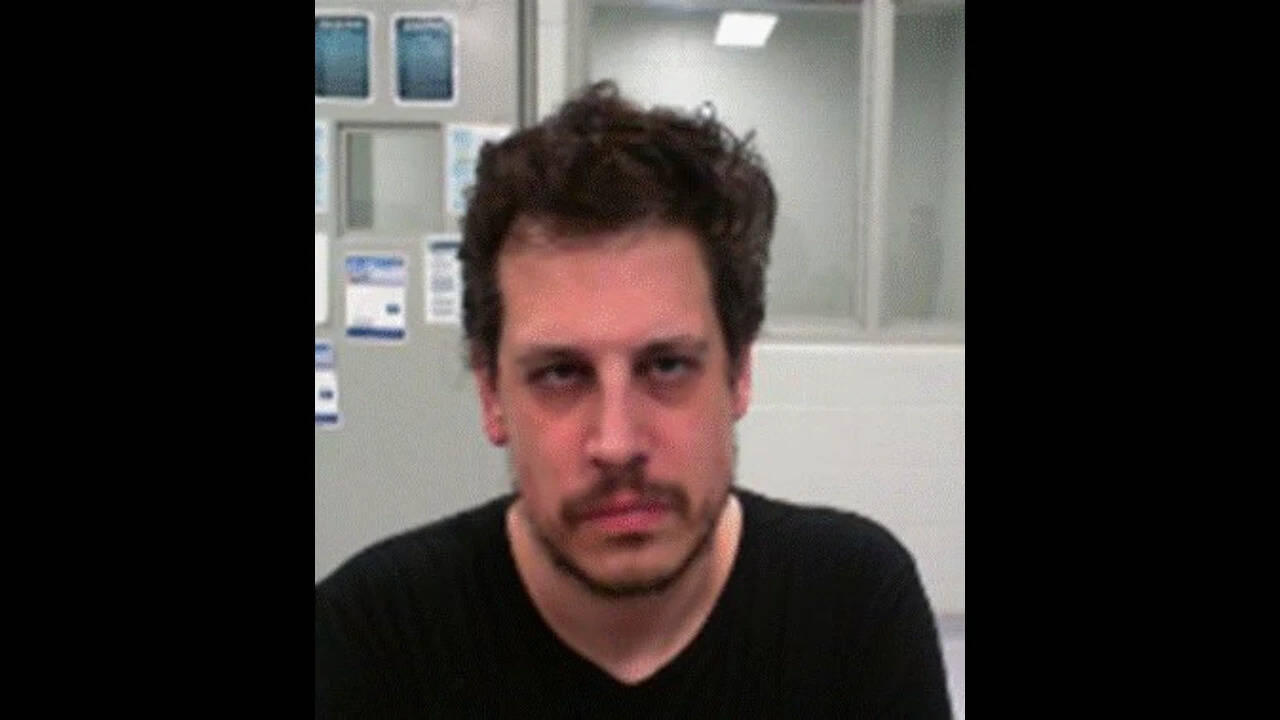
The Department of Homeland Security made no attempt to cushion the fall of a former media darling. The agency released a mugshot of Yiannopoulos alongside a public statement pointedly using his own ideological talking points against him. DHS noted that he chose to overstay his welcome in violation of federal law, adding that being in detention is a choice and suggesting that undocumented residents take advantage of a three-thousand-dollar self-deportation stipend rather than face mandatory expulsion and a permanent re-entry ban.
It was a cold, administrative execution. Yet the real story behind the arrest extends beyond a routine visa overstay. It exposes a bitter, cannibalistic feud inside the fringe media ecosystem, where former allies now use federal law enforcement as a weapon of personal destruction.
Weaponizing Federal Enforcement in Factional Warfare
He did not fall because of a routine traffic stop. He fell because someone turned him in.
Far-right activist Laura Loomer immediately took public credit for alerting immigration authorities to his presence. For months, Loomer waged an aggressive public and private campaign against Yiannopoulos, badgering the Department of Homeland Security and the FBI with claims that the British national was residing in the country unlawfully. Loomer claimed her reporting directly triggered federal intervention, framing the arrest as payback for years of personal insult and online escalation.
The animosity ran deep. Loomer claimed Yiannopoulos had previously incited violence against her online, calling for her assassination during a public dispute. Rather than keeping the feud confined to social media posts and podcasts, she targeted his legal vulnerability, turning federal immigration officers into executioners of a personal grudge.
Loomer immediately expanded her attack to target former Georgia Representative Marjorie Taylor Greene. She publicly called on the Department of Justice and acting Attorney General Todd Blanche to launch a formal investigation into Greene for employing and harboring an undocumented alien.
The political entanglement is real. In 2022, Greene hired Yiannopoulos as an unpaid summer intern in her congressional office, bringing an illegal resident into the halls of the U.S. Capitol. Reports later emerged that Yiannopoulos lived at Greene's residence while working on political projects. Loomer alleged that Greene used Yiannopoulos to execute media hit jobs against rivals within the movement when political alliances shifted.
This backstabbing reveals how federal agencies are increasingly drawn into factional warfare among political influencers. When ideological movements splinter, private knowledge of a rival's administrative non-compliance—whether tax errors, corporate filing lapses, or expired visas—becomes an effective weapon. Yiannopoulos spent years operating under the assumption that his political alignment provided an informal cloak of immunity. He miscalculated.
The Rise and Disintegration of a Professional Firebrand
To understand how a once-ubiquitous media figure ended up in a Louisiana detention center, one must trace the trajectory of an empire built entirely on transgression.
Yiannopoulos first gained attention in 2014 during the Gamergate controversy, a scorched-earth online campaign targeting female game developers and journalists. Operating as the technology editor for Breitbart News, he channeled online rage into a political strategy. He specialized in high-visibility provocation, staging campus speaking tours designed to provoke student protests and trigger national media coverage.
His formula was simple and profitable. He delivered speeches filled with deliberate insults aimed at minority groups, political opponents, and campus administrators. The resulting chaos generated headlines, cable news segments, and lucrative speaking fees. At his peak in early 2017, he secured a six-figure book deal with Simon & Schuster and a headlining slot at the Conservative Political Action Conference.
Then the structure collapsed overnight.
In February 2017, old video footage resurfaced showing Yiannopoulos making statements that appeared to condone sexual relationships between adult men and 13-year-old boys. The backlash was immediate and total. CPAC canceled his appearance, his book publisher voided his contract, and Breitbart forced his resignation. Major social media platforms systematically banned his accounts, cutting off the distribution pipeline that sustained his influence.
Stripped of mainstream platforms, Yiannopoulos spiraled through a series of bizarre ideological pivots to retain relevance. He declared himself cured of homosexuality, rebranded as an anti-gay activist, and sold religious statues on a Catholic television shopping network. He struggled to pay millions of dollars in personal debts accumulated during his peak years.
By 2022, he surfaced as an operative for Ye's chaotic political apparatus. In November of that year, Yiannopoulos orchestrated a notorious dinner at Mar-a-Lago, bringing white supremacist Nick Fuentes to dine with Donald Trump and Ye. Yiannopoulos later admitted to reporters that he arranged the meeting specifically to create chaos for the political establishment.
His tenure in Ye's inner circle ended in bitter legal battles. Former employees filed lawsuits against both Ye and Yiannopoulos, alleging hostiles work environments and unpaid wages. By the time ICE agents intercepted him in New Orleans, Yiannopoulos was a man without a formal organization, without legal standing, and without political allies willing to step forward in his defense.
The Irony of Demanding Total Immunity for ICE
The most striking aspect of the arrest is the stark contradiction between Yiannopoulos's public rhetoric and his personal reality.
Throughout 2025 and early 2026, as federal authorities expanded immigration enforcement operations across the country, Yiannopoulos emerged as one of the most extreme cheerleaders for militarized roundups. He repeatedly used online forums to urge the White House to execute aggressive, unyielding enforcement measures without compromise.
He publicly demanded that federal agents be granted total legal immunity while conducting enforcement operations on domestic soil. He called for mandatory checkpoints outside supermarkets, gas stations, strip malls, and government offices in major urban centers, advocating for immediate, on-the-spot deportations for anyone unable to produce physical proof of legal status.
In June 2025, he explicitly argued that supporters of the administration must insist on the immediate removal of millions of people, writing that without mass deportations, nothing else mattered.
Yet while demanding total immunity for law enforcement officers to round up farmworkers, construction laborers, and service personnel, Yiannopoulos was himself a fugitive from the immigration court system. He was living in the country illegally, moving between hotel rooms and private residences, ignoring formal court summonses while assuming that his public support for the enforcement apparatus would shield him from its machinery.
That assumption fundamentally misunderstands how modern administrative enforcement operates. Bureaucracy is unfeeling. An automated warrant generated by a missed court date does not examine an individual's ideological alignment before issuing a detention directive. When an immigration judge entered the final order of removal on July 22, Yiannopoulos became just another line item in a database.
The Administrative Machine Has No Loyalty
The spectacle of Milo Yiannopoulos in federal custody marks the final chapter in a decade-long experiment with outrage-driven political influence.
For years, digital firebrands operated under the illusion that online visibility translates to real-world power. They assumed that building a brand through public provocation creates a protective bubble strong enough to resist legal and administrative realities. But performative politics offers no structural protection when formal legal processes kick in.
The immigration enforcement system is designed to process individuals based on documentation, judicial rulings, and physical custody. It does not reward past media appearances, nor does it grant exemptions for political loyalty. When the political figures who once benefited from Yiannopoulos's provocations realized he had become an administrative liability and a target for internal movement feuds, they offered no defense.
Instead, his arrest was converted into digital content by his former allies within hours of his detention. Loomer used his mugshot to score political points against legislative rivals, while federal agencies used his detention to advertise their self-deportation initiatives.
The provocateur who built a career using human conflict for personal attention was ultimately consumed by the very machinery he tried to direct. His movement did not rally to save him; it simply took screenshots of his booking photo and moved on to the next fight.
He remains in federal custody in Alexandria, awaiting a charter flight back to London.