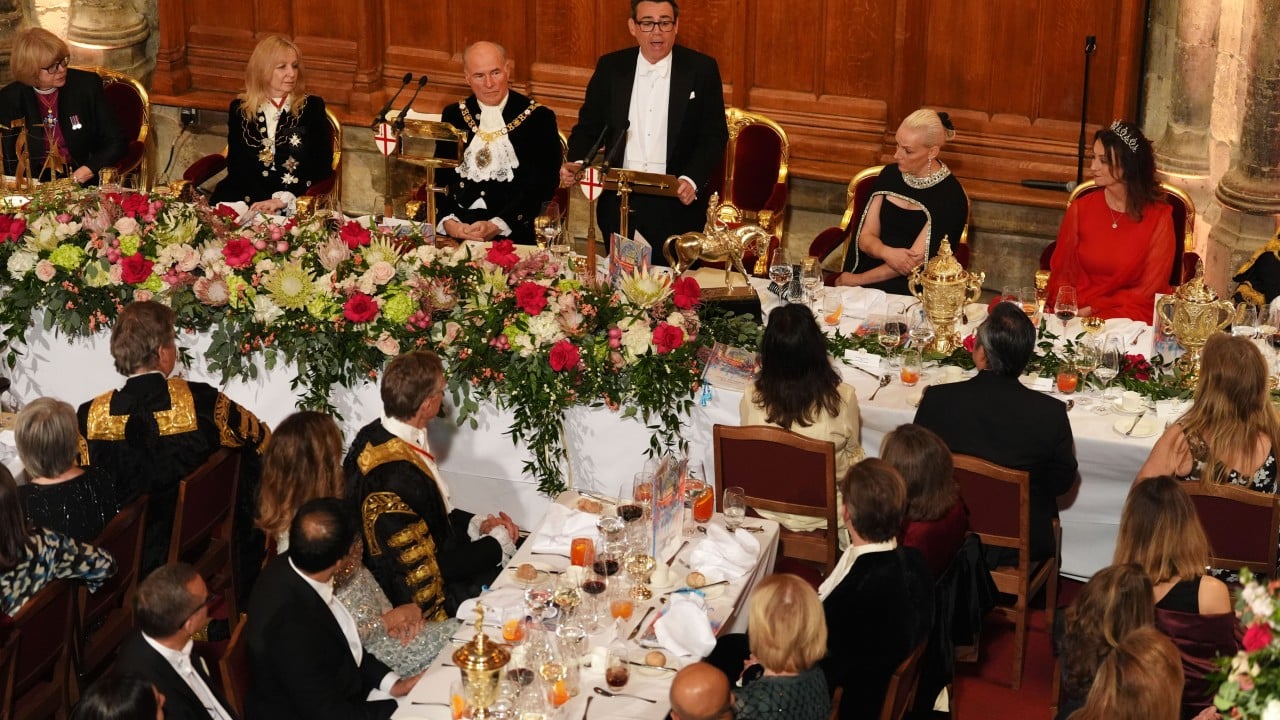
Prime Minister Andy Burnham has declared that Brexit has not worked ahead of a high-stakes reset summit with the European Union, turning a long-simmering economic reality into a formal bargaining posture. For anyone who has covered Westminster across three decades of political reinvention, the line lands less like a shock confession and more like an overdue admission that slogans cannot clear customs. Burnham wants closer alignment to steady trade, lift sluggish investment, and repair frayed ties with Brussels. Yet a summit table does not erase structural friction on its own, and both sides know the hardest trade-offs are still sitting behind closed doors.
Political leaders love the word reset. It sounds clean, modern, and frictionless, as if a single round of diplomatic handshakes could wipe away years of regulatory divergence and mutual distrust. In practice, trade architecture moves at the speed of legal texts, inspection regimes, and domestic political survival. Burnham's blunt verdict before the summit is a deliberate effort to reset expectations at home while signaling pragmatic intent abroad. Whether that candid framing buys real concessions in Brussels or simply exposes Britain's weak hand is the central test of this round of talks.
Why Burnham Dropped the Euphemisms
Politicians rarely say a signature national project failed unless they believe the political cost of pretending otherwise has become higher. For years, officials across the political spectrum danced around the economic fallout of leaving the single market and customs union, blaming global shocks, pandemics, or energy spikes whenever trade friction appeared. Burnham has chosen a different tack. Calling out that Brexit has not worked strips away polite Whitehall hedging and puts the burden of proof squarely on what comes next.
There is calculation in that candor. A leader heading into negotiations with twenty-seven member states needs leverage, and pretending the status quo is working gives away the urgency for change. By stating openly that current arrangements fall short, Burnham frames closer cooperation not as ideological backsliding, but as practical damage control for British households, manufacturers, and exporters.
Still, straight talk cuts both ways. Brussels officials have heard British ministers shift tone before, often whenever domestic polling nudges a new angle. European negotiators tend to read Westminster rhetoric through a cold lens of credibility and durability. If Burnham's critique is seen as genuine structural realism, it can build momentum toward practical agreements. If it looks like short-term political positioning ahead of a domestic audience, European capitals will keep their guard up and demand strict reciprocity for every inch of market access.
The Friction That Trade Treaties Cannot Wish Away
To understand why a reset summit faces steep hurdles, look at what actually happens at the border rather than what appears in a communique. Leaving the single market meant replacing shared rules with regulatory checks, rules-of-origin paperwork, and separate compliance regimes. Those barriers hit small and mid-sized businesses hardest because compliance costs scale poorly when shipment sizes are small.
Supply Chains and Hidden Costs
Trade friction rarely announces itself with a single dramatic collapse. It accumulates quietly through delays, extra forms, veterinary checks, and cautious sourcing decisions. A British food producer or engineering firm may lose a continental buyer not because of a headline tariff, but because delivery times become unpredictable or paperwork adds days and fees to every order.
Consider a hypothetical example of a mid-sized British precision-valve maker shipping components to a German assembly plant. Even without headline tariffs, proving origin rules, meeting updated conformity standards, and handling customs clearance at peak periods adds administrative overhead and occasional shipment hold-ups. Over a year, the German buyer may decide that sourcing closer to home—or consolidating orders inside the bloc—is simply less stressful. Once a supply chain rewires itself, winning that contract back takes years, not a single summit declaration.
Services face their own quieter obstacles. While goods get the loudest headlines at ports, the United Kingdom's economy leans heavily on services, professional qualifications, and cross-border operations. Mutual recognition that once flowed smoothly inside the bloc now requires patchwork arrangements, sector-by-sector negotiations, or local establishment rules that add friction and cost.
Sovereignty Meets Alignment
Every serious conversation about fixing Brexit runs straight into the old collision between regulatory autonomy and market access. Closer alignment with EU rules reduces trade friction. It also means accepting standards shaped in Brussels without a formal seat at the table when those rules are written.
That tension never really went away; it simply changed shape. Earlier debates asked whether Britain should diverge to chase nimble global deals or stay close to its largest trading partner. Years of real-world trading have shown that divergence brings real costs when your nearest market has strict rules and short transit times. Yet dynamic alignment—following evolving EU rules automatically—touches a raw nerve in British politics around rule-taking and democratic control.
Burnham's team has to thread a narrow needle. Move too little, and business groups complain the reset summit delivered cosmetic tweaks rather than real relief on trade and investment. Move too far, and critics accuse the government of sliding back into EU orbit without voting rights. Every clause in a draft agreement will be judged against that push-and-pull.
Brussels Has Its Own Ledger
Westminster often treats EU talks as a debate about British priorities. Brussels treats them as a balance-sheet exercise across twenty-seven capitals, where every concession to a non-member must be justified to domestic industries and national parliaments.
European negotiators have spent years building a post-Brexit equilibrium. From their perspective, reopening core pillars of the single market without full obligations—such as free movement, budget contributions, or overarching court oversight—undermines the integrity of the bloc's four freedoms. Cherry-picking is not a dirty word in London; in Brussels, it is a structural threat to how the union holds together.
Security, Mobility, and Bargaining Chips
A reset summit rarely succeeds on trade alone because governments trade favors across different baskets. Defense and security cooperation is one area where shared interests are plain to see. European capitals face pressing security challenges and value Britain's military capabilities, intelligence depth, and diplomatic weight.
Yet goodwill in security does not automatically unlock frictionless commerce. EU member states have their own priorities, from youth mobility and fishing access to regulatory standards on chemicals, agriculture, and financial services. When one capital pushes for mobility arrangements for young workers and another guards coastal waters or industrial rules, the EU position becomes a mosaic of competing domestic demands.
Anyone watching European summits over the past decade knows how slow that machinery can be. Consensus takes time, and member states rarely grant unilateral favors when they hold structural advantages in geographic proximity and market scale. Realism in London starts with accepting that Brussels will negotiate hard, methodically, and strictly in its own interest.
What a Credible Reset Actually Requires
If Burnham wants this reset summit to mark a genuine turning point rather than another round of polite communiques, incrementalism has to be matched with concrete mechanics. Broad statements about warmer relations are easy to issue and quick to fade. Businesses and investors look for predictable rules they can plan around over five- or ten-year horizons.
Practical progress usually starts in narrow, high-friction areas where mutual benefit is clear. Streamlining sanitary and phytosanitary checks for agri-food trade, easing business travel and short-term mobility for technical staff, linking certain regulatory standards where safety goals already align, and deepening structured defense procurement can all lower day-to-day friction without pretending to rebuild the entire pre-2016 architecture overnight.
Even then, expectations need a dose of discipline. No diplomatic summit can turn back the clock to full membership, nor can it instantly erase years of diverted capital and altered trade routes. Rebuilding confidence is slow work that depends on steady execution long after the summit cameras pack up.
Watch how specific the deliverables are once talks move past opening statements. Vague pledges to cooperate more closely signal caution and delay; binding timetables, technical working groups, and concrete reductions in border and compliance friction show whether Burnham's blunt diagnosis of Brexit is actually buying real change.


