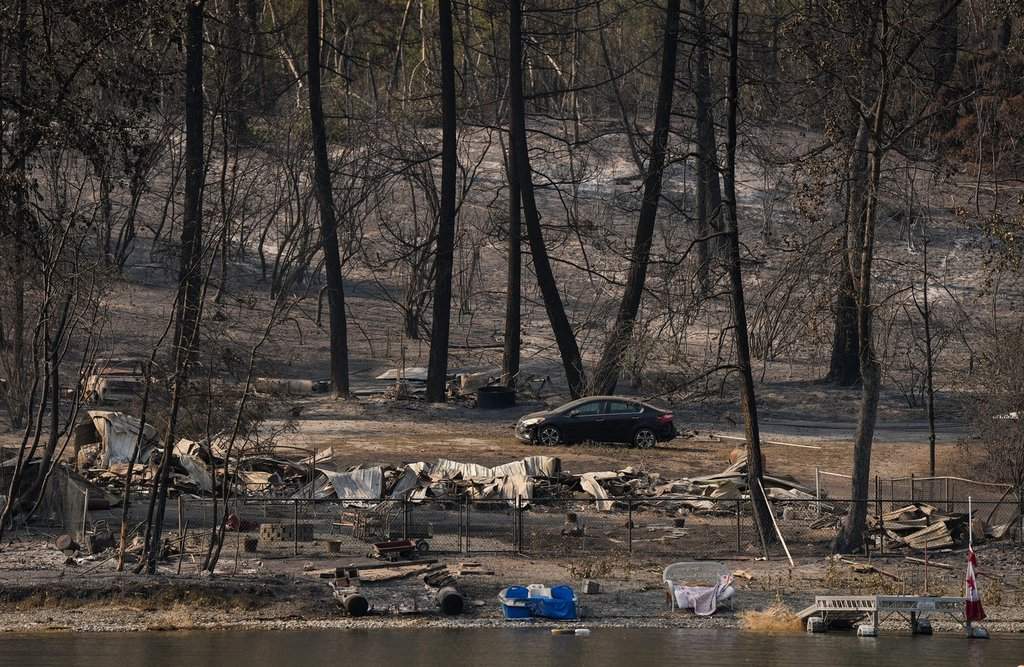
The smoke cleared from Bradley Creek weeks ago, but the acrid smell of charred timber and political failure still hangs heavy over the valley. When the local fire chief stepped before reporters and flatly described the neighborhood as a war zone, he was not using hyperbole. He was offering an autopsy of an avoidable disaster.
Flames devoured dozens of structures, displaced hundreds of residents, and exposed deep vulnerabilities in regional disaster response frameworks. Yet, as the initial shock fades, a harder question demands an answer. Why was a community with known seasonal vulnerability left so catastrophically exposed when the inevitable spark finally hit dry timber?
Answering that requires looking past the dramatic footage of water-dropping helicopters and examining the bureaucratic friction, land management oversights, and communication breakdowns that turned a routine wildfire threat into a neighborhood-wide catastrophe.
Anatomy of a Failure
Wildfires do not materialize out of a vacuum. They are the product of convergence—prolonged dry spells, heavy fuel loads, and high winds meeting a spark. But disaster is rarely purely natural. It is engineered by years of deferred maintenance, complacent planning, and institutional inertia.
For over a decade, local environmental groups and forestry experts warned municipal planners about the dense, unmanaged brush choking the perimeter of Bradley Creek. Deadfall accumulated year after year. Controlled burns, standard tools for reducing wildfire intensity, were repeatedly postponed due to budget constraints, public complaints over smoke pollution, and permitting gridlock.
When the fire front arrived, it encountered an environment primed to burn at maximum intensity. The brush served as kindling, pushing flame lengths past the threshold where standard ground crews can safely operate.
[Normal Brush Level] -> Low-Intensity Fire -> Manageable Containment
[Unmanaged Bradley Creek Fuel Load] -> Crown Fire -> Complete Evacuation Failure
The failure was systemic. By prioritizing short-term political and economic convenience over mandatory mitigation, regional authorities traded long-term safety for temporary comfort.
The Evacuation Bottleneck
Physical destruction is only part of the ledger. The human toll of the Bradley Creek wildfire was severely exacerbated by infrastructural choke points that transformed an orderly evacuation into a gridlocked panic.
Bradley Creek features a geography common to many rural-urban interface zones. One primary arterial road snakes out of the canyon, flanked by steep terrain and limited secondary access routes. When evacuation orders were finally issued, that single artery jammed within minutes.
Residents reported sitting in idling vehicles for hours while walls of smoke closed in around them. Sirens wailed in the distance, but traffic did not move. This is the nightmare scenario of modern suburban expansion. Municipalities approve housing developments in high-risk zones without simultaneously funding the necessary infrastructure upgrades to evacuate those populations safely during a crisis.
Emergency management protocols assume rational actors operating within functional systems. Real-world emergencies involve panic, power failures, burning utility poles blocking roadways, and conflicting instructions broadcast across various emergency alert apps.
Communication Breakdown
Compounding the traffic gridlock was a fractured emergency alert system. Some neighborhood pockets received mandatory evacuation orders via mobile alert an hour before the flames arrived. Other residents, living just a few streets away, received nothing until neighbors hammered on their doors.
Cell towers lost backup power early in the event. Traditional landlines failed as overhead lines melted. The lack of a redundant, hardwired local warning system left hundreds of families to rely on word-of-mouth and visual confirmation of smoke—a margin of error measured in terrifyingly few minutes.
The Insurance Spiral and Economic Aftermath
The fire is out, but the financial fallout has only just begun. Surviving homeowners are now confronting an insurance market in rapid retreat. Across fire-prone regions, major carriers are quietly pulling out, non-renewing policies, or hiking premiums to punishing heights.
For Bradley Creek, this introduces a secondary crisis. Families who managed to save their homes from the flames now face monthly mortgage and insurance bills that outpace their incomes. Others, whose homes were reduced to ash, find that their payout limits fall tens of thousands of dollars short of modern rebuilding costs due to inflation and surging labor demand.
This creates a ghost-town effect. Properties sit vacant and blighted because owners cannot afford to clear the debris, let alone rebuild to current fire-resistant building codes. Municipal tax bases shrink just as local governments need revenue most to repair damaged public infrastructure like water mains, guardrails, and asphalt.
Shifting the Burden to Property Owners
In the wake of the disaster, municipal leadership has been quick to pivot toward individual responsibility. Public statements emphasize defensible space, urging homeowners to clear vegetation within thirty feet of their structures, install multi-pane tempered glass, and swap wood-shale roofs for non-combustible materials.
While these measures are sound in principle, they shift an immense financial and labor burden entirely onto residents. Clearing defensible space on steep, erosion-prone terrain requires professional arborists and heavy equipment—services that cost thousands of dollars out of pocket.
Furthermore, individual mitigation is insufficient if the adjacent public lands remain choked with fuel. A homeowner can clear every square foot of their yard, but if a wall of fire sweeps down from a neglected federal or municipal greenbelt, the effort is rendered irrelevant. True wildfire resilience requires synchronized, landscape-scale maintenance where public agencies and private property owners share the load equally.
Rebuilding With Eyes Wide Open
Reconstructing Bradley Creek cannot mean simply rebuilding what was there before. Doing so would be an invitation to repeat history.
Urban planners face a stark choice. They can enforce strict, modern zoning laws that restrict rebuilding in high-severity hazard zones, or they can approve business-as-usual construction and cross their fingers for a wet winter. The former option is politically toxic; the latter is criminally negligent.
Resilience demands boring, expensive choices. Burying power lines. Widening evacuation corridors. Funding permanent, year-round fuel reduction crews instead of relying on emergency reactive spending. Mandating fire-hardened building materials through public subsidy programs rather than punitive mandates.
The smoke over Bradley Creek has dissipated, but the embers beneath the surface are still warm. The next dry season is coming, and the clock is already ticking down.