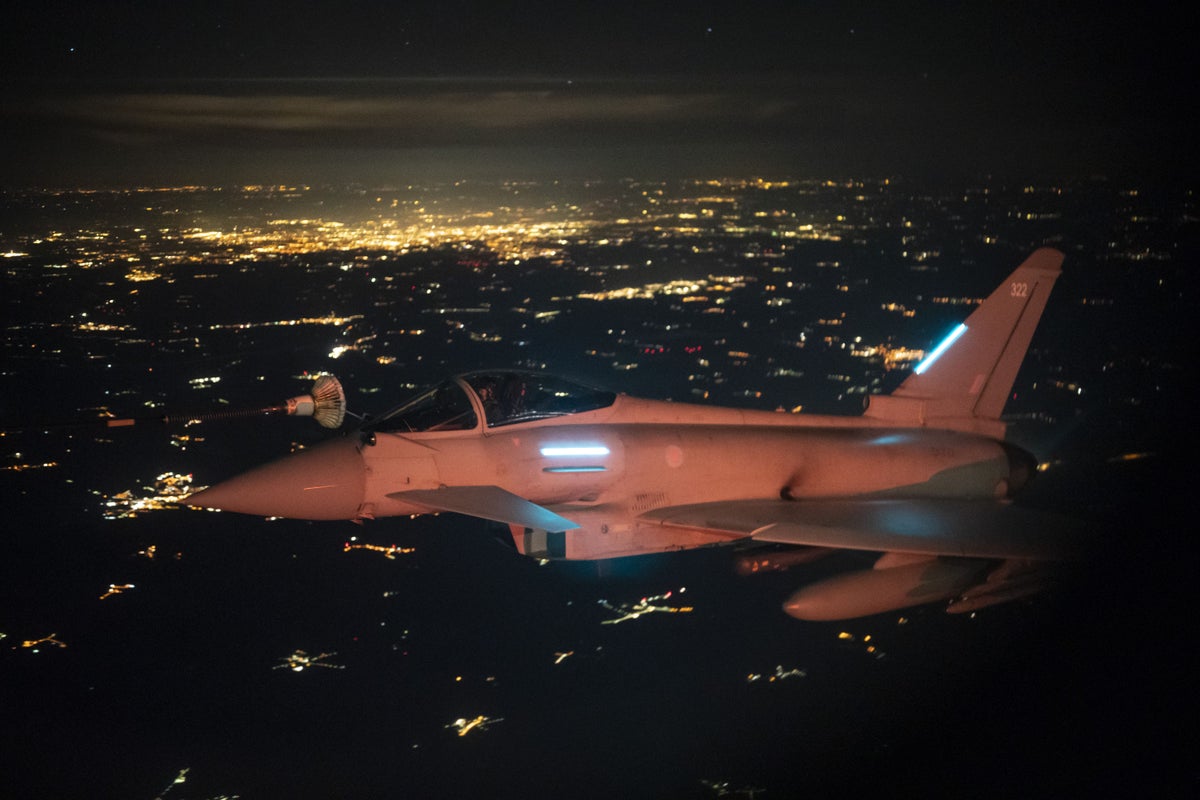
French Rafale fighter jets operating out of Šiauliai Air Base in Lithuania scrambled 11 times in a single week to intercept Russian military aircraft over the Baltic Sea. The French Armed Forces confirmed the sudden spike in high-altitude friction, labeling the encounters as a concentrated wave of provocations. This is not the standard posturing that has defined the eastern flank of NATO for two decades.
The mechanics of these encounters reveal a calculated escalation. Russian Sukhoi Su-30SM2 fighters, intelligence-gathering Il-20M platforms, and heavy transport planes are moving through international airspace without filing flight plans, disabling their transponders, and refusing all radio communication with civilian air traffic control. They are flying dark, turning the crowded skies of Northern Europe into a high-stakes laboratory for kinetic brinkmanship.
The Weaponry is Changing
A routine air policing mission involves identifying a non-responsive aircraft, photographing its tail number, and escorting it away from sovereign airspace. What French pilots are seeing through their Thales TALIOS long-range targeting pods tells a far more dangerous story.
During recent intercepts, Russian Su-30SM2 heavyweight fighters were observed carrying live Kh-31 anti-radiation missiles. These are not defensive weapons. The Kh-31 is specifically engineered to home in on and destroy NATO land-based and sea-based radar networks. Flying an electronic-warfare-configured fighter with an active suppression of enemy air defenses (SEAD) payload directly toward NATO territory is a deliberate tactical message. It signals a shift from passive intelligence gathering to active combat profiling.
The timing aligns perfectly with political choreography on the ground. Moscow initiated this surge in aerial non-compliance during the exact week it hosted its annual St. Petersburg International Economic Forum. The Kremlin regularly uses military muscle to project domestic stability and external defiance when global attention turns toward its economic narratives.
The Logistics of Friction
Western analysts often misinterpret these intercepts as sudden, chaotic dogfights. They are actually highly bureaucratized ballets.
When a radar array in Estonia or Latvia detects an unidentified radar return moving at high speed over the water without a corresponding transponder signal, the Combined Air Operations Centre in Uedem, Germany, issues an Alpha Scramble.
[Baltic Radar Array] -> Detects Unidentified Return (No Transponder)
       ↓
[CAOC Uedem, Germany] -> Evaluates Threat & Issues Alpha Scramble
       ↓
[Šiauliai Air Base]   -> French Rafales Airborne Within Minutes
       ↓
[Baltic Airspace]     -> Visual Identification & Escort Protocol
French pilots, keeping their engines prepped and their flight gear on, must be airborne within minutes. They climb rapidly to intercept the targets before they can breach the narrow air corridors of the Baltic states.
The geography creates a pressure cooker. Kaliningrad, Russia’s heavily militarized Baltic enclave, sits jammed between Poland and Lithuania. To supply Kaliningrad or to move aircraft from mainland bases near St. Petersburg, Russian pilots must traverse a narrow strip of international airspace over the Baltic Sea.
This creates a permanent flashpoint. The airspace is tight, civilian airliners are constantly crossing the same sectors, and a single navigation error could push an armed Russian jet into sovereign NATO territory.
The Drone Component
The aerial pressure is not limited to piloted aircraft. The sudden surge in French fighter scrambles follows a pattern of military drones drifting into the airspace of Finland, Estonia, Latvia, and Lithuania.
These drone incursions force NATO commanders to make difficult choices. Testing the response times of a Rafale squadron with a cheap, disposable reconnaissance drone is a cost-effective way for Russian intelligence to map out Western radar frequencies and deployment habits. Every time a French pilot turns on their onboard radar to track a target, Russian electronic intelligence assets in Kaliningrad log the data.
A War of Attrition in the Skies
The Kremlin's strategy is fundamentally economic and logistical. It relies on wearing down European hardware and personnel.
Flying a complex, twin-engine fighter jet like the Rafale consumes immense financial resources. Every hour spent idling on a hot tarmac during an alert status or screaming into a supersonic climb accelerates the maintenance clock on airframes and engines. By forcing the French detachment to scramble 11 times in seven days, Moscow is running a live calculation on Western readiness, logistics chains, and mechanical fatigue.
The Baltic states—Estonia, Latvia, and Lithuania—do not possess their own supersonic fighter fleets. They rely entirely on rotating deployments from wealthier NATO allies to secure their skies. If Moscow can make the cost of air policing unsustainable or politically unpopular in Western European capitals like Paris, it chips away at the core promise of collective defense.
The burden is falling heavily on a small number of aircrews. The French deployment currently relies on a lean contingent of personnel and aircraft at Šiauliai. Maintaining an intense operational tempo where pilots are sprinting to their aircraft multiple times a day creates a compound layer of human fatigue that increases the risk of a fatal mistake.
The Risk of Miscalculation
The true danger in the Baltics is not a planned Russian invasion, but a localized accident that spins out of control.
When two heavily armed fighter jets fly within meters of each other at near-supersonic speeds, the margin for error disappears. A sudden pocket of turbulence, a mechanical failure on an aging Russian jet, or a misinterpreted defensive maneuver by a stressed pilot could result in a mid-air collision.
The historical guardrails that prevented these incidents from escalating during the Cold War have eroded. Communication channels between Western military commanders and the Russian General Staff are functional but deeply strained. In the event of a crash over the Baltic Sea, the immediate impulse on both sides will be to control the narrative, deploy rescue forces into contested waters, and prepare for retaliation.
The skies over the Baltic Sea are no longer just a border. They have become an active testing ground where Russia measures the political will of the West, one scramble at a time.


