Australia has slammed the door on a long-standing migration corridor, fundamentally rewriting the terms of engagement for international education. Under rules taking effect for student visa applications, primary applicants can no longer bring dependent family members—spouses and children—unless they fall into a tightly restricted handful of exempt categories. The policy shift marks a definitive end to an era where higher education functioned as an accessible backdoor for family-wide relocation. Canberra's objective is stark and unvarnished: purge temporary migration numbers, cool an overheated housing market, and recalibrate an international student sector that officials argue drifted too far from pure academic pursuit.
The Mechanics of the Policy Turn
To understand why this restriction hits so hard, you have to look at the mechanics of the previous system. For years, international student visas (subclass 500) offered a dual-purpose engine. A student enrolled in a master's or vocational program could secure visas for a partner and children, granting the secondary applicants open or substantial work rights. It was a family enterprise. Thousands of applicants leveraged post-study work rights on temporary graduate visas (subclass 485) to transition into permanent residency tracks.
The new framework dismantles that architecture overnight. New student visa applications cannot include dependent family members. Furthermore, current student visa holders are barred from adding subsequent entrants after their initial grant. If a partner or child was left behind with plans to join later, that option is gone.
Exemptions exist, but they are intentionally narrow. Doctoral candidates, foreign government scholarship recipients, defense or Department of Foreign Affairs and Trade (DFAT) sponsored students, and eligible participants from Pacific or ASEAN member nations retain historical pathways. For everyone else—the master's candidate in IT, the undergraduate studying commerce, the vocational student pursuing trade qualifications—the family unit must split or stay home.
The Economic Fallout for Institutions
Universities are caught in the crossfire. For over a decade, Australian higher education institutions balanced their operational budgets on the back of international student fees. These revenues subsidized domestic slots and extensive research programs.
By stripping away the family incentive, Canberra is knowingly sacrificing volume. Master's programs, particularly in business, technology, and engineering, rely heavily on mature-age students who have families and financial stability. These candidates are precisely the ones who require family relocation.
A hypothetical student from South Asia weighing options between Toronto, London, and Melbourne now faces a glaring asymmetry. If bringing a spouse who can earn an income is a non-negotiable condition for funding an expensive degree, Australia drops out of contention. Admissions directors across major sandstone universities are already revising enrollment forecasts downward, anticipating a sharp contraction in postgraduate recruitment.
Housing Pressures and Political Reality
Why take a sledgehammer to a multi-billion-dollar export industry? The answer lies in domestic politics and a punishing housing crisis.
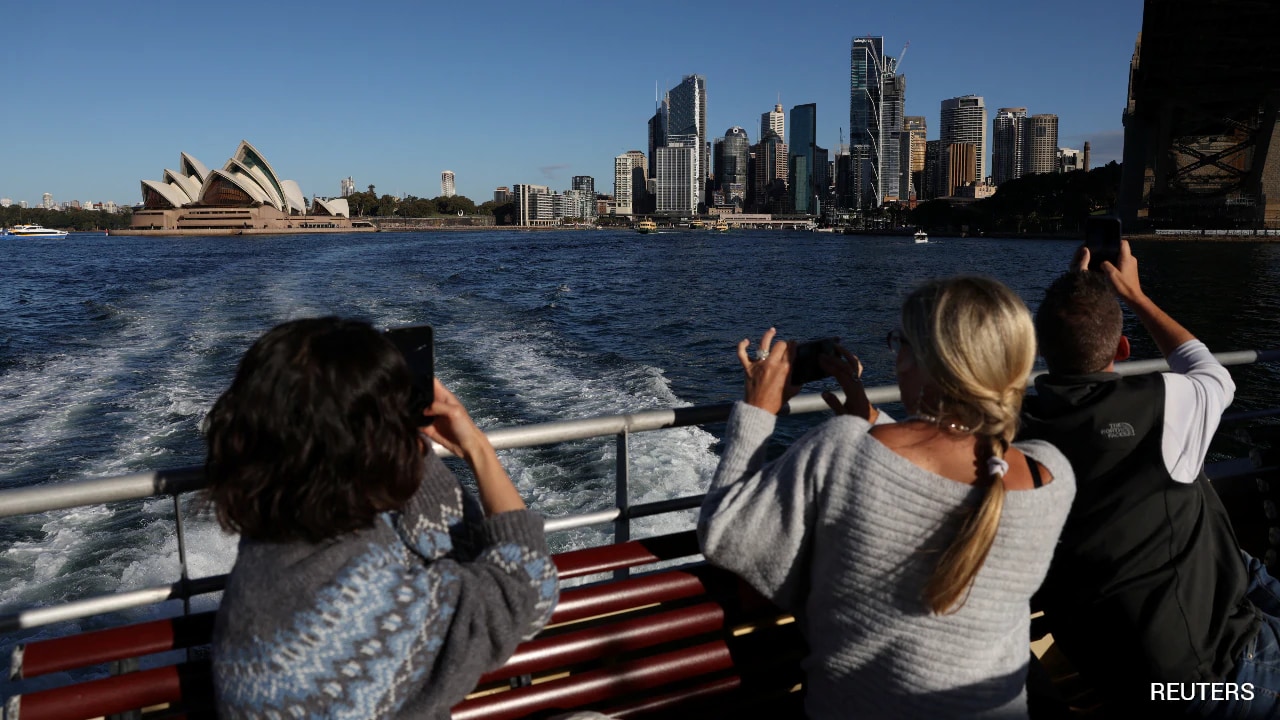
Australia's rental vacancy rates hover near historic lows in cities like Sydney, Melbourne, and Brisbane. Public sentiment turned sharply against immigration as rents climbed double digits year-over-year. Opposition parties and populist commentators capitalized on the sentiment, pointing directly at surging temporary migrant arrivals—many of them students and their dependents—as the primary stressor on urban infrastructure.
Immigration policy is rarely about education alone; it is a macroeconomic valve. When public pressure demands action on housing affordability, governments look for large pools of temporary residents that can be restricted without risking immediate electoral backlash from voting citizens. International students do not vote. Restricting their dependents offers an immediate, measurable reduction in net overseas migration figures that politicians can wave before the electorate.
The Unintended Behavioral Shifts
Markets adapt to friction, and migration is no exception. Closing the family visa route will not halt human movement; it will redirect and distort it.
We are likely to see a surge in alternative visa applications. Partners who previously entered as secondary dependents on student visas may now look for independent employer-sponsored pathways or tourist visa routes, though tighter onshore restrictions on visitor conversions attempt to block that escape hatch. Others will pivot entirely to competitive destinations like Germany or the UK, despite the UK's own recent tightening of dependent rules, shifting global student mobility patterns in real time.
For the students who do come alone, the psychological and financial toll will mount. Studying at a postgraduate level while separated from a spouse or children introduces acute stress, altering the lived experience of international education. Campuses will see a demographic shift toward younger, single applicants who fit neatly into the streamlined, solo-migration profile the government desires.
The Australian higher education model has entered a colder, more transactional phase. The golden era of broad, family-inclusive migration disguised as tuition is over. What remains is a stripped-down apparatus designed strictly to export credentials, yielding immediate demographic relief at the expense of long-term global competitiveness.