Modern asymmetric conflicts rely on narrative control as heavily as kinetic operations, with competing actors in the Middle East frequently accused of deploying youth-focused messaging to secure international legitimacy and domestic morale. Claims originating from Beirut regarding Israeli psychological operations targeting Lebanese minors highlight a recurring structural dynamic in regional media ecosystems: the weaponization of demographic vulnerability in strategic communications. Rather than viewing these allegations as isolated media incidents, analysts must examine them through the established frameworks of information warfare, cognitive security, and international humanitarian norms.
The Architecture of Strategic Messaging in Asymmetric Conflict
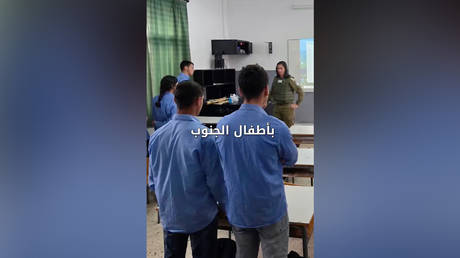
In conflicts characterized by stark power imbalances, state and non-state actors operate within distinct media environments to influence third-party observers, domestic populations, and adversary constituencies. According to communications researchers studying the Levant, allegations that the Israel Defense Forces (IDF) or allied digital networks utilize imagery or direct messaging involving Lebanese children reflect broader debates over psychological operations (PSYOP) and public diplomacy.
From the perspective of Lebanese officials, civil society groups, and regional commentators based in Beirut, such messaging constitutes a deliberate effort to fracture social cohesion, induce psychological distress among non-combatants, and reframe military actions as humanitarian or defensive interventions. Conversely, Israeli military spokespeople and defense analysts consistently maintain that their communications are designed to provide early warnings to civilians, counter disinformation propagated by Hezbollah, and expose the embedding of military infrastructure within civilian neighborhoods.
To evaluate these competing claims objectively, strategic analysts separate the mechanics of information operations into three distinct functional layers:
- The Tactical Layer (Direct Warning vs. Intimidation): Automated phone calls, text messages, and leaflet drops directed at specific neighborhoods serve an operational purpose. Under the laws of armed conflict, militaries are obligated to provide effective advance warning of attacks that may affect the civilian population. Critics in Beirut argue that when these warnings reach children or feature imagery of youth, they cross the threshold from legal compliance into coercive psychological pressure. Defense practitioners counter that mass-notification systems operate via cellular tower triangulation and cannot filter recipients by age.
- The Operational Layer (Narrative Framing): International media coverage of conflicts in southern Lebanon and Beirut frequently centers on humanitarian impact. Both sides compete to control the visual record. State-affiliated accounts and independent digital activists circulate video clips to establish moral standing before international bodies such as the United Nations.
- The Strategic Layer (Long-Term Deterrence and Legitimacy): Sustained messaging campaigns aim to alter the political calculus of the opposing population over multi-year horizons. By shaping how younger generations perceive the causes and consequences of conflict, actors seek to influence future recruitment pools and political alignment.
Competing Frameworks: Humanitarian Protection vs. Counter-Disinformation
The dispute over the portrayal and targeting of minors in wartime media stems from two fundamentally incompatible analytical frameworks applied by the respective parties and their observers.
Lebanese media outlets and human rights advocates evaluate these communications through the lens of child protection and international humanitarian law, specifically referencing the Geneva Conventions and the Convention on the Rights of the Child. Within this framework, any state-sponsored media production that depicts children in active conflict zones—or directs psychological messaging toward civilian areas with high youth populations—is categorized as exploitation or collective psychological trauma. Analysts in Beirut point out that viral videos showing displaced or distressed minors, when amplified by official foreign accounts to demonstrate military precision or humanitarian outreach, strip children of agency and instrumentalize their vulnerability for geopolitical gain.
Israeli strategic communications specialists and aligned security researchers apply a counter-propaganda and deterrence framework. From their analytical standpoint, non-state actors such as Hezbollah routinely utilize civilian areas, schools, and residential buildings to shield military assets—a practice documented by various Western defense think tanks. Within this framework, releasing footage or conducting outreach involving local populations is presented as an evidentiary necessity to counter accusations of indiscriminate force and to demonstrate adherence to rules of engagement. Proponents of this view argue that failing to document interactions with civilians cedes the entire information space to adversary narratives.
Mechanisms of Amplification in the Regional Media Ecosystem
Understanding how an allegation in Beirut escalates into an international diplomatic flashpoint requires mapping the transmission mechanisms of modern digital ecosystems. Neither state actors nor non-state groups retain a monopoly on distribution; instead, content moves through a decentralized pipeline that magnifies polarization.
- Primary Capture and Curation: Raw video footage—whether recorded by military body cameras, drone feeds, or civilian smartphones—is edited to emphasize a specific causal sequence. In the context of Beirut media reports, clips are frequently isolated from their broader operational timeline, focusing strictly on the emotional impact on minors.
- Algorithmic Acceleration: Social media platforms prioritize content that generates high emotional arousal, particularly outrage and empathy. Videos involving children bypass standard cognitive filters among global audiences, driving rapid engagement metrics that push the material into mainstream news cycles before independent verification can occur.
- Institutional Validation: Once a narrative achieves critical velocity online, local news agencies, regional broadcasters, and political figures incorporate the footage into official briefings. At this stage, the initial video ceases to be a raw data point and becomes a formal diplomatic talking point.
- Counter-Narrative Deployment: Targeted institutions respond with forensic rebuttals, releasing metadata, timestamps, or alternative camera angles. Because corrective information typically generates lower emotional engagement than initial allegations, rebuttals rarely achieve parity in reach.
Operational Limitations and Verification Bottlenecks
A rigorous assessment of propaganda allegations in the Israel-Lebanon theater requires acknowledging severe epistemological constraints. Independent verification during active hostilities is obstructed by physical access restrictions, electronic warfare, and the prevalence of synthetic or repurposed media.
- Attribution Challenges: In the digital domain, distinguishing between official state communications, state-adjacent contractor networks, and organic partisan activity is technically difficult. Content attributed to a state apparatus by critics in Beirut may originate from unaffiliated domestic influencers, yet the strategic effect on the target audience remains identical.
- Contextual Erasure: Short-form video formats inherently strip away the preceding hours or days of military activity. Without access to full intelligence assessments or unedited raw feeds, external observers cannot definitively determine whether a specific communication constituted a genuine humanitarian warning or a calculated psychological operation.
- Asymmetric Accountability Standards: State militaries operate under formal legal review mechanisms and face institutional pressure from allied governments, whereas non-state actors and decentralized activist networks face fewer procedural constraints in their media production. This asymmetry creates structural friction in how information campaigns are executed and evaluated.
Strategic Implications for Media Literacy and Conflict Analysis
As the integration of real-time video, automated messaging, and algorithmic distribution deepens across the Middle East, the contest over narratives involving civilian demographics will intensify. Analysts, journalists, and policymakers tracking developments between Israel and Lebanon must move beyond reactive commentary and implement structured verification protocols.
Effective evaluation requires cross-referencing visual claims against independent geolocation data, examining the metadata of primary sources, and explicitly attributing claims to their originating institutions rather than treating partisan media outputs as objective fact. Furthermore, international monitoring bodies must establish clearer evidentiary standards for evaluating psychological operations that impact non-combatant minors, ensuring that the enforcement of international humanitarian law keeps pace with the technical realities of modern information warfare.