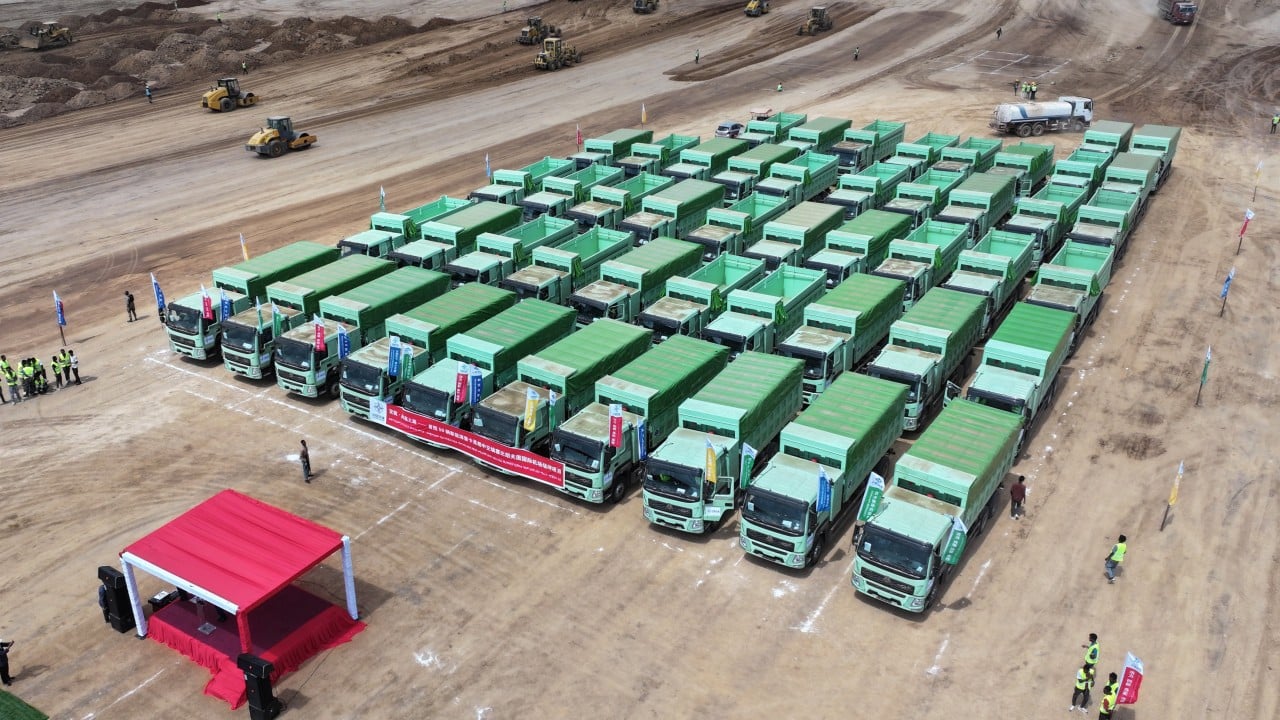
China is dominating the global heavy-duty electric vehicle market by abandoning traditional fleet electrification playbooks and relying on aggressive state mandate, battery-swapping infrastructure, and sheer industrial scale. While Western logistics operators run pilot programs with small batches of battery-electric semi-trucks, Chinese highways already move millions of tons of freight using heavy-duty electric trucks running on standardized battery-swapping stations. This isn't an experimental transition driven by corporate ESG pledges. It is a orchestrated realignment of industrial supply chains designed to curb urban diesel pollution and secure a dominant position in the global commercial transport ecosystem.
Understanding this shift requires looking beyond basic vehicle manufacturing. The real driver behind Beijing's heavy fleet deployment lies in solving the fundamental operational flaw of commercial electrification: dead time.
The Downside of Plug-in Charging for Freight
To understand why the Chinese model moved so fast, you have to look at the math of long-haul logistics. Freight transport operates on margins so thin that any idle time destroys profitability.
A standard diesel heavy truck runs nearly continuously, stopping only for mandatory driver rest periods and five-minute fill-ups. When Western original equipment manufacturers (OEMs) introduced high-capacity electric Class 8 trucks, they brought massive lithium-ion battery packs requiring substantial charging time. Even with ultra-fast megawatt-level chargers, bringing a 500-kilowatt-hour battery from 10 percent to 80 percent takes time that logistics dispatchers simply do not have.
Furthermore, high-power fast charging places immense stress on local electrical grids. Pulling multiple megawatts from a rural sub-station during peak hours requires costly grid upgrades and triggers astronomical demand charges from utility companies. For a fleet manager operating fifty trucks out of a single depot, installing the necessary charging infrastructure can take years in utility approvals and capital expenditure alone.
China faced the exact same physics and grid constraints, but its response was fundamentally different. Instead of waiting for grid capacity or faster chemical charging speeds, Chinese regulators and state-backed enterprises standardized the battery pack itself.
Battery Swapping as national Infrastructure
In 2020, China's Ministry of Industry and Information Technology began pushing standardized battery-swapping configurations across major industrial hubs. The concept was straightforward: decouple the vehicle frame from the energy storage unit.
Instead of plugging the truck into a wall, the vehicle pulls into a automated swapping station. Robotic arms lift the depleted five-ton battery pack out from behind the cab, replace it with a fully charged unit, and send the driver back on the road in under five minutes.
This model changes the economics of fleet management in three distinct ways:
- Separation of vehicle and battery costs: Fleet operators purchase the chassis and lease the battery pack through a service contract. This brings the upfront acquisition price of an electric heavy truck close to parity with a conventional diesel tractor.
- Optimized grid usage: Swapping stations act as decentralized energy storage systems. They recharge depleted batteries slowly over hours when electricity prices drop or when renewable generation spikes, avoiding peak-demand penalties from the grid.
- Battery longevity: Standardized, slow-charging protocols inside temperature-controlled swapping bays reduce thermal stress on the cells, extending the operational life of the battery pack compared to repeated ultra-fast direct-current charging.
State-owned enterprises and private heavyweights like CATL built hundreds of these stations along key industrial corridors, particularly those connecting coal mines, steel mills, and shipping ports in provinces like Hebei and Shanxi. These routes feature predictable, high-frequency trips—the exact use case where battery swapping thrives.
Municipal Pressures and Supply Chain Dominance
Systemic adoption did not rely solely on clever engineering; it was forced through aggressive state intervention. Municipalities across northern China instituted strict environmental controls that effectively banned diesel trucks from entering port zones, steel facilities, and urban centers during heavy pollution alerts.
For a logistics company operating around major industrial nodes, going electric was not a forward-looking sustainability strategy. It was the only way to remain legally operational.
At the same time, China's domestic supply chain built a structural cost advantage that foreign competitors struggle to match. The country controls the majority of global lithium refining capacity, synthetic graphite production, and cathode manufacturing. Domestic truck makers purchase battery packs at a fraction of the cost paid by European and American manufacturers.
Because of this vertical integration, Chinese truck manufacturers can sell heavy electric rigs at prices that make operational sense even without perpetual direct subsidies. They have built an internal market that absorbs tens of thousands of units annually, allowing them to refine vehicle designs, telemetry software, and structural durability through real-world commercial stress testing.
The Blind Spots in the High-Speed Deployment
Despite the speed of this transition, the Chinese heavy fleet model contains friction points that are rarely discussed in corporate press releases.
The primary vulnerability is standardization lock-in. For battery swapping to function across a national network, vehicle design must conform to rigid dimensional and mechanical standards. As battery chemistries evolve, upgrading a nationwide ecosystem of automated swapping stations requires enormous capital. If a superior energy storage technology emerges that does not fit the physical form factor of current standardized packs, the existing infrastructure risks early obsolescence.
Second, the current success is heavily concentrated in fixed-route, short-haul, and regional industrial loops. Heavy industrial corridors connecting ports to hinterland industrial zones are ideal for fixed swapping stations. Interprovincial long-haul freight across vast, low-density regions remains a far tougher challenge. Building out nationwide swapping networks across rural provinces demands capital commitments that even state-backed energy firms hesitate to fund without guaranteed traffic volume.
There is also the question of power source purity. A heavy electric truck running on energy generated by coal-fired power plants in northern China still produces a lower net carbon output over its lifespan than a direct-emitting diesel engine due to central plant efficiency. However, it falls short of true net-zero transport. The environmental gain depends entirely on how quickly the surrounding regional grid transitions to solar, wind, and nuclear generation.
The Global Implications for Freight Transport
Western OEMs and policymakers who view China's heavy electric truck rollout purely as a domestic phenomenon miss the broader economic reality.
Vehicle manufacturers in Europe and North America are attempting to build long-haul electric vehicles designed for individual ownership, flexible routes, and mega-watt direct charging. It is a capital-intensive approach that requires massive public investment in highway charging corridors and grid modernization.
Meanwhile, Chinese truck makers are exporting these battery-swapping platforms to developing markets in Southeast Asia, South America, and parts of the Middle East. These regions often lack the stable grid infrastructure required for high-power fast-charging networks, making the self-contained, battery-buffered swapping station model an attractive alternative for mining and port operations.
By establishing the dominant global standards for heavy vehicle battery swapping, Chinese industrial firms are positioning themselves to control not just the vehicle market, but the energy delivery networks that fuel commercial transport globally. The race for zero-emission heavy freight will not be decided by who builds the most advanced electric truck chassis. It will be decided by who controls the infrastructure that keeps those trucks moving without stopping.


