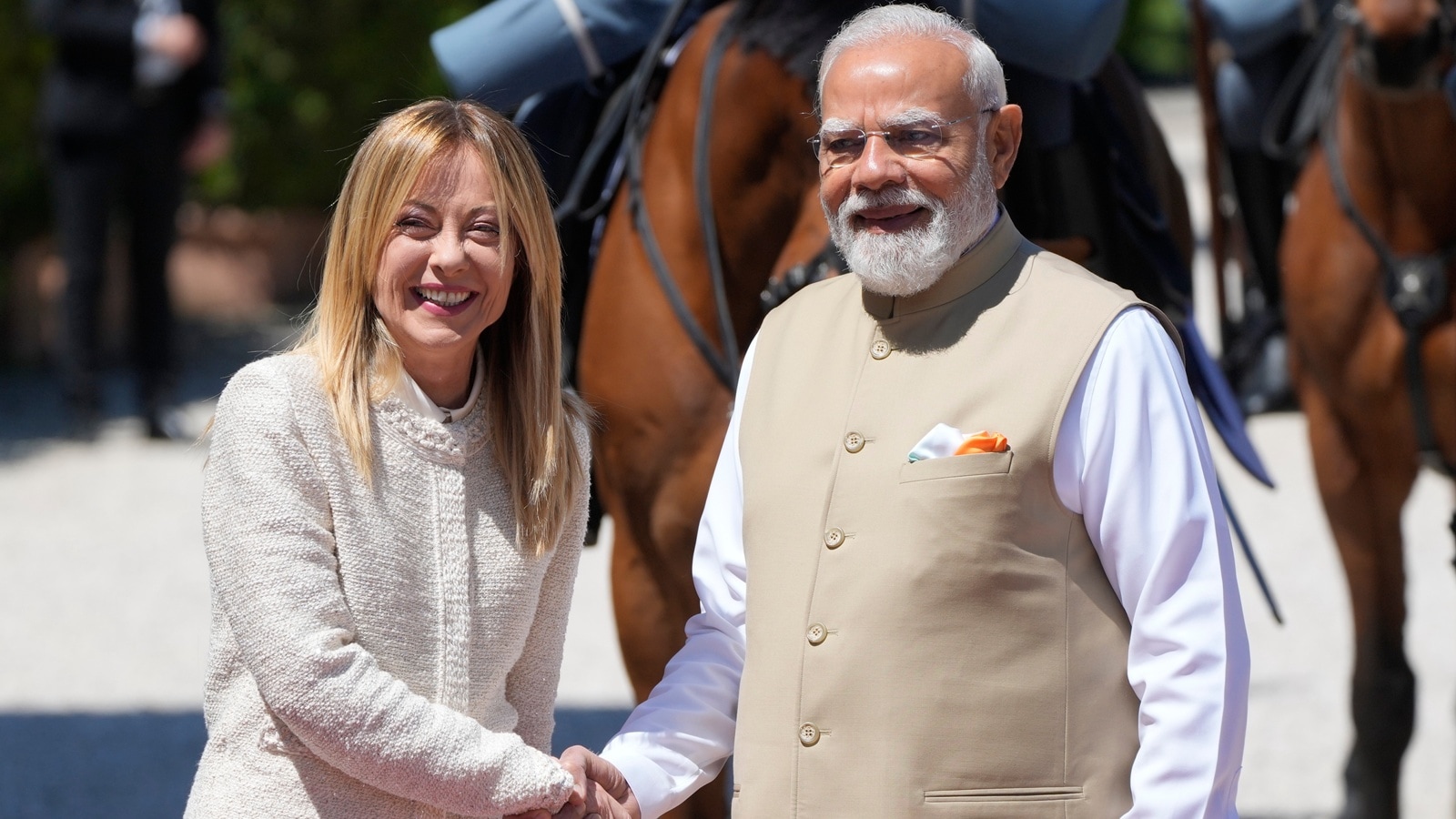
Geopolitics isn't just about handshakes and photo ops outside the Colosseum. It's about supply chains, industrial shifting, and cold hard cash.
When Indian Prime Minister Narendra Modi met Italian Prime Minister Giorgia Meloni in Rome, the internet naturally obsessed over viral videos and candy gifts. But if you look past the social media noise, something much larger happened. India and Italy quietly upgraded their relationship to a Special Strategic Partnership.
This isn't just diplomatic jargon. It's an aggressive recalibration of trade between South Asia and Europe. At the center of this shift are more than 800 Italian firms operating inside India, actively driving manufacturing, infrastructure, and technology. The two nations just dropped a massive Joint Strategic Action Plan spanning 2025 to 2029. They aren't just trading anymore. They're rewriting how products get made and shipped across continents.
The Indo Mediterranean Corridor is Real
For a long time, Europe looked at India through a very narrow lens. It was either a source of IT talent or a massive market to dump consumer goods. That era is officially dead. Modi and Meloni recently co-authored a piece highlighting a concept that should make global logistics managers pay close attention: the emergence of the Indo-Mediterranean corridor.
Think of this as a direct economic superhighway connecting the Indian Ocean to Europe. It bridges physical trade, data flows, clean energy networks, and maritime security. This isn't a theoretical project. Italy has positioned itself as India's main gateway to the European continent, bypassing traditional, more cumbersome northern routes.
Look at the numbers. Bilateral trade hit 14.25 billion euros in 2025. India exported roughly 8.55 billion euros worth of goods, while Italy sent 5.70 billion euros back the other way. That's a solid 9.42% jump over the previous year. But the new target is what matters. The 2025-2029 action plan explicitly aims to push annual bilateral trade to 20 billion euros by 2029.
To get there, they're relying on a very specific economic philosophy: Design and Develop in India and Italy, and Deliver for the World. It pairs Italian precision engineering with Indian industrial scale.
Moving Past Simple Outsourcing
If you think Italian involvement in India is just about luxury fashion brands opening boutiques in Mumbai, you're missing the point. The 800+ Italian companies on the ground are heavily embedded in core industrial sectors. We're talking about heavy machinery, automotive components, renewable energy infrastructure, and advanced metallurgy.
Historically, foreign firms made the mistake of treating India as a cheap assembly line. Italian businesses are shifting away from that flawed strategy. They're focusing on co-creation. Italy is an industrial powerhouse built on specialized small and medium enterprises that excel in high-end design. India offers an engineering ecosystem with over 200,000 startups and a massive talent pool.
This partnership directly links Italy’s manufacturing expertise with India’s "Make in India" initiatives. The goal isn't to just build factories to sell things to Indian consumers. The goal is to build highly integrated supply chains that insulate both regions from geopolitical shocks in East Asia.
Defense and Deep Tech Take Center Stage
The most telling sign of how serious this partnership has become lies in the security and technology sectors. You don't sign a comprehensive defense industrial roadmap unless you trust each other implicitly.
The two countries are moving aggressively into co-production of defense equipment, maritime security cooperation, and shared military logistics. Why? Because freedom of navigation in the Indo-Pacific and the Mediterranean is mutually critical. If shipping lanes in either domain get choked, both economies bleed.
On the tech side, the focus has moved to sectors that will define the next decade:
- Artificial Intelligence & Quantum Computing: Merging India’s massive digital scale with Italy's focus on industrial application and human-centric tech ethics.
- Space Exploration: Combining India's proven cost-effective satellite launch capabilities with Italian aerospace engineering.
- Critical Minerals: Securing supply chains for the raw materials needed to power the global electric vehicle and electronics shift.
The establishment of a new India-Italy Innovation Centre is designed to act as the practical hub for these initiatives. It ensures these plans don't get trapped in bureaucratic paperwork.
What This Means for Businesses Right Now
If you run a business relying on global supply chains, ignoring this axis is a mistake. The ongoing negotiations for the India-European Union Free Trade Agreement are getting a massive push from Rome. Italy is India's fourth-largest trading partner in the EU, and they are actively using their political weight to smooth out trade friction.
Furthermore, the Migration and Mobility Partnership Agreement is already smoothing out the movement of skilled professionals between the two regions. India's diaspora in Italy has grown to over 186,000 people, making it the largest Indian community in the EU. This isn't just a statistics point. It represents a living network of corporate managers, engineers, and entrepreneurs who understand how to operate in both business cultures.
If you want to capitalize on this shifting economic landscape, look closely at joint ventures in precision manufacturing and green energy transition. The companies winning right now aren't trying to sell off-the-shelf products. They are the ones setting up shared R&D facilities to utilize Indian engineering scale and Italian design logic. Monitor the rollouts from the newly formed Innovation Centre over the coming months. Align your procurement and expansion plans with the emerging Indo-Mediterranean shipping corridors to stay ahead of the curve.