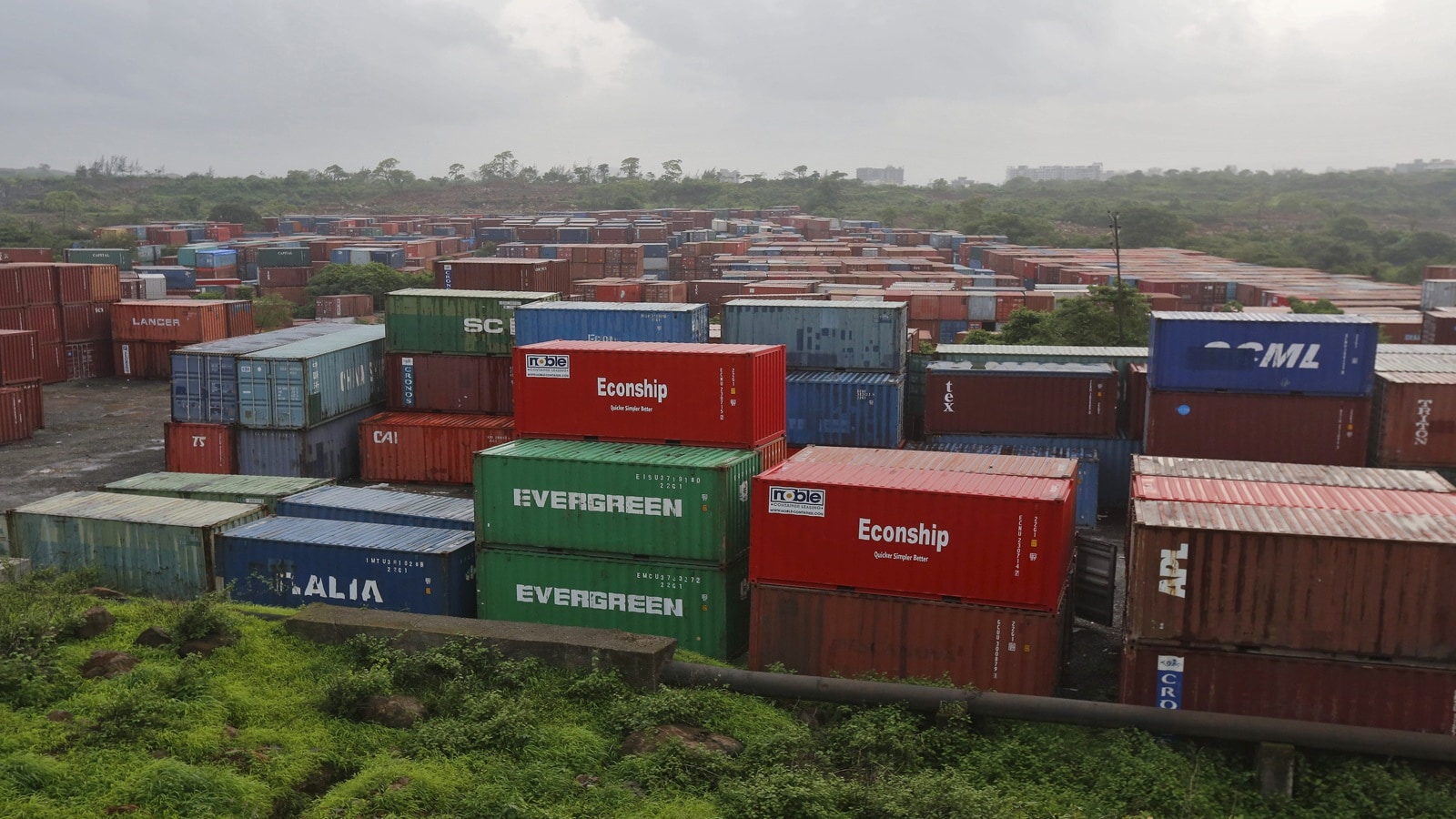
Eleven percent. Fifty point eight billion dollars. Champagne corks popping across trade desks from Mumbai to Washington.
Hold the celebration.
Every headline cheering India's merchandise exports to the United States rising 11% in April–September FY27 (up from $45.73 billion a year earlier) is reading the wrong ledger. The lazy consensus goes like this: India is conquering American shelves despite tariff threats and trade friction; supply chains are shifting; victory is locked in.
That story is comfortable. It is also shallow.
A gross export figure measures what leaves the port at invoice value. It does not measure domestic value added, margin compression, import leakage, or whether an exporter is quietly eating tariff friction just to keep a buyer slot alive. When you celebrate top-line shipment growth without checking what sits underneath the bill of lading, you confuse movement with muscle.
The Lazy Consensus Everyone Is Repeating
Standard trade coverage treats a bilateral export jump like a scoreboard tally. Higher number equals stronger hand.
Three assumptions drive that lazy consensus:
- Top-line export growth proves structural competitiveness. If shipments to the US rise 11% over six months, pundits assume Indian factories suddenly became cheaper, faster, or more indispensable.
- Trade friction is a settled obstacle. Because shipments rose during ongoing bilateral trade negotiations and shifting tariff rhetoric, commentators declare tariffs toothless.
- Bilateral surplus means broad trade health. Looking at one corridor in isolation ignores the broader supply-chain bill coming due elsewhere—especially in Asia, where imports often feed the very goods shipped West.
Ask a sharper question instead. When a manufacturer ships $100 worth of electronics or assembled hardware out of Chennai or Bengaluru to a US buyer, how much of that value was actually forged inside India—and how much walked in through a bonded warehouse as imported sub-assemblies, printed circuit boards, and components from East Asia?
Gross export value is the total customs value of goods leaving a country's border. Domestic value added is the portion of that export's value created by domestic labor, capital, raw materials, and engineering within the exporting economy.
Conflate those two terms and you will mistake assembly pass-through for industrial depth.
What the Bill of Lading Actually Hides
I have watched exporters and industrial lobbies blow millions chasing headline volume targets while net margins bled out on the back end. A mid-sized component maker lands a prestigious US retail or industrial contract. Order books double. Press releases tout record shipment growth. Six quarters later, working capital is choked, currency swings and freight surcharges eat the spread, and the exporter is trapped selling low-margin volume just to service debt.
Trade economists from Dani Rodrik to Richard Baldwin have spent decades warning against mistaking gross trade integration for deep domestic industrial capability. When supply chains splinter across borders, final assembly often relocates ahead of deep component manufacturing. That is standard modular production. Calling it a permanent structural triumph skips the hardest part of the math.
Consider the bigger trade picture surrounding this six-month window. During April–September FY27, India's exports to Asia rose 21% to $103.84 billion and shipments to Africa jumped 44% to $31.42 billion, alongside the 11% gain to the US reaching $50.80 billion. Meanwhile, data covering January–September 2026 showed India's exports to China up 40.7% to $19.26 billion against imports from China climbing 23.3% to $125.19 billion—leaving a $105.93 billion trade deficit over that nine-month stretch.
Read those numbers together. You do not have to guess that every dollar exported to the US is pure homegrown value. Even where electronics or industrial goods post gains, imported intermediate inputs frequently sit inside the cost stack.
Imagine a scenario where an Indian exporter ships $50 million of assembled goods to the United States after importing $34 million in specialized components, chips, and specialty inputs from East Asia, paying logistics and compliance costs, and conceding a 4% price discount to keep a major American account. Gross exports rise by $50 million. Net retained value inside the domestic economy is a fraction of that number—and if tariff rules tighten on origin or transshipment, the fragile margin evaporates overnight.
Why People Ask the Wrong Trade Questions
When headlines trump an 11% rise to $50.8 billion, readers naturally ask the wrong follow-up questions.
"Does an 11% rise mean US tariffs failed to slow Indian exports?"
Wrong question. A six-month rise proves short-term resilience and order-book momentum, not immunity to trade friction. Buyers front-load orders ahead of policy shifts, absorb costs temporarily, or lean on specific categories less exposed to immediate punitive duties. Treating six months of growth as permanent tariff proof is like claiming a house is fireproof because the kitchen stove stayed on during a warm afternoon.
"Should India celebrate overtaking rivals on gross US export growth?"
No. Market share measured by gross customs value is a vanity metric if it rests on thin domestic value capture or subsidy-dependent scaling. Competing purely on cost or final-stage assembly keeps suppliers replaceable. Real leverage comes from owning bottlenecks—precision tooling, proprietary chemistry, certified testing, and deep supplier ecosystems—that buyers cannot swap out next quarter.
"Are exporters safely insulated as long as US demand holds up?"
Not even close. Over-reliance on any single giant consumer market—or on imported upstream inputs to feed it—creates twin vulnerabilities. Policy shifts in Washington can rewrite landed costs in weeks; supply hiccups in East Asia can stall factory lines just as fast.
Unconventional Moves That Actually Build Export Power
If you run an export business, advise industrial policy, or allocate capital in trade-exposed sectors, stop chasing raw shipment milestones. Do this instead:
- Audit net dollar retention per container, not gross FOB value. Track imported input content, freight volatility, compliance overhead, and net cash conversion on every SKU shipped to the US. Cut volume lines that starve working capital.
- Build Tier-2 and Tier-3 domestic suppliers before expanding final capacity. Final assembly without local depth leaves you vulnerable to origin scrutiny and upstream price spikes. Anchor local tooling, packaging, and sub-components.
- Price for policy volatility in every contract. Build tariff, currency, and freight adjustment clauses into US buyer agreements rather than absorbing shocks silently to win applause at renewal time.
- Diversify buyer concentration, not just country labels. Selling to three mid-sized buyers across North America, Europe, and Asia with healthy margins beats leaning 80% of capacity on one aggressive US buyer squeezing price.
Where This Bet Can Backfire
Being contrarian does not make you infallible. Calling an 11% export surge a fragile illusion carries real downside risk.
If India uses this momentum to push structural reforms—lowering logistics friction, deepening local component ecosystems, and negotiating durable trade access—then today's assembly gains can become tomorrow's high-value industrial base. Skeptics who dismiss the entire trend as fake could underinvest in sectors that genuinely compound over a five-year cycle.
Trade data is a warning light and a clue, never a verdict. Count the value that stays behind after the ship sails.