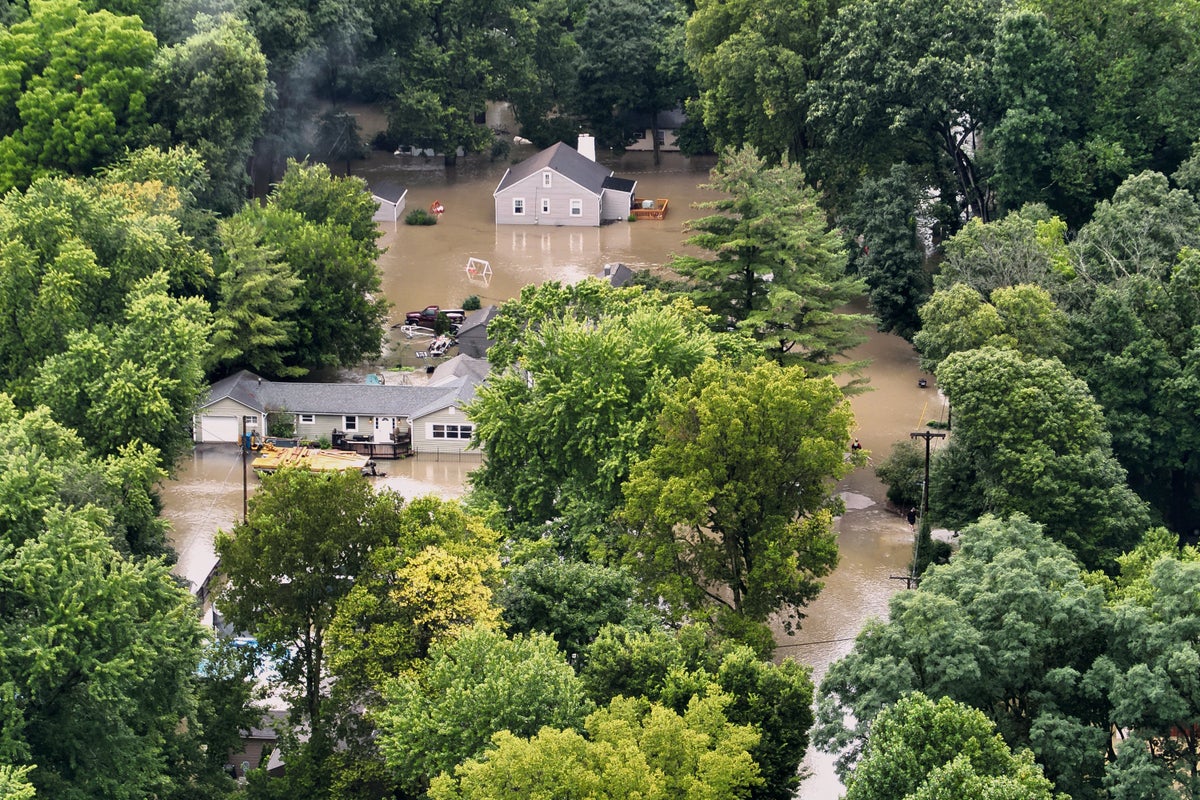
Five people are dead and homes are completely swallowed by water across Indiana. The water is still rising. When local officials call an emergency a once-in-a-lifetime disaster, people tend to brush it off as typical weather hype. But the brutal reality along the White River right now proves otherwise. More than 11 inches of rain dropped over a brutal two-day window, turning quiet river corridors into raging channels. If you live anywhere near the Midwest waterways, this event changes the baseline for what normal flood preparation looks like.
Understanding the Scale of the Deluge
The numbers coming out of central Indiana tell a terrifying story. The White River surged past marks that have stood for more than a century, cresting above 24 feet in communities like Anderson and Noblesville. That shatters previous records set way back in 1913. Recently making waves in this space: Why the India Israel Alliance is Built on Cold Pragmatism Not Shared Values.
Think about that timeline. For over a hundred years, generations built homes, planted gardens, and mapped out towns believing they understood the absolute worst-case scenario. Mother Nature just tore those blueprints up.
Upstream downpours funneled millions of gallons downstream toward northern Indianapolis suburbs and Hamilton County. Residents who thought they were safe because their immediate neighborhood stayed dry suddenly found themselves walled off by brown, rushing water. More insights into this topic are explored by TIME.
The Human Toll and Dangerous Misconceptions
Tragically, five lives have already been lost to the storm. The victims include a young boy killed when a heavy tree fell onto his home in Jennings County, a woman whose vehicle was swept away after she attempted to drive through deep floodwaters in Delaware County, and a teenager swept into a swollen river.
People constantly underestimate how little water it takes to turn deadly. Emergency crews repeat the same warnings during every single major weather event, yet drivers still test their luck against flooded roads.
- Just six inches of moving water can stall out a standard vehicle.
- Eight inches of moving water has enough force to float and sweep a car right off the asphalt.
- Barely three inches of rushing water can knock an adult completely off their feet.
When you see a water-covered street, turning around isn't an inconvenience. It is survival.
Emergency Responders Push to the Limit
First responders are working around the clock utilizing rescue boats and National Guard vehicles to pull trapped residents from porches and rooflines. In Indianapolis alone, fire department personnel completed nearly a hundred water rescues alongside dozens of stranded pets in a single afternoon.
Evacuations stretched across multiple counties. Entire mobile home communities in Tipton County faced urgent clearance orders, while hundreds of families self-evacuated from northern Indianapolis neighborhoods trapped between swollen rivers and parallel canals. Governor Mike Braun sought federal disaster assistance, working alongside local mayors to secure resources as emergency declarations stacked up.
How to Protect Your Property Before the Next Surge
If you live in a flood-prone zone, you cannot wait for an official knock on your door. Water moves faster than expected, and evacuation routes vanish in minutes.
Keep emergency bags packed with essential documents, medications, and chargers stored high up in your home, well away from basement levels. Check your homeowner's insurance policy today. Standard policies almost never cover rising groundwater or river overflows; separate flood coverage requires a dedicated policy with a mandatory waiting period before it kicks in.
Pay attention when local management agencies sound the alarm. Stay away from riverbanks, avoid downed power lines hidden in standing water, and heed every road closure sign immediately.