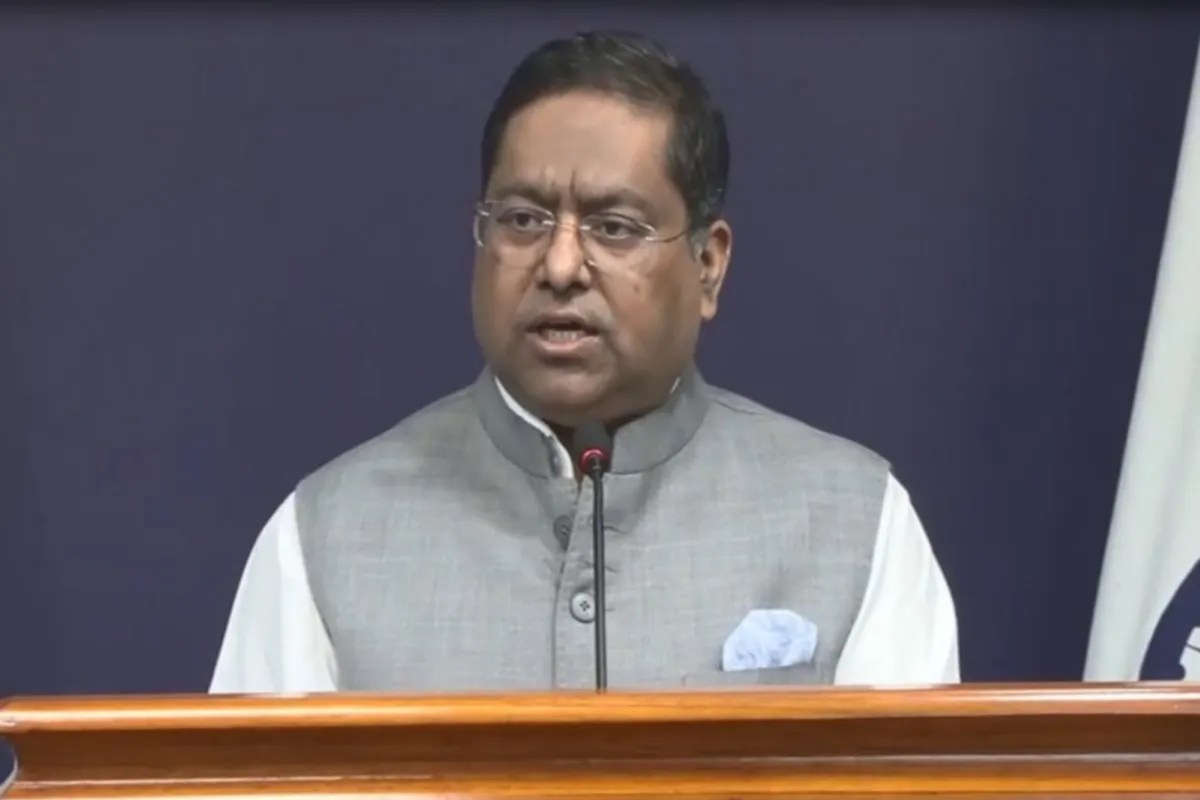
Geopolitics rarely operates like a clean balance sheet. Headlines screamed about the Maldives settling its financial debts, but the real story hides in the interest ledger. When Ministry of External Affairs spokesperson Randhir Jaiswal stepped up to brief the media, he dropped a detail that most casual observers missed. The island nation just cleared its $150 million loan from India, but New Delhi quietly absorbed roughly $45 million—hovering right around 430 crore rupees—in total interest payments accumulated over five years.
People love to frame international relations through a lens of cold, transactional rivalry. They want every dollar spent to look like a strict business loan with high penalties. Reality is far messier. Governments dealing with regional stability understand that letting a close neighbor drown in liquidity crises creates security risks far more expensive than a few hundred crores in written-off carrying costs.
Let's look at how this financial backstopping actually worked. Back in 2019, the State Bank of India subscribed to treasury bills totaling $150 million to rescue Malé from a tight spot. Normally, short-term debt gets repaid fast or triggers a severe financial crunch. Instead, those bills were rolled over six separate times. Each extension lasted a full year. Every time a sovereign debt instrument gets rolled over, someone has to pay the carrying cost. Placing that crushing fiscal burden squarely on an economy already struggling with foreign exchange reserves would have pushed the island nation into total default.
India didn't want that. So, the Indian government stepped in and covered the interest bill entirely.
Understanding the True Cost of Regional Diplomacy
You can't talk about this move without acknowledging the political climate surrounding it. Relations between New Delhi and Malé have experienced notable shifts depending on who sits in the presidential office. Administrations change, political rhetoric heats up, and domestic pressures in the Maldives often push leaders to posture against traditional partners.
Yet, strategic policy doesn't swing wildly with every election cycle. India's Neighbourhood First doctrine isn't just a catchy phrase printed on diplomatic pamphlets. It is a long-term insurance policy. When you share maritime boundaries with vital shipping lanes that carry global commerce, you cannot afford a failed state sitting in your backyard.
Randhir Jaiswal made it clear during his briefing that financial support isn't handed out in a vacuum. It forms part of a massive, ongoing development partnership. While the Maldives government managed to scrape together the funds to clear the principal amount of those treasury bills—with the final $50 million tranche paid out recently—the fact remains that the interest was entirely subsidized by India.
That is what real leadership looks like in a neighborhood. You don't squeeze a partner when they're down. You build a bridge so they can walk across it.
Beyond the T Bills Currency Swaps and Long Term Bonds
If you think the $150 million treasury bill arrangement is the extent of India's financial footprint in the Maldives, you are missing half the picture. Financial backstopping runs much deeper.
Take the currency swap facility, for instance. New Delhi extended an astonishing 30 billion rupee currency swap arrangement to help shore up Malé's liquidity. That gives the local monetary authority breathing room when foreign reserves dip dangerously low. It prevents panic buying, currency devaluation, and severe import shortages.
Then there are the Treasury bonds. The State Bank of India didn't just stop at short-term T-bills. SBI subscribed to a massive $350 million worth of Maldivian Treasury bonds. These aren't overnight notes; they carry validity stretching all the way into 2029 and 2030.
Let that sink in. India has tied a portion of its financial health directly to the long-term stability of the Maldivian economy through bonds that won't mature for years. Critics who claim New Delhi lacks a coherent economic strategy in the Indian Ocean simply aren't looking at the ledger.
Why Economic Diplomacy Trumps Short Term Headlines
Most people misunderstand how regional power works. They think it's about aircraft carriers, naval patrols, and loud diplomatic warnings. Those things matter, sure. But food security, currency stability, and debt relief keep nations stable far more effectively than military hardware ever could.
India supplies essential commodities to the Maldives without interruption. Rice, wheat, sugar, pulses, stone aggregate, and river sand flow regularly. When global supply chains fracture or local inflation spikes, these shipments keep grocery store shelves stocked in Malé.
Think about what happens if an island nation runs out of food or foreign exchange. Panic sets in. Governments collapse. Radical elements take root. By absorbing 430 crore rupees in interest payments, India effectively purchased regional stability at a bargain price.
Compare that figure to the astronomical cost of managing a hostile or collapsed state right on your maritime border. It's pocket change compared to the security dividend it pays.
The settlement of the final $50 million tranche marks the end of a specific five-year chapter. It closes the book on that particular round of treasury bill rollovers. But make no mistake, economic engagement between the two nations is only evolving. As the 2029 and 2030 bond maturity dates approach, both capitals will continue a complex dance of financial interdependence.
You can complain about government spending or debate the merits of foreign aid all day long. But in the brutal arena of international relations, keeping your neighbors solvent isn't charity. It's survival.