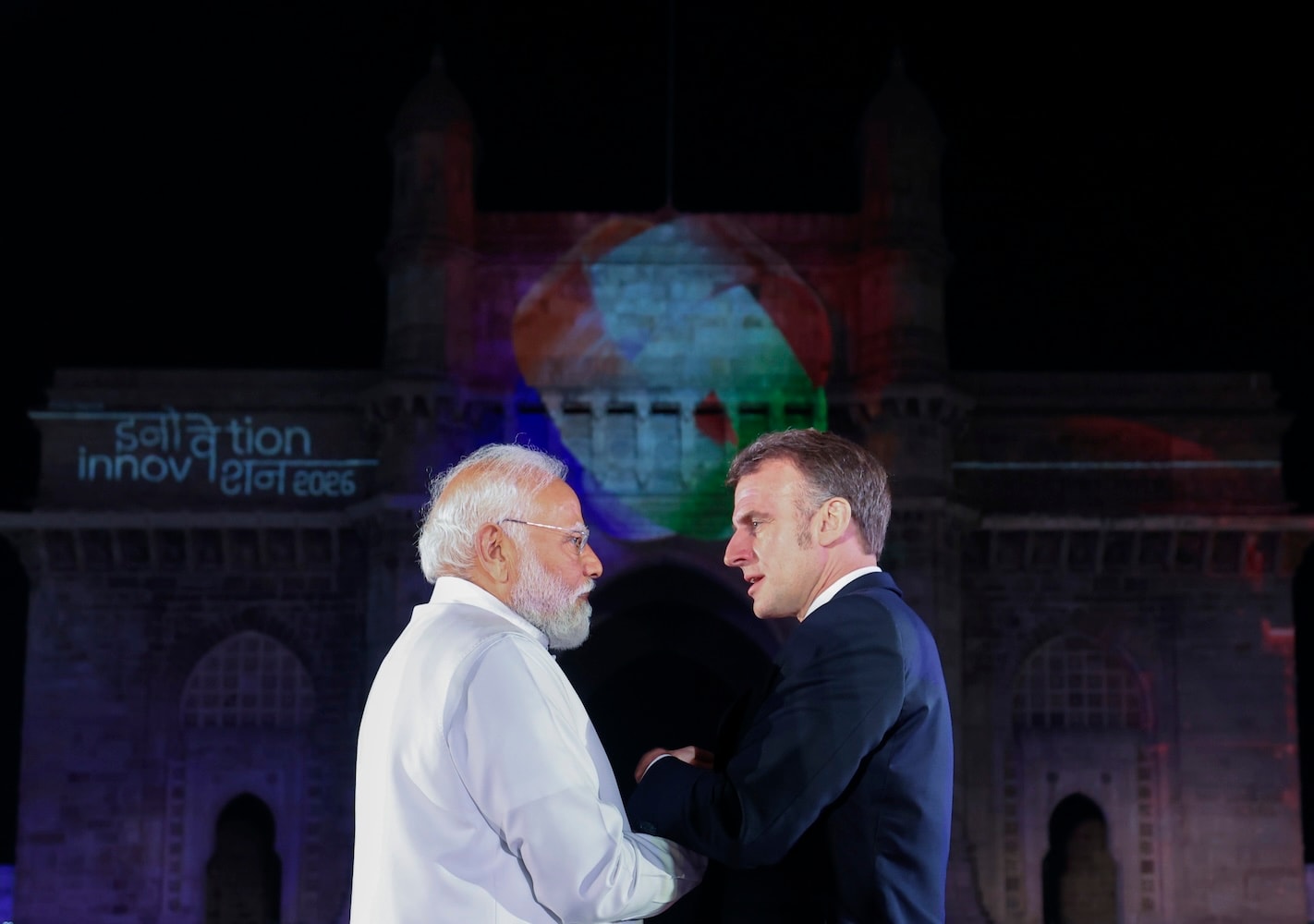
Geopolitics usually moves at a glacial pace, packed with endless handshakes and vague statements. But the recent meeting between Indian Prime Minister Narendra Modi and French President Emmanuel Macron in Nice just changed the script. If you think this is just another standard diplomatic photo-op, you are missing the bigger picture.
India is opening up its tightly controlled civil nuclear sector to French private companies. At the exact same time, India's Unified Payments Interface (UPI) is planting its flag deeper into French soil, starting right at Charles de Gaulle Airport in Paris.
This isn't just a routine trade update. It's a calculated, dual-track strategy. India is buying top-tier Western clean energy tech while exporting its own world-class digital infrastructure. Let's break down exactly what happened at Villa Kerylos and why these moves will alter the economic dynamics between Europe and Asia.
The SHANTI Act Opens the Nuclear Floodgates
For decades, India's nuclear sector was a fortress. Government monopolies ran everything, and foreign investors had to navigate a minefield of liability laws and bureaucratic red tape. That old playbook is officially dead.
During the talks, India highlighted the Sustainable Harnessing and Advancement of Nuclear Energy for Transforming India Act, or the SHANTI Act. This legislative shift changes everything. It alters the country's legal framework to allow domestic and foreign private firms to directly participate in Indian civil nuclear projects.
Foreign Secretary Vikram Misri spelled it out clearly after the meeting. The field is wide open for French nuclear firms. They can now enter into direct joint ventures with Indian private companies. This isn't limited to massive, traditional installations either. The real excitement surrounds Small Modular Reactors (SMRs) and Advanced Modular Reactors (AMRs).
While everyone has been watching the agonizingly slow negotiations over the massive 10,380 MW Jaitapur nuclear project in Maharashtra, the SHANTI Act shifts the goalposts. SMRs are faster to build, cheaper to finance, and much easier to integrate into a modern grid. By inviting French giants like EDF to build these modular systems alongside Indian private capital, India is accelerating its clean energy transition while bypassing state-level bottlenecks.
UPI Reaches Paris Airports and Nice
While France sends nuclear hardware to India, India is sending its digital financial system to France. The days of fighting with high credit card transaction fees or hunting down currency exchange booths at Paris airports are numbered.
UPI is launching at Charles de Gaulle Airport in Paris and across Nice. It is a brilliant piece of financial diplomacy. By making cashless, QR-code transactions instant for Indian tourists, business travelers, and students in France, India is proving that its digital public infrastructure can operate seamlessly inside the Eurozone.
This footprint matters because Europe has traditionally been protective of its banking systems. France is acting as India's primary gateway. It isn't just about making vacations easier for tourists. It introduces European financial institutions to a low-cost, high-speed payment network that handles billions of transactions monthly back home. If you can convince French merchants to adopt UPI, the rest of the European Union becomes a much easier sell.
Doubling Trade and Fighting for Supply Chains
The headlines focused heavily on nuclear energy and fintech, but the numbers reveal a much larger economic ambition. India and France officially set a target to double their bilateral trade within the next five years.
Currently, two-way commerce sits at roughly $16 billion. They want to push that past $32 billion by 2031. To make this happen, the two nations are setting up a High-Level Annual Mechanism to monitor progress, blast through trade barriers, and identify new market sectors. They are also pushing for the rapid completion of the wider India-EU Free Trade Agreement.
But trading wine, tech, and textiles isn't enough anymore. The real battleground in 2026 is resource security. Modi and Macron initiated an Economic Security Dialogue specifically designed to safeguard supply chains for critical minerals and advanced technology. India wants to ensure it has a steady supply of components for its tech manufacturing boom, while France wants a reliable, democratic partner to offset its reliance on volatile supply chains.
Startups and AI Innovation Take Center Stage
The cooperation goes far deeper than government-to-government pacts. The two leaders inaugurated the Bharat Innovates 2026 event, which brought over a hundred Indian deep-tech startups face-to-face with hundreds of global investors.
As part of the 19 separate agreements signed during the visit, France's famous mega-incubator, Station F in Paris, will take in an additional 10 Indian startups. This gives young Indian tech companies a permanent launchpad into the European market, complete with local mentors and venture capital access.
The two countries also established a Joint India-France AI Working Group. Instead of just talking about the theoretical dangers of artificial intelligence, this group will actively build out frameworks for AI governance, joint research, and startup linkages.
What This Means for Global Alliances
This meeting solidifies an undeniable trend: France is rapidly becoming India’s most reliable partner in the West. When India wants high-end defense tech without political lectures, it buys Rafale fighter jets. When it needs to upgrade its energy grid, it turns to French nuclear engineers. When it wants to test international health data collaborations, it sets up a new pilot project between the Indian Council of Medical Research (ICMR) and the French Health Data Hub.
For France, anchoring itself to India provides a massive economic counterweight in Asia. For India, a deep partnership with Paris offers advanced technology and European diplomatic support without the complications that often come with Washington or London.
The immediate next steps are clear. Watch the commercial spaces over the coming months. We will see the first corporate joint ventures under the SHANTI Act for modular nuclear reactors, and the first wave of retail data showing how many European merchants are successfully adopting Indian QR-code payments. The strategic roadmap is set, and the execution is already underway.