The standard economic playbook is broken. You’ve read the headlines. You’ve seen the "analysts" on cable news dusting off their 1973 oil crisis scripts. They tell you that a kinetic conflict with Iran will send Brent crude to $150, trigger a global inflationary spiral, and collapse the consumer economy.
They are wrong. They are lazy. They are clinging to a geopolitical reality that died the moment the first hydraulic fracturing drill hit the Permian Basin and the first high-capacity battery rolled off a Gigafactory line.
The consensus view assumes we live in a world of scarcity and static supply chains. It ignores the brutal, cold efficiency of modern capital markets and the deflationary pressure of rapid technological substitution. A war in the Middle East won't just "increase costs." It will act as a violent, necessary accelerant for a massive structural shift that will actually drive costs down in the long run.
If you’re hedging for inflation, you’re already losing.
The Oil Myth and the Permian Reality
The biggest lie currently circulating is that Iran "controls" the global energy price floor via the Strait of Hormuz.
Yes, 20% of the world’s petroleum passes through that choke point. In 1980, blocking it would have been an extinction-level event for the Western middle class. Today? It’s a temporary logistics hurdle.
The United States is now the largest oil producer in history. I have sat in boardrooms with Permian operators who can turn the taps on the moment the price hits a specific threshold. This isn't your grandfather’s oil market where OPEC dictated terms. We have a "fracklog"—thousands of drilled but uncompleted wells (DUCs)—ready to flood the market the moment a Middle Eastern skirmish creates a price spike.
When Iran threatens the Strait, they aren't threatening to starve the world of energy. They are inviting the most efficient, technologically advanced energy apparatus in human history to eat their market share. High prices are the best cure for high prices. A spike to $120 oil doesn't create permanent inflation; it creates a massive, localized investment boom in domestic production and renewables that permanently lowers the cost curve three years out.
The Substitution Effect: War as an R&D Lab
Conflict is the ultimate engine of efficiency. The "everything will cost more" crowd forgets that when a specific input becomes prohibitively expensive, industry doesn't just pay the bill and cry. Industry deletes the input.
Imagine a scenario where the cost of shipping through the Suez Canal triples due to regional instability. The "lazy consensus" says your sneakers get 10% more expensive. The reality? That price delta becomes the venture capital that funds the next generation of automated, localized manufacturing.
We saw this during the 2021 supply chain crunch. Companies didn't just wait for the ports to clear; they began "near-shoring" and "friend-shoring." A war with Iran is the final nail in the coffin for the globalized, just-in-time manufacturing model that relied on cheap, vulnerable shipping lanes.
- Energy Transition: High oil prices are the greatest marketing tool Tesla and BYD ever had.
- Logistics: Drone-based short-haul delivery and automated trucking get their ROI shortened from decades to months when diesel spikes.
- Materials: We stop using petroleum-based plastics and start using bio-synthetics because the math finally works.
By making the "old way" of doing business expensive, a conflict forces the world into a "new way" that is inherently more efficient and, therefore, deflationary.
The Great Debt Deleveraging
Everyone screams about the "cost of war" adding to the national debt. They point to the trillions spent in Iraq and Afghanistan. They ignore how modern warfare is actually fought.
We are moving away from "boots on the ground" nation-building—which is inflationary because it requires massive human labor and physical infrastructure—toward "attrition via silicon."
The cost-to-kill ratio has shifted. A $20,000 loitering munition can take out a $100 million corvette. We are seeing this in Ukraine, and we will see it in any conflict with Iran. This shift in military spending isn't a drain on the treasury in the way the Vietnam War was; it is a massive subsidy for the domestic robotics and AI sectors.
The money being "spent" on the war isn't disappearing. It is being recycled into the most productive, high-growth sectors of the Western economy. This is a transfer of wealth from stagnant, old-world energy regimes to high-margin, tech-driven economies.
The False Narrative of "Sector-Wide Increases"
Let's dismantle the specific claims. The competitor article likely argues that food prices will skyrocket because of fertilizer costs.
Let's look at the data. Natural gas is the primary feedstock for nitrogen-based fertilizer. Does Iran control the Marcellus Shale? No. Does Iran control the massive LNG export terminals in Qatar or the US Gulf Coast? Partially, but not enough to break the back of global supply.
What actually happens is a radical shift in precision agriculture. When fertilizer costs rise, farmers stop "spray and pray" techniques. They adopt AI-driven, per-plant fertilization. They use satellite imagery to optimize yields.
The result? The first year is painful. The second year is a wash. By the third year, the industry is 30% more efficient and food prices drop below their pre-war levels.
The "Iran War" isn't a story about rising costs. It's a story about the forced retirement of inefficient legacy systems.
The Risk Nobody Mentions
If you want to be worried about something, don't worry about your gas bill. Worry about the "Geopolitical Risk Premium" being priced out of the market entirely.
For 50 years, the world has operated with a "fear tax" on energy. If a conflict actually happens and the world discovers that we can, in fact, survive perfectly well without Iranian oil or a peaceful Strait of Hormuz, that tax disappears forever.
The real loser in an Iran conflict isn't the American consumer. It's the concept of the Middle East as a central pillar of global stability. Once the world proves it has outgrown the need for this specific geography's "permission" to function, the capital flight from the region will be absolute.
We are looking at the potential "de-valuation" of an entire quadrant of the globe. That isn't inflationary. That is a massive, global write-down of old-world assets.
The Actionable Truth
Stop listening to the people telling you to buy gold and canned goods. They are selling you a version of the world that hasn't existed since the fall of the Berlin Wall.
If you want to survive the economic fallout of a Middle Eastern conflict, you don't hedge for higher costs. You invest in the technologies that make those costs irrelevant.
- Bet on the Substitutes: Look at the companies making the "alternative" viable, not the "incumbent" expensive.
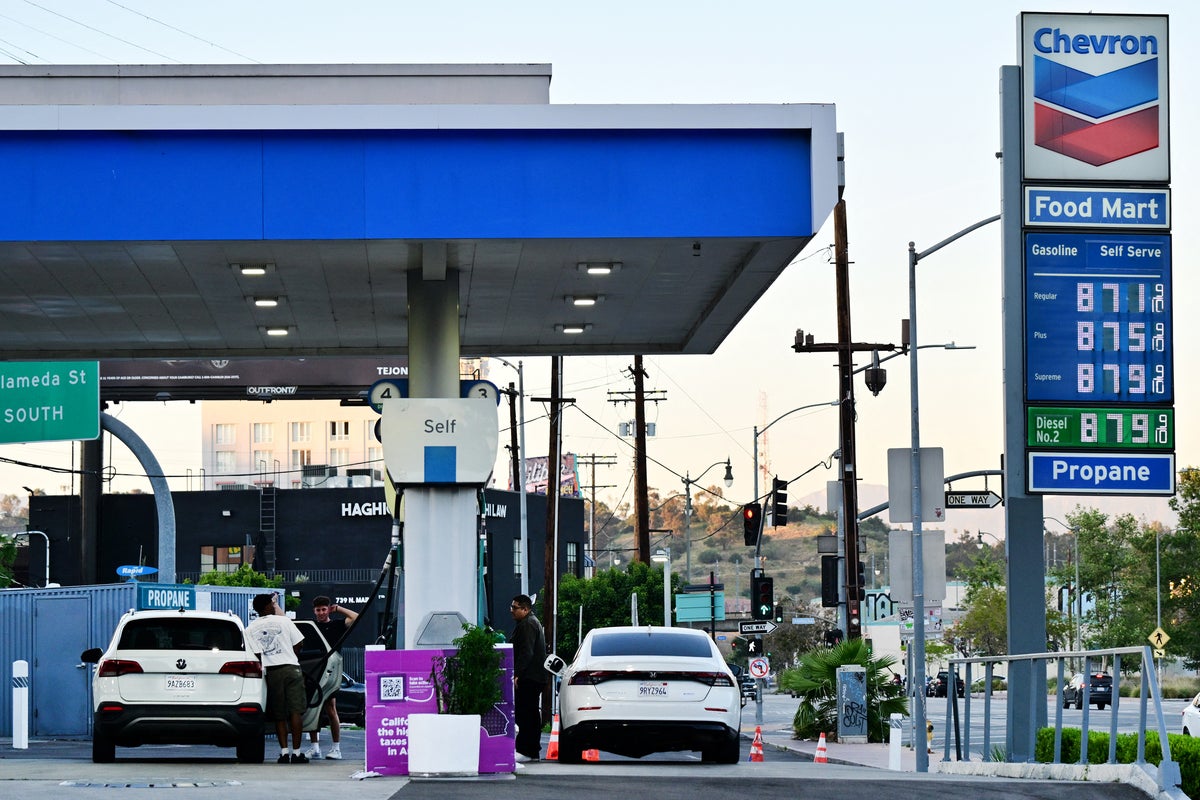
- Ignore the Pump: Gas prices are a lagging indicator of a dying era. The real move is in the power grid.
- Watch the Margins: Companies that can't adapt to higher energy costs in the short term don't deserve your capital. The "great filter" is coming.
The "Iran War" isn't the end of the global economy. It's the beginning of its most aggressive upgrade cycle in a century.
Stop mourning the old world. Start pricing the new one.