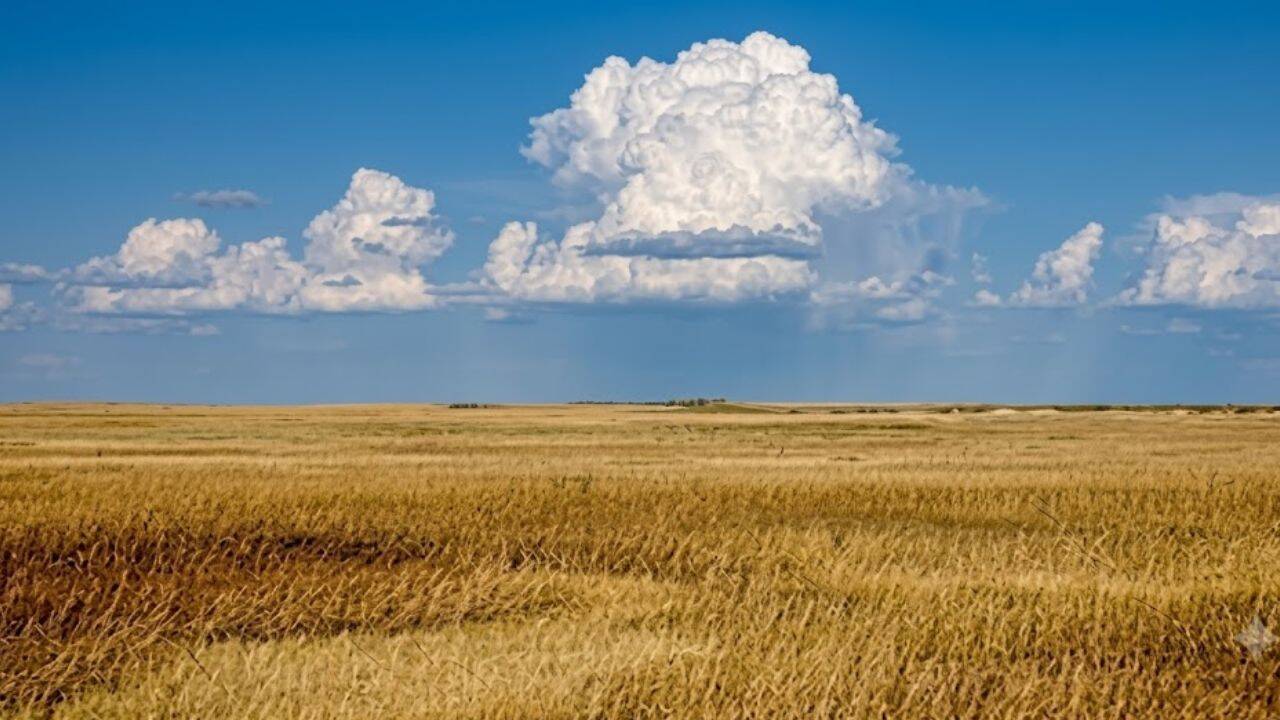
A dying stretch of commercial farmland in central Illinois has undergone a radical ecological inversion. Where dense rows of patented hybrid corn once dominated the horizon, an intentionally engineered native prairie now thrives with 134 distinct plant species. This transformation challenges the bedrock assumptions of modern midwestern agriculture. It proves that depleted topsoil can recover, but the process exposes a massive chasm between corporate farming models and ecological restoration reality.
For over a century, the story of the American Midwest was written in plow-lines and tile drainage. Farmers cleared the original tallgrass ecosystem—a deep-rooted wilderness that once stretched across millions of acres—to feed a global commodity market. The result was unprecedented grain production paired with catastrophic ecological debt. Nitrogen runoff choked local watersheds. Topsoil eroded into dust or washed down the Mississippi River. The conversion of a single Illinois cornfield back into a thriving prairie ecosystem offers a glimpse into what happens when nature reclaims its territory, yet it also highlights the immense friction required to reverse decades of intensive cultivation.
The Cost of the Monoculture Machine
Industrial agriculture relies on a simple premise. Strip the earth of biological complexity, inject massive quantities of chemical inputs, and maximize annual yield. This system works exceptionally well for short-term balance sheets. It performs terribly over centuries.
When a piece of land is farmed for corn year after year, the soil microbiome undergoes a brutal simplification. Earthworms, beneficial fungi, and native bacteria struggle to survive under heavy synthetic fertilizer applications and chemical weed control. The soil loses its natural architecture. It compacts easily, drains poorly, and requires ever-larger doses of chemical assistance to produce a viable harvest.
Reversing this trajectory is not as simple as turning off the tractor and walking away. Left untended, a retired cornfield does not magically transform into a rich prairie. It usually turns into a wasteland of invasive weeds. Canada thistle, giant ragweed, and smooth brome take advantage of the disturbed earth, choking out native vegetation and locking the soil in an arrested state of ecological degradation.
The transformation of the Illinois site required deliberate, aggressive intervention. Technicians and restoration ecologists did not just scatter seeds and hope for the best. They waged a multi-year campaign against decades of agricultural residue and chemical legacy.
Beneath the Surface The Soil Rehabilitation Battle
The true battleground of prairie restoration lies underground. A corn plant features roots that extend a few feet into the soil, designed to absorb heavy doses of nitrogen and water provided by human hands. Native prairie plants operate on an entirely different evolutionary timeline.
Big bluestem, Indian grass, and compass plants plunge roots ten to fifteen feet deep. These massive root systems pump organic carbon deep into the earth, creating a sponge-like soil structure that can absorb torrential rainfall and hold moisture through severe droughts. But waking up a sleeping soil profile requires patience.
The restoration team faced years of legacy chemical persistence. Synthetic fertilizers and herbicides linger in the soil profile, creating a hostile environment for sensitive native seedlings. To break this cycle, workers implemented targeted burning schedules and mechanical clearing. They systematically stripped away the invasive canopy that protected the old weeds. They introduced mycorrhizal fungi to jumpstart the biological communication network beneath the surface.
Without these underground allies, native seeds simply wither. The soil must be coaxed back to life, molecule by molecule. It is a slow, unglamorous process that exposes the fragility of industrial earth management.
Furthermore, the historical alteration of the hydrology compounds the difficulty. Early settlers installed miles of subsurface clay tile lines to drain the naturally marshy prairie soils of Illinois, turning wetlands into high-yield grain fields. Re-establishing a native prairie often requires disabling or managing these drainage tiles so that water can pool naturally during spring thaws, reviving the ephemeral wetlands that once supported diverse waterfowl and amphibian populations. Without addressing the hidden plumbing of the old farm, native plants struggle to find the moisture regimes they evolved alongside.
Seeds of Resistance Why 134 Species Matters
Diversity is the ultimate insurance policy for an ecosystem. Monocultures are notoriously fragile. A single pest outbreak or weather anomaly can wipe out an entire corn harvest because every plant shares the exact same genetic vulnerabilities.
Cataloging 134 species in a single restored plot represents a massive ecological achievement. This is not just a random collection of wildflowers. It is a functional web of life. Early bloomers like pasque flowers feed waking insects in the spring, while late-season asters sustain migrating pollinators deep into autumn. Legumes pull atmospheric nitrogen down into the soil naturally, eliminating the need for synthetic fertilizers. Predator insects find permanent habitat, keeping agricultural pests in check without chemical intervention.
When an ecosystem reaches this level of complexity, it achieves self-regulation. Rainwater infiltrates the ground instead of pooling on the surface and causing floods. Carbon is sequestered in deep root zones rather than escaping into the atmosphere. The land begins to heal itself.
Yet, achieving this diversity requires immense precision. Sourcing local ecotype seeds—genetics adapted specifically to the soil and climate of that specific county—is a logistical hurdle. Commercial seed companies do not sell native prairie blends by the ton. Conservationists must harvest seeds by hand from remnant prairies along railroad tracks and old cemeteries, preserving the unique genetic signatures of a vanishing era.
The collection process demands botanical expertise. Workers must identify plants in various stages of growth, timing their harvests precisely when seeds reach maturity. Storing and stratifying these seeds—often requiring months of cold, damp storage to mimic winter conditions—adds another layer of scientific rigor to the endeavor. Without this meticulous attention to genetic lineage, a restored field risks becoming a monoculture of a different sort, dominated by a few aggressive native species that crowd out the rarer components.
The Return of the Fauna and Microclimate Shifts
As the floral inventory expanded past the hundred-species mark, biological responders materialized almost immediately. Ground-nesting birds such as bobolinks and Henslow's sparrows reappeared within two seasons, signaling that the structural density of the vegetation finally matched their nesting requirements.
Insects that had been absent from the acreage for decades returned. Specialist pollinators, which rely entirely on specific native plants to complete their reproductive cycles, established permanent colonies. Below ground, the return of deep-rooted vegetation altered the physical microclimate of the soil. Ground temperatures stabilized, dropping significantly during peak summer heatwaves compared to the adjacent bare corn ground. This thermal moderation protected microbial populations from baking in the sun, accelerating the breakdown of organic matter into stable humus.
The transformation proved that biology is remarkably resilient when given structural diversity. Yet, these animals and insects remain isolated within their pocket of sanctuary. Without continuous corridors connecting this restored prairie to other natural areas, wildlife populations face genetic bottlenecks that threaten their long-term survival.
The Economic Friction of Giving Land Back
Restoring a cornfield to a prairie sounds noble on paper. In practice, it faces severe economic headwinds.
Land in the American Corn Belt carries high financial value. Property taxes, cash rents, and opportunity costs dictate that every square foot must turn a profit. Converting productive crop acreage into non-revenue-generating native habitat requires capital, government subsidies, or deep-pocketed private backing.
Farmers operating on tight profit margins cannot simply afford to retire forty acres of good corn ground to grow switchgrass and coneflowers. Commodity markets reward volume, not biodiversity. Federal crop insurance programs historically penalized farmers who took land out of production for conservation purposes, though policy shifts have slowly begun to accommodate ecological buffers.
The economic reality forces a hard question. Can a society built on high-yield grain production afford to give land back to nature on a scale that actually matters? Right now, prairie restorations remain small, isolated pockets of green surrounded by an ocean of corn and soybeans. They are islands in a hostile sea.
The cost equation involves more than just upfront seed and labor expenses. Long-term management requires specialized equipment, prescribed burn crews, and continuous monitoring to prevent invasive species from staging a comeback. A prairie is not a set-it-and-forget-it installation. It requires active stewardship year after year, turning ecological restoration into a permanent line item on an operational budget.
Beyond the Fence Line Scaling the Restoration
Isolated success stories do little to reverse regional watershed collapse. A single 134-species prairie is a triumph for the biologists who built it, but it remains a drop in the bucket compared to the millions of acres of intensely farmed land across the Midwest.
Scaling this model requires rethinking how agricultural subsidies function. What if financial incentives rewarded farmers not just for bushels harvested, but for carbon sequestered, water filtered, and biodiversity restored? Some agricultural economists argue for radical restructuring of farm bill funding, moving away from pure production support toward ecosystem service payments.
Others propose regenerative farming models that blend food production with native restoration. Strip-cropping, alley cropping, and the introduction of perennial grains offer a middle ground where farmers can harvest crops without entirely destroying the soil microbiome. These methods do not recreate a pristine tallgrass prairie, but they move agricultural land significantly closer to ecological stability.
The transformation in Illinois proves that the land remembers what it used to be. Given the right conditions, the native flora will return. The question is whether our economic and political systems possess the willingness to let it happen on a scale that matters, or if these restored prairies will remain rare museum pieces of a forgotten ecosystem.
The tractors continue to run along the fence line. The corn market dictates the price of bread and fuel. But deep inside the restored acreage, a compass plant reaches ten feet into the autumn air, anchoring its roots in soil that is finally beginning to breathe again.