Paper.
That is the first thing a man notices when a steel door clicks shut behind him in a foreign country, leaving behind the humid air of his homeland and the familiar noise of traffic outside a crowded café. You think espionage looks like midnight boat drops in fog or encrypted satellites beaming secrets across the stratosphere. Usually, it looks like a manila folder sliding across a table under fluorescent lights.
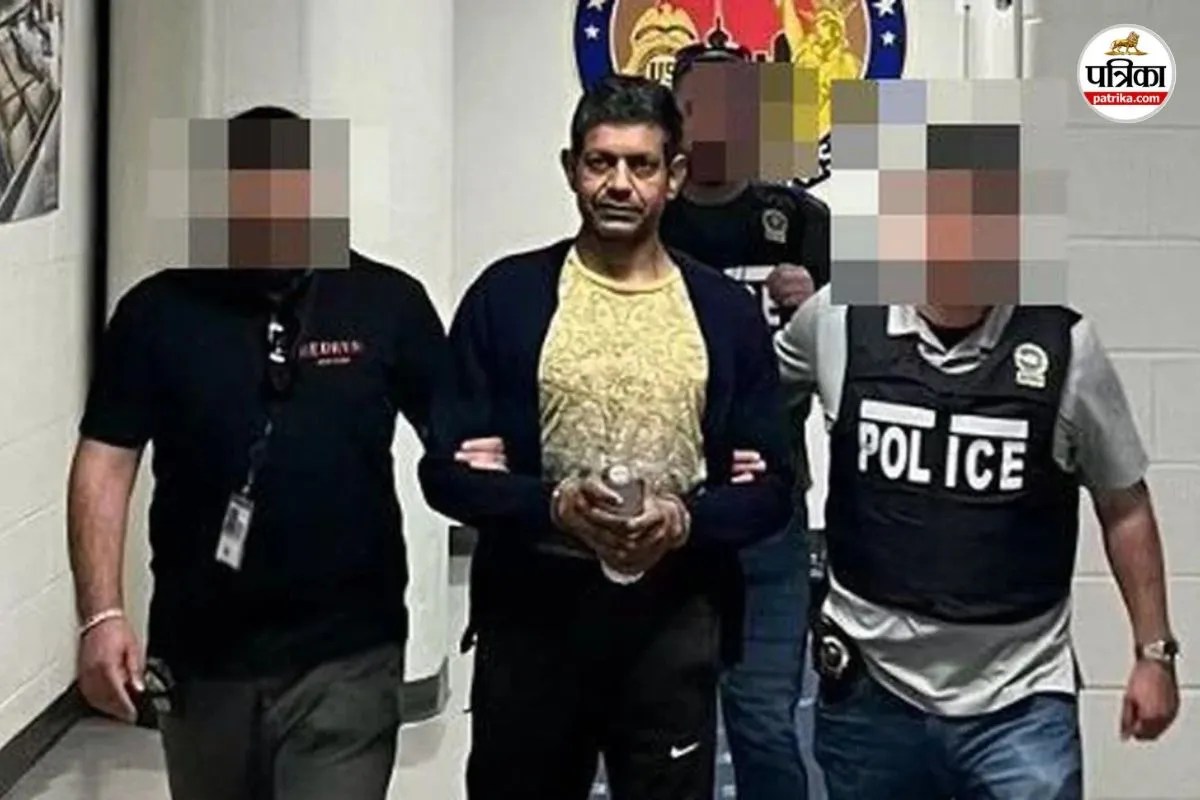
In the case that ended with Nikhil Gupta receiving a sentence of nineteen years and seven months in a United States federal court, the price tag attached to a human life was set at one hundred thousand dollars. A contract killing. A quiet transaction arranged across borders. Yet the real drama did not happen in a dark alley with a smoking gun. It happened inside a quiet sting where an undercover operative became the bridge between a plot and its unraveling.
Stop and think about how strange modern crime has become.
A target lives in one place. A middleman moves through another. Money shifts through channels designed to look ordinary until someone pulls the right thread. When an undercover agent steps into that chain, the conversation changes. Every word spoken in a hotel lobby or typed into a messenger app carries a weight that neither speaker can fully measure in the moment.
To understand how a plot like this takes shape—and why it so often collapses from the inside—consider a hypothetical scenario grounded in how intelligence and federal law enforcement operations typically unfold. Picture a fictional broker we will call "Rajan" sitting in a quiet lounge. Rajan believes he is dealing with a reliable fixer who can make a problem disappear quietly for a fee. Across from him sits "David," an operative working undercover. David nods at the right pauses. He asks practical questions about timing, photos, and advance payments. To Rajan, David looks like a door swinging open. In reality, David is a mirror recording every angle of the room.
This is a metaphor, not a literal transcript of any single meeting, yet it captures the exact psychological trap at the heart of hired-hit conspiracies. Once you bring an outsider into a murder-for-hire plan, secrecy stops being a shield and becomes a gamble. Every extra person who knows the name, the address, or the price doubles the chance that one of them is already answering to someone else.
I have spent years reporting on transnational crime and watching how people convince themselves they are invisible right up until the handcuffs appear. The hardest part to explain to friends who ask about these cases is the sheer banality of the buildup. There is no orchestral swell when a fatal mistake is made. Often, it is just a casual assumption—assuming a contact is loyal, assuming borders insulate a scheme from American prosecutors, assuming cash moves without leaving fingerprints.
It feels confusing at first. How does a case stretch from overseas planning all the way into a U.S. courtroom for a sentence measured in nearly two decades?
Federal jurisdiction in the United States is wider than many people realize when a plot touches American soil, American citizens, or networks tied to the U.S. Even when arrangements begin abroad, prosecutors build cases around communications, financial trails, co-conspirators, and overt acts that connect the scheme to U.S. law. Once a federal jury or guilty plea locks those elements into place, sentencing guidelines turn calculated risk into hard calendar years. Nineteen years and seven months is not a symbolic number. It is roughly seven thousand one hundred days behind bars.
Consider what happens next:
When a plot is exposed before violence occurs, people sometimes ask whether the danger was real. That question misses how law enforcement treats a contract killing. If someone pays—or agrees to pay—one hundred thousand dollars to have another person killed, the law does not wait for a tragedy to prove intent. The agreement, the steps taken toward carrying it out, and the money or promises exchanged are already enough to cross a massive legal line.
Look closely at the human cost on every side of a story like this.
There is the intended target, living with the knowledge that someone tried to put a price on their existence. Even when an undercover operation stops an attack before a shot is fired, fear has a long half-life. You look differently at strangers near your front gate. You check the lock twice.
Then there is the accused—Nikhil Gupta, in this case—facing the crushing reality of a nineteen-year, seven-month prison sentence in a foreign justice system. Nineteen years is long enough for children to grow up, for parents to age out of reach, for a life as you knew it to become history. Seven months on top of nineteen years feels almost cruel in its precision, like a clerk adding exact change at the end of a long receipt.
History has shown time and again that conspiracies built on secrecy rarely stay secret when money enters the room. In classic cold-war spycraft as much as modern federal investigations, the weak link is almost always human ego or misplaced trust. A broker wants to look capable. A buyer wants deniability. An undercover agent simply lets both of them talk until the whole picture is framed in ink.
People often wonder how undercover agents keep their nerve in rooms where stakes are measured in life, death, and decades of prison.
Training helps, of course. Scripts, cover stories, and backup teams keep an operative anchored. Yet anyone who has studied high-stakes sting operations knows that patience is the real weapon. An undercover agent does not need to rush. Time works for the investigator. Every day a suspect keeps talking, keeps confirming details, or keeps moving funds adds another brick to the case file.
Still, I will admit something that surprises people who expect neat answers: even when you know how these investigations work, the gap between human ambition and real-world consequence can still feel jarring. You read about a one-hundred-thousand-dollar murder plot, an undercover sting, and a sentence of nineteen years and seven months, and part of your mind still asks how someone thought that math would ever work out in their favor.
Maybe that is why stories like Nikhil Gupta's case stay in the mind longer than ordinary crime briefs. They strip away the glamour of intrigue and leave only cause and effect.
A decision made in secret. A hundred thousand dollars offered to end a life. An undercover agent listening closely. A courtroom gavel bringing down nearly twenty years of lost time.
When the steel door closes in the end, no amount of money can buy back the hours waiting on the other side.