Min-soo wakes up before the Seoul subway stations even unlock. Outside his high-rise apartment window, the gray morning mist hangs heavy over the Han River, blurring the silhouettes of cranes and high-tech towers that have come to define South Korea’s miraculous economic ascent. He makes his way to a cramped office in Pangyo, often dubbed the Silicon Valley of Asia, where engineers are hunched over glowing monitors, racing against a clock that never stops ticking.
They are not just building microchips or electric vehicles. They are building an insurance policy for a nation's entire future.
Across the Pacific, tectonic plates are shifting. In Washington and across the sprawling industrial corridors of America, a quiet understanding has hardened into a massive, irreversible strategy. South Korea is moving toward a monumental agreement, a sprawling pact worth more than one hundred billion dollars in industrial investments aimed squarely at the United States.
To read about this in a financial ledger is to see numbers stripped of their humanity. One hundred billion dollars. It sounds like an abstraction, a dry statistic printed in a morning broadsheet meant for weary traders in suit jackets. But numbers of this magnitude do not exist in a vacuum. They are forged from sweat, geopolitical anxiety, supply chain trauma, and the desperate, universal human desire to remain relevant in a rapidly accelerating world.
Consider what happens when a country built on exports looks at the horizon and sees gathering storms.
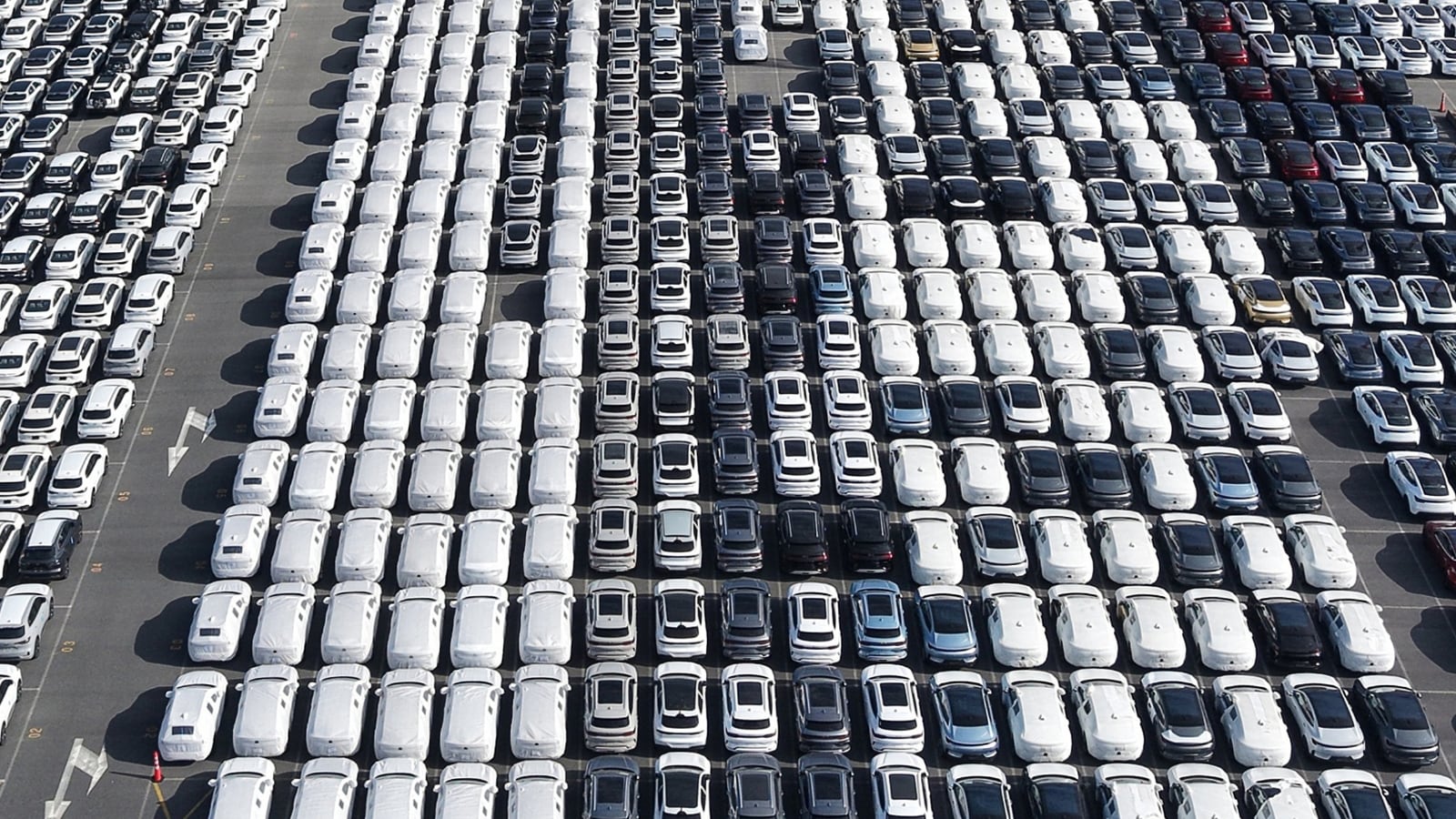
For decades, South Korea’s economic engine ran on a simple, brilliant formula: manufacture goods domestically with astonishing precision, load them onto massive container ships, and send them out to satisfy the global appetite for memory chips, smartphones, and batteries. It was a model that transformed a war-torn peninsula into an economic powerhouse. But the world of 2026 is a harsher, more fractured place. Protectionism is on the rise. Supply chains, once treated as invisible, frictionless pathways of commerce, have proven fragile, vulnerable to sudden political shocks, pandemics, and trade wars.
When the rules of global trade began to fray, the architects of Seoul's corporate and political destiny realized a stark truth. If you cannot ship your goods across borders freely, you must plant your flag inside those borders.
This incoming wave of investments is not an act of charity or a casual corporate expansion. It is a calculated, high-stakes migration of industrial might. Korean conglomerates—household names that manufacture everything from the OLED screen in your pocket to the battery cell powering your vehicle—are packing their blueprints, their engineering genius, and their capital to build massive production ecosystems on American soil.
Imagine the sheer scale of it. Acres of quiet rural land in states like Georgia, Texas, and Ohio are transforming into humming epicenters of advanced manufacturing. Steel beams rise against southern skies. Clean rooms, where workers must suit up like astronauts to prevent a single speck of dust from ruining a silicon wafer, are being constructed with frantic urgency.
Yet, this industrial relocation carries a profound internal contradiction for South Korea.
When a nation exports its factories along with its capital, it inevitably raises a haunting question among its own people. Min-soo hears it whispered in the corridors of his office and debated on late-night talk shows. If the capital goes abroad, if the manufacturing hubs are established thousands of miles away, what remains for the young graduates crowding Seoul's coffee shops, searching for a foothold in a hyper-competitive job market?
The anxiety is palpable. There is a fear of hollowing out, of trading domestic vitality for international survival. The elders remember the poverty of the post-war decades, and they guard their economic sovereignty fiercely. Every billion dollars earmarked for a factory in America is a billion dollars not spent modernizing domestic infrastructure, or so the argument goes.
But the alternative is far more terrifying.
To stay behind is to risk obsolescence. In the high-stakes arena of modern technology, scale is everything. By locking arms with the United States through massive financial commitments, South Korean firms are embedding themselves deep into the regulatory and economic fabric of the world's largest consumer market. They are buying proximity. They are buying certainty. They are ensuring that when the next global trade shock arrives, their products are already inside the fortress, not locked outside the gates.
This dynamic reveals a fascinating behavioral pattern of modern superpowers and middle powers alike. Nations can no longer afford to be mere trading partners; they must become structural partners. They must bind their economic fates together so tightly that untangling them becomes unthinkable.
The mechanics of this multi-billion-dollar pivot require an astonishing degree of diplomatic and corporate tightrope walking. Negotiators in Seoul and Washington have spent months behind closed doors, navigating complex subsidy rules, labor laws, and national security mandates. Every clause in these agreements is a battleground where national pride meets cold economic reality. American officials want high-paying manufacturing jobs restored to their communities; Korean executives want assurances that their intellectual property will be protected and that their investments will yield predictable returns.
When you look past the press releases and the handshakes at podiums, you find human stories of adaptation.
Take Sarah, a veteran supply chain manager based in Detroit, who spent twenty years watching local manufacturing wither away. Last year, she found herself welcoming a team of Korean engineers to a newly minted facility on the outskirts of the city. There was initial cultural friction, of course. Different communication styles, contrasting expectations of work-life balance, and the inevitable language barriers that turn simple meetings into exercises in patience.
Yet, something remarkable happened in the trenches of daily problem-solving. Engineers who grew up half a world apart realized they spoke the same universal language of mathematics, physics, and stubborn perseverance. They bonded over midnight takeout pizza while troubleshooting automated assembly lines. They realized their professional survival depended on making this bizarre, cross-cultural marriage work.
That is where the real history of this hundred-billion-dollar agreement is being written. Not in the sleek boardrooms where executives sign documents with gold-plated pens, but on the factory floors where diverse teams stumble through miscommunications to build something bigger than themselves.
The geopolitical chessboard is ruthless, but it is ultimately played by people trying to secure a future for their children. South Korea's massive financial leap into the American market is a recognition that the old ways of doing business are gone forever. The ocean no longer separates economies; it is merely a digital and logistical bridge that must be crossed with bolder steps than ever before.
As the morning mist clears over the Han River, Min-soo finally puts down his coffee cup and turns back to his screen. The lines of code scrolling down his monitor represent a tiny fraction of a massive economic machinery, a single gear in a wheel that spans continents. He doesn't know how the geopolitical chess match will end, or whether every factory built abroad will pay off the way the politicians promise.
He only knows that the work has to start, because standing still is the one luxury no one can afford.