The Myth of the Digital Guillotine
Pundits love a good apocalypse. The current obsession with the Strait of Hormuz as a "digital chokepoint" is the latest flavor of geopolitical alarmism. The narrative is simple, seductive, and mostly wrong: Iran, cornered and bellicose, drops a few well-placed anchors or sends a "research" sub to sever the fiber-optic arteries of the global economy, plunging the Gulf into a dark age and sending the global markets into a tailspin.
It makes for great headlines. It also ignores how modern networks actually function.
I’ve spent years looking at the messy reality of global routing tables and the physical layout of subsea infrastructure. Here is the reality the "chokepoint" crowd misses: The Strait of Hormuz is not a digital throat you can slit. It is a shallow, crowded, redundant mess of glass that is far harder to kill than the doom-and-gloomers realize.
The obsession with Hormuz is a distraction from the real vulnerabilities in global data flow. If you’re worried about a digital blackout in 2026, you’re looking at the wrong map.
Redundancy is the Antidote to Sabotage
The primary argument for the "Hormuz threat" rests on the idea that these cables—like the Asia-Africa-Europe 1 (AAE-1) or the FALCON network—are fragile, singular points of failure. This is a fundamental misunderstanding of Border Gateway Protocol (BGP) and the nature of modern mesh networking.
Internet traffic is not like oil. If you block a pipeline, the oil stays in the pipe or spills. If you cut a subsea cable, the data packet simply looks for the next available path. This isn't theoretical; it’s the core design of the internet.
- Terrestrial Resilience: The Gulf is no longer an island. Saudi Arabia and the UAE have spent the last decade building massive terrestrial fiber backbones that link the Gulf directly to the Mediterranean via Jordan and Israel.
- The Red Sea Bypass: While everyone watches Hormuz, the real heavy lifting happens in the Red Sea. Most traffic between Asia and Europe doesn't even enter the Persian Gulf; it skirts the coast of Oman and heads straight for the Bab el-Mandeb.
- The Rise of LEO: Starlink and Project Kuiper are no longer hobbies. In a scenario where multiple subsea cables are severed, Low Earth Orbit (LEO) satellites provide a high-bandwidth, low-latency failover that didn't exist five years ago.
Imagine a scenario where Iran successfully severs every major cable in the Strait. Would Netflix lag in Dubai? Probably. Would the Saudi banking system collapse? No. The traffic would reroute through terrestrial links to the West or satellite arrays above. The "chokepoint" is a porous sieve.
The Shallow Water Paradox
There is a common belief that because the Strait of Hormuz is shallow (averaging only 50 meters), it is "easy" to sabotage cables there. In reality, the opposite is true.
Shallow water is the most heavily monitored maritime environment on the planet. Between the U.S. Fifth Fleet, Iranian Revolutionary Guard patrols, and the constant hum of commercial shipping, the Strait is a glass bowl. You cannot sneak a specialized cable-cutting vessel into 50 meters of water without being seen by every thermal sensor and satellite in the region.
Furthermore, cables in shallow water are armored.
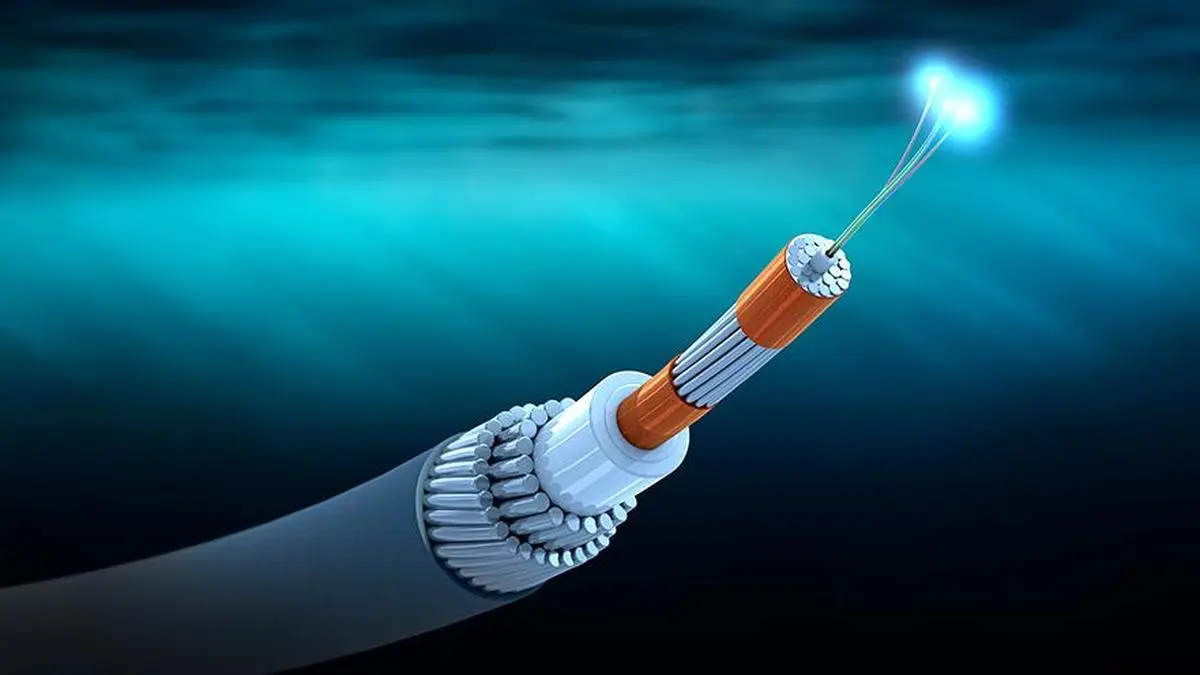
Unlike deep-sea cables, which are often as thin as a garden hose, cables in "high-activity" zones like Hormuz are encased in multiple layers of galvanized steel wire and buried meters deep into the seabed. Cutting them requires more than a rogue diver with a hacksaw; it requires heavy industrial equipment and hours of conspicuous work.
If Iran wants to cause chaos, they won't do it with a surgical cable strike. They’ll do it with a minefield or a missile strike on a landing station—the physical buildings where cables meet the shore. Those are the real "chokepoints," yet they receive a fraction of the media’s panic.
The "Attribution" Trap
The competitor article suggests that cable sabotage is the perfect asymmetric weapon because it’s hard to prove who did it. This is a "lazy consensus" take that ignores the sophistication of modern Fiber Optic Sensing (FOS).
Companies like Alcatel Submarine Networks and SubCom now integrate Coherent Optical Time Domain Reflectometry (C-OTDR) into their systems. These tools can detect a disturbance on a cable—not just a break, but even the vibration of a nearby anchor or a submarine—with meter-level precision in real-time.
If a cable goes dark, the operators know exactly where and when. If that location correlates with an Iranian naval vessel's transponder (or even its acoustic signature captured by regional hydrophone arrays), the "anonymity" of the attack evaporates instantly. Sabotaging a cable in the 21st century is as subtle as throwing a brick through a window while wearing a name tag.
The Real Threat: Data Sovereignty and the Localization Trap
If you want to know what actually threatens the digital economy of the Middle East, stop looking at the bottom of the ocean and start looking at the statute books.
The real "chokepoint" is the move toward Data Localization. Governments in the region are increasingly mandating that "sovereign data" must stay within national borders. This sounds like a win for security, but it’s a disaster for resilience.
When you force a company to host all its data in a single data center in Riyadh or Doha to satisfy a "digital sovereignty" law, you have created a physical target. A single precision drone strike on a Tier 4 data center does more damage to a nation’s economy than cutting ten subsea cables.
I’ve seen enterprises blow millions on "redundant" cable paths only to realize that their entire cloud architecture is pinned to a single Availability Zone that sits 10 miles from a potential frontline. That is the true "digital chokepoint"—the legal requirement to put all your eggs in one highly flammable basket.
Actionable Intel for the Unfiltered
If you are an infrastructure lead or an investor, ignore the Hormuz cable porn. Do this instead:
- Audit the Landing Stations: Stop worrying about the 1,000 miles of cable under the sea. Worry about the 500 square feet of concrete where it lands. If your provider doesn't have diverse landing points in different countries (e.g., one in Oman, one in the UAE), you have no redundancy.
- Invest in Terrestrial Transit: The "Blue-Raman" cable system and similar projects that cross land-masses are the real game-changers. Physical security on land is easier to maintain than security at 50 meters of depth in a war zone.
- LEO is Not a Toy: If your disaster recovery plan doesn't include a dedicated LEO satellite failover for your most critical API calls, you aren't serious about uptime.
The Strait of Hormuz is a 19th-century obsession applied to a 21st-century infrastructure. Iran can rattle the saber all they want, but the internet was built to survive a nuclear exchange. It can certainly survive a few cut wires in a shallow pond.
Stop planning for a cable cut and start planning for a world where the "chokepoint" is the very laws intended to protect your data.