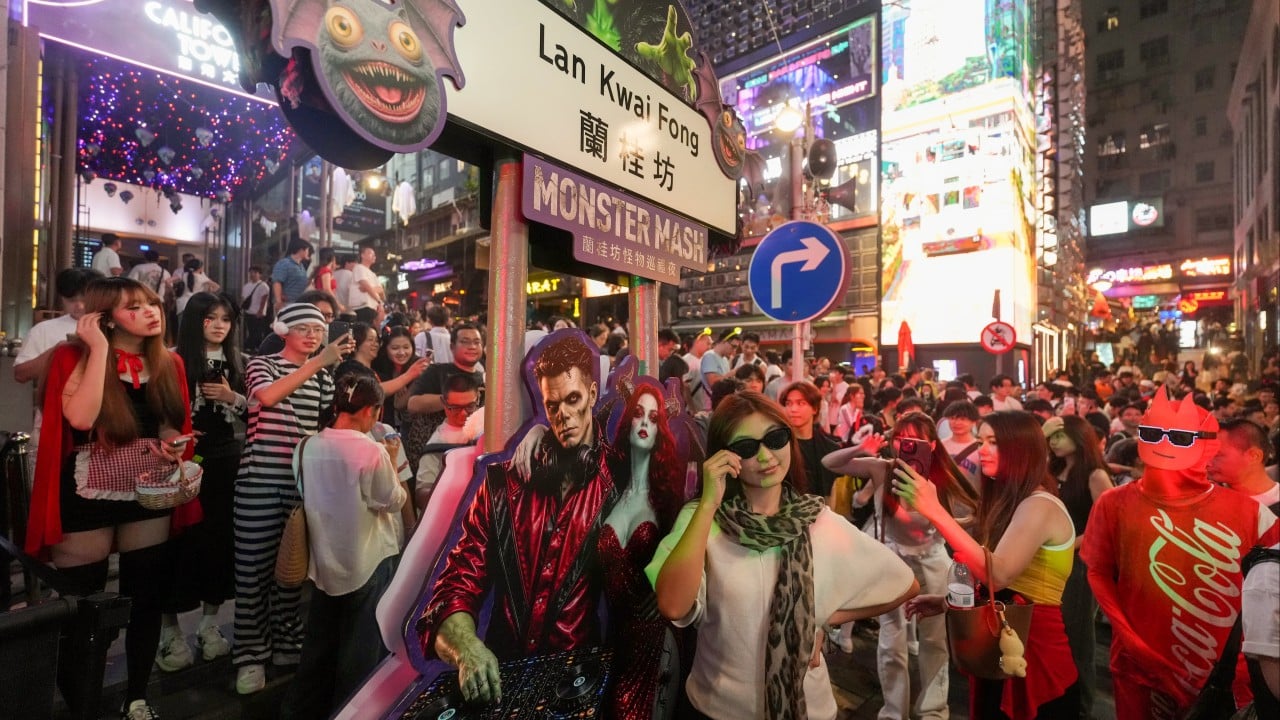
Every October, local media and hospitality associations run the exact same victory lap. They point to packed streets in Lan Kwai Fong, costumed pub crawls starting two weeks ahead of schedule, and bar operators reporting double-digit bumps in foot traffic. They call it a revival. They treat an early Halloween surge like proof that Hong Kong’s nightlife economy has roared back to life.
They are wrong.
Celebrating an extended Halloween season as a structural victory for Hong Kong’s food and beverage sector is like celebrating a fever because it makes you feel warm. When bars have to stretch a single-night novelty holiday across three weeks just to hit baseline revenue targets, you are not looking at a thriving industry. You are looking at an industry addicted to artificial life support.
I have spent years watching hospitality operators across Asia mistake seasonal sugar highs for sustainable unit economics. They confuse crowded sidewalks with healthy balance sheets. If you actually look at the mechanics of Hong Kong’s current nightlife market—soaring commercial rents, shifting consumer demographics, and the relentless pull of cross-border spending in Shenzhen—the "Halloween comes early" narrative falls apart immediately.
The Illusion of the Packed Street
Walk through Central on a Friday night in mid-October, and the optics look phenomenal. People in elaborate costumes are spilling out of bars. Lines wrap around the block. Bartenders are pouring drinks as fast as their hands can move.
To a casual observer or a lazy journalist, this looks like an unqualified boom. To anyone who has ever audited a bar’s profit-and-loss statement, it looks like a margin trap.
Foot traffic does not pay rent in Central. Gross margin does. And the fundamental flaw with early-season holiday promotions is that they pull demand forward rather than creating net-new spending. When a consumer buys three drinks at a themed pre-Halloween event on October 18, they do not magically acquire extra disposable income to spend on October 31. They simply cannibalize their own future spending, or worse, they skip standard non-themed weekends entirely because they are waiting for the next gimmick.
Furthermore, holiday crowds are notoriously low-yield customers for high-end operators. The person standing in the street holding a convenience-store beer—a ubiquitous sight in Lan Kwai Fong—generates zero revenue for the surrounding establishments while actively clogging the doorways and driving away high-spending regulars who refuse to fight through a mob just to order a cocktail.
The Cost of Manufactured Hype
Running an extended holiday campaign is expensive. Bars are forced to bleed cash on custom decor, third-party event promoters, costumed staff, and discounted drink packages just to compete for attention.
- Promoter Cuts: Independent nightlife promoters regularly take 15% to 30% of door cover or minimum-spend tables.
- Inventory Waste: Seasonal themed ingredients and custom glassware rarely sell through cleanly, turning into dead stock on November 1.
- Labor Burnout: Forcing front-of-house teams to work peak-intensity shifts for three consecutive weekends destroys morale and spikes turnover in a market already starving for experienced service staff.
When you strip away the promotional overhead and the discounted happy-hour pricing used to lure crowds in early, the net profit from these "boom" weeks often barely clears what a normal, unpromoted weekend used to generate five years ago.
Why Consumers Are Really Showing Up Early
If the economics for bar owners are shaky, why are the crowds showing up so early? The answer has nothing to do with a sudden renaissance in Hong Kong nightlife and everything to do with desperation for escapism and the gamification of social media.
Modern nightlife in Hong Kong no longer competes against the bar next door. It competes against staying home, flying to Tokyo on a weak yen, or taking the high-speed rail to Shenzhen for a fraction of the price.
For local operators, turning October into "Halloweekends" is a defensive crouch. Normal nights have become too hard to sell. When a standard Friday night out in Soho or Tsim Sha Tsui easily costs HK$800 to HK$1,200 per person for a mediocre dinner and two drinks, consumers balk. They stay home. They cook. They host apartment gatherings.
To break that inertia, bars have to manufacture an occasion. A costume party gives people social permission to spend money they otherwise wouldn't, largely because it provides visual currency for Instagram and Xiaohongshu. The drink isn't the product anymore; the backdrop is.
Imagine a scenario where a bar in Wan Chai stops running themed nights, strips down its decor, and simply relies on great music, fair pricing, and solid service. Under current market conditions, that bar struggles to fill half its seats on a Tuesday. Now imagine that same bar spends HK$30,000 on cobwebs, fog machines, and a "Pre-Halloween Kickoff" flyer. Suddenly, it’s packed. That isn't brand loyalty. That is a venue functioning as a glorified photo booth.
The Structural Rot Beneath the Costumes
Focusing on a two-week October spike distracts from the brutal structural realities crushing Hong Kong’s hospitality sector. You cannot paint over a cracked foundation with fake blood and pumpkin spice.
1. The Commercial Real Estate Disconnect
Hong Kong’s commercial landlords remain stubbornly detached from reality. Even with retail vacancies sitting at multi-year highs across prime districts, many property owners refuse to mark rents down to match current consumer spending power, largely because lowering rents forces a downward revaluation of their underlying real estate assets. Operators are trapped in leases that require 2018 revenue volumes in a 2026 economy. Pushing Halloween into mid-October is an act of survival to make Q4 rent payments, not a sign of expansion.
2. The Northward Migration
Every weekend, hundreds of thousands of Hong Kong residents cross the border into Guangdong province. They aren't just going for cheap groceries; they are going for nightlife, dining, and entertainment. In Shenzhen and Guangzhou, hospitality venues offer massive square footage, aggressive service culture, and prices that are routinely 40% to 60% lower than Hong Kong. No amount of early Halloween face paint in Central solves the fundamental value-for-money deficit that drives locals north every Friday afternoon.
3. The Death of the Late-Night Corporate Expense Account
The true engine of Hong Kong’s golden era of nightlife was never costumed twenty-somethings. It was finance, legal, and corporate expense accounts. Bankers and executives taking clients out on Wednesdays and Thursdays kept high-margin venues profitable all year round, allowing them to treat weekend crowds as pure gravy. With IPO volumes depressed, corporate budgets slashed, and compliance departments scrutinizing every bar tab, that mid-week institutional money has evaporated. Bars are now overwhelmingly dependent on retail consumers—a notoriously fickle, price-sensitive demographic that only comes out when there is a spectacle.
Are Nightlife Operators Asking the Wrong Question?
If you ask most bar owners or industry commentators how to fix Hong Kong nightlife, they will ask: "How do we get more tourists and locals to come out to entertainment districts?"
That is completely the wrong question. Getting bodies onto the street is easy; you can do that with cheap booze and a DJ. The real question operators should be asking is: "How do we build a hospitality model that survives when there isn't a holiday on the calendar?"
Let’s look at the common myths surrounding this seasonal surge and dismantle them directly.
Does an early Halloween mean Hong Kong’s nightlife economy is recovering?
No. A recovery is defined by baseline growth—higher average spend per head on unremarkable Tuesdays in March or August. Seasonal spikes simply prove that consumers will still show up for a novelty event. Relying on holiday extensions is a classic symptom of a brittle, event-driven market where organic demand has dried up.
Do themed bar crawls and street festivities help local businesses?
They help a very narrow slice of businesses: convenience stores, street-level dive bars selling high-volume cheap liquor, and late-night fast-food joints. For craft cocktail bars, wine lounges, and sit-down restaurants, chaotic street festivities often actively hurt business. High-margin diners avoid districts overrun by noisy, intoxicated crowds, meaning upscale venues often see their reservation books collapse during peak street-party weekends.
Should bars start extending other holidays to keep the momentum going?
If every month becomes a manufactured festival, nothing is special. Consumers suffer from theme fatigue. When bars try to stretch Oktoberfest, Halloween, Singles' Day, Christmas, and Lunar New Year into multi-week extravaganzas, they train their customers to never pay full price for a standard night out. You end up in a race to the bottom where your venue has zero identity outside of whatever holiday props you pulled out of storage that week.
What Smart Operators Are Doing Instead
While the loud, street-level bars in Lan Kwai Fong chase high-volume, low-margin Halloween tourists, the smartest operators in Hong Kong are quietly doing the exact opposite. They are rejecting the spectacle entirely.
I’ve seen operators blow small fortunes trying to out-decorate and out-promote their neighbors, only to shut their doors six months later when the January slump hits. Meanwhile, the venues posting genuine, sustainable profits right now share a completely different playbook:
- Micro-Venues Over Mega-Clubs: High rent kills scale. The winning formula in Hong Kong today is 600 to 1,000 square feet, a lean team of three to four killer staff members, and zero reliance on outside promoters. Keep fixed overhead low enough that you don't need a Halloween miracle to break even.
- Community Over Foot Traffic: Street-level walk-ins are unreliable. The most resilient bars in Sheung Wan, Sai Ying Pun, and Sham Shui Po are tucked away on upper floors or quiet side streets. They build hyper-loyal neighborhood communities through membership perks, bottle-keep programs, and genuine hospitality—the kind of places where bartenders know your name and your drink without needing a costume party to get you through the door.
- Radical Pricing Transparency: Consumers are exhausted by hidden service charges, inflated minimums, and HK$180 cocktails that taste like sugar water. Operators who price honestly—offering high-quality drinks at fair margins without fake "VIP" gatekeeping—are winning back the local crowd that abandoned Central years ago.
To be fair, there is a distinct downside to ignoring the seasonal hype cycle: you leave short-term cash on the table. If you run a high-capacity ground-floor venue with massive fixed rent, refusing to participate in an early Halloween push might mean missing a crucial liquidity injection before the slow winter months. Sometimes, taking the sugar high is the only way to survive until spring.
Stop Celebrating the Symptom
The next time you read a headline praising how early Halloween festivities are "lifting bar business" in Hong Kong, look past the photos of people in vampire makeup holding plastic cups.
Look at the empty tables in those exact same bars two weeks later on a random Wednesday night in November. Look at the shuttered storefronts two blocks away that couldn't survive the quiet months between holidays.
A healthy nightlife ecosystem does not need to start celebrating October 31 in the middle of the month to pay its bills. Until Hong Kong fixes its structural cost base, stops treating hospitality as a real estate extraction game, and gives people a reason to go out on an ordinary night, an early Halloween isn't a sign of life. It’s just a mask.