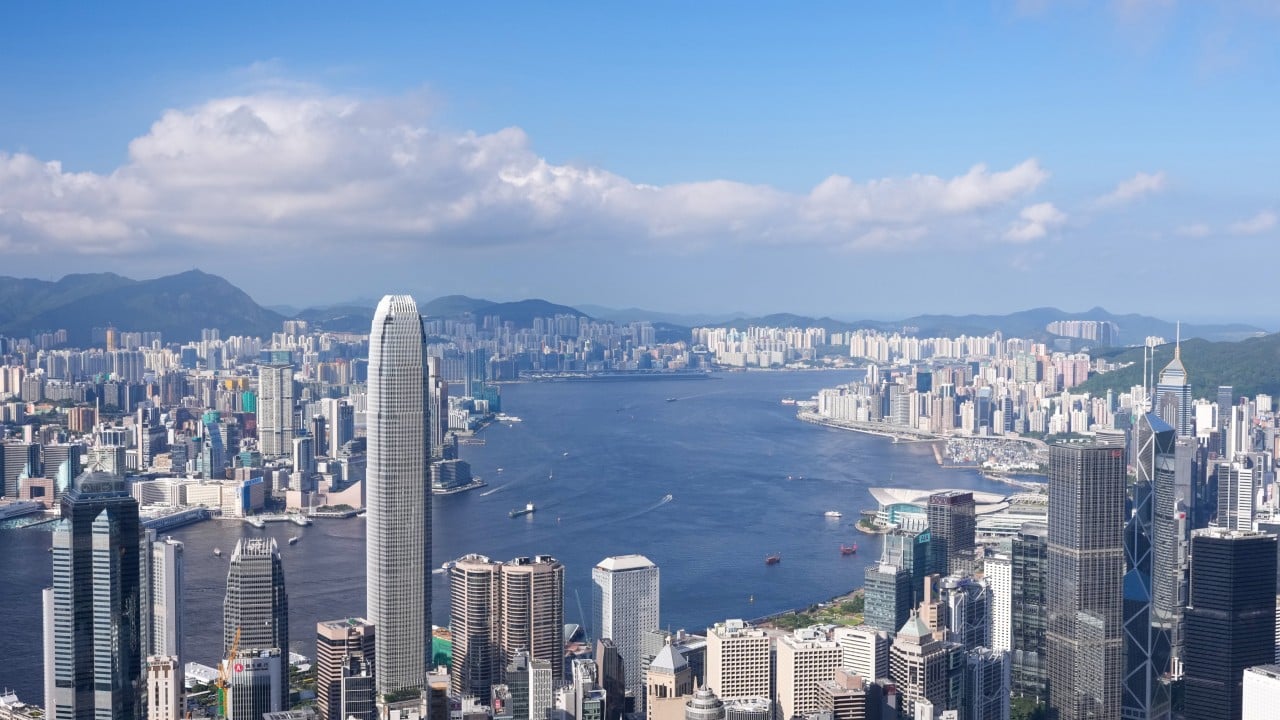
Inbound tourist volumes in Hong Kong remain roughly 20 percent below pre-pandemic peaks, yet the city's highest-tier hospitality segment—traditionally classified as High Tariff A properties—has systematically driven Average Daily Rates (ADR) past historical benchmarks. This divergence invalidates standard hospitality economic models, which dictate that volume recovery must precede pricing power. While mid-scale and budget properties experience downward rate pressures due to a shifting demographic mix of regional travelers, luxury operators have successfully decoupled their revenue metrics from raw headcount statistics. Understanding this phenomenon requires an examination of supply inelasticity, changing capital allocations, and asymmetric demand elasticity among ultra-high-net-worth consumers.
The Volume Value Decoupling Framework
The fundamental error in aggregate market commentary lies in treating the hospitality sector as a homogenous entity. In Hong Kong, the post-pandemic recovery profile is bifurcated. Data indicates that while total overnight visitor counts have contracted, the sub-segment of premium spenders has contracted at a much slower rate, and their per-capita expenditure on premium services has intensified.
This asymmetric recovery alters the traditional relationship between occupancy levels and ADR. Historically, hotels maximized occupancy to optimize Revenue Per Available Room (RevPAR). The current operational playbook reverses this order, prioritizing high ADR targets at the expense of nominal volume. High Tariff A properties have maintained Gross Operating Profit (GOP) margins in line with historical averages despite running at lower absolute occupancy rates than their 2018 or 2019 baselines.
This operational shift relies on three distinct pillars of pricing elasticity:
- Insulated Consumer Demographics: The primary target demographic for luxury assets—high-net-worth individuals and premium corporate travelers—exhibits low sensitivity to room rate inflation. Price changes do not meaningfully alter their booking behavior.
- Value Concentration over Volume: Operators have shifted from broad-based marketing to micro-targeted customer acquisition. This reduces reliance on high-volume tour groups that dilute yield metrics.
- Complementary Revenue Generation: High room rates are reinforced by premium food and beverage (F&B) and experiential services, allowing properties to extract higher spend per occupied room night.
The Structural Inelasticity of Luxury Supply
A critical catalyst for sustained premium pricing is the absolute constraint on new high-end inventory. Commercial real estate in Hong Kong is constrained by geographical limitations and capital reallocations that favor office or mixed-use developments over hospitality projects.
According to historical real estate data, the cumulative annual growth rate (CAGR) for hotel rooms in Hong Kong was 1.3 percent between 2018 and 2024. Projections for the subsequent five years indicate a deceleration to a negligible 0.3 percent CAGR.
Hong Kong Hotel Room Supply Growth (CAGR)
2013–2018: 2.3%
2018–2024: 1.3%
2025–2030: 0.3% (Projected)
This restriction creates a structural bottleneck. When demand spikes during key city-wide events, such as international financial summits or cultural exhibitions, the market cannot scale inventory to absorb the pressure. The fixed-supply constraint forces prices upward exponentially.
Unlike the mid-scale sector, where independent properties can be rapidly converted or repurposed, a luxury property requires immense capital expenditure and specialized design. The high barrier to entry protects incumbent properties from market dilution. This structural protection gives institutional operators the confidence to enforce high base rates, knowing that substitute products cannot easily emerge to capture market share.
The Cost Function and Operating Margin Realities
High room rates are not merely a function of opportunistic pricing; they are an operational necessity driven by an escalating cost base. Luxury hotel operations have become significantly more expensive, with inputs rising faster than general inflation.
- Labor Deficits and Wage Escalation: The hospitality sector faces persistent staff turnover, ranging between 31 percent and 73 percent across various operational departments. To maintain the high staff-to-guest ratios required for luxury classification, operators have been forced to increase baseline compensation, introduce retention bonuses, and invest heavily in specialized recruitment.
- Supply Chain Inflation: The cost of importing premium ingredients, luxury amenities, and capital equipment has surged due to structural adjustments in global logistics.
- Regulatory Compliance: Stricter environmental mandates, carbon reduction initiatives, and energy efficiency targets require upfront capital deployment, altering short-term cash flow models.
The relationship between these escalating costs and premium pricing can be modeled as an operational equilibrium. To prevent margin compression, luxury operators must deploy a cost pass-through strategy.
Because the target consumer is largely price-inelastic, hotels can transfer these operational cost increases directly to the room rate without triggering a drop-off in demand. Mid-market hotels do not possess this luxury. If a mid-scale property attempts to pass through rising labor costs via higher room rates, its consumer base quickly migrates to lower-cost alternatives or short-term rental platforms, leading to a catastrophic decline in occupancy.
Asymmetric Capital Flows and Institutional Valuation
The operational resilience of Hong Kong's premium hospitality assets has triggered a reallocation of institutional capital within the Asia-Pacific region. Luxury hotel transaction volumes rose 77 percent between 2017 and 2025, reaching approximately USD 2.1 billion. In the broader regional market, luxury deals accounted for nearly 20 percent of all hotel transactions, a substantial increase from the 8 percent share recorded in 2017.
Investors are treating luxury hospitality assets as an inflation hedge. Because room rates can be adjusted daily, hotels offer a dynamic pricing flexibility that long-term commercial leases lack. In an inflationary environment, this feature allows asset owners to preserve real yields.
The valuation model for these properties has shifted from traditional capitalization rate assessments to sophisticated cash-flow optimization strategies. Institutional buyers are willing to pay a premium for properties that possess clear pricing power and sit in tightly-held geographic nodes like Central, Admiralty, and TST. The scarcity of these core assets ensures long-term capital preservation, even during periods of regional macroeconomic volatility.
Operational Constraints and Execution Risks
While the luxury segment demonstrates significant structural advantages, the strategy of maintaining elevated rates amid lower volumes introduces specific operational vulnerabilities. No asset class is entirely insulated from execution risks.
The primary risk centers on the service-delivery gap. When a property commands a premium ADR, consumer expectations scale non-linearly. If labor shortages result in delayed check-ins, slower room service, or reduced concierge availability, the perceived value proposition breaks down. This creates a risk of reputational damage that can rapidly erode a brand's pricing power.
A second limitation involves the reliance on specific geographic source markets. While diversification into non-Mainland international segments is growing, any sudden macroeconomic contraction in key wealth centers will directly impact premium occupancy. High fixed costs mean that if occupancy falls below a critical threshold, even exceptionally high room rates cannot prevent net operating income from deteriorating.
Strategic Asset Maximization
To sustain this premium positioning, luxury operators must move away from defensive cost-cutting and focus on aggressive yield optimization. The following tactical directives outline the operational framework required to convert high room rates into long-term enterprise value:
- Implement Dynamic Duration Controls: Implement algorithmic length-of-stay restrictions during peak event periods. Forcing multi-night minimum bookings during major conventions ensures that high-yield days subsidize lower-demand shoulder nights, maximizing total revenue per available room across the entire event window.
- Unbundle and Monetize Idle Capital: Convert underutilized auxiliary spaces into private dining rooms, exclusive wellness clinics, or co-working suites tailored to high-net-worth travelers. This diversifies revenue streams away from pure room inventory and increases the overall yield per square meter of real estate.
- Accelerate Direct Digital Reintermediation: Invest heavily in direct-to-consumer digital channels to minimize reliance on online travel agencies (OTAs), which extract high commission percentages. Transitioning repeat corporate and leisure guests to proprietary booking platforms directly improves net room realization metrics.
- Outsource Non-Core Capital Centers: Mitigate labor inflation by outsourcing secondary food preparation, laundry services, and overnight deep cleaning to specialized external vendors. This shifts fixed labor liabilities into a variable cost structure, protecting operating margins during seasonal demand contractions.
The long-term outlook for Hong Kong's high-end hospitality sector will be determined by how effectively operators defend their pricing power against rising operational friction. Properties that fail to maintain flawless service execution will see their margins compressed by escalating labor costs. Conversely, assets that successfully leverage supply scarcity and rigid premium demand will continue to outpace the broader commercial real estate market, establishing a permanent premium benchmark that operates independently of aggregate tourist volumes.