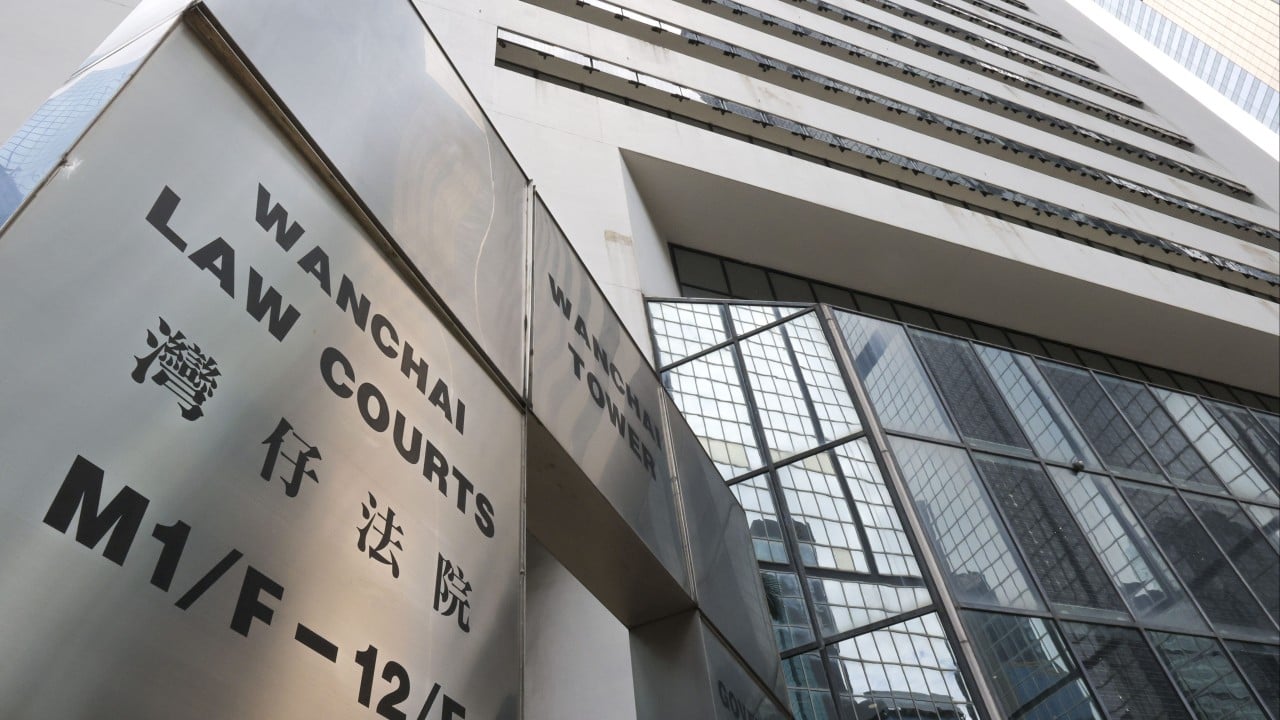
Ten percent. That was the alleged price of doing business in a recent Hong Kong procurement case, where prosecutors laid out claims that three individuals offered HK$2 million in bribes to lock down a HK$20 million tender.
It sounds like a movie plot. It isn't. When a Hong Kong bid-rigging trial hits the courtroom with numbers like HK$2 million on the table, it exposes a much deeper problem in how commercial tenders actually operate behind closed doors. Most people think corporate bribery is a relic of the past, wiped out by compliance checklists and strict auditing. They're wrong. For an alternative view, check out: this related article.
If you've ever worked on commercial bids or managed procurement, you know how fiercely competitive the tendering process gets. Margins shrink. Deadlines tighten. And for unethical operators, the temptation to bypass fair competition with an under-the-table payout becomes overwhelming. The allegations surrounding this HK$20 million tender show just how brazen those attempts can be when millions are on the line.
Why HK$2 Million for a HK$20 Million Tender Makes Sense to Crooks
Let's look at the math. A 10% kickback on a HK$20 million contract leaves HK$18 million on the table. To an outside observer, handing over two million dollars upfront or as a promised cut seems reckless. Why risk prison for a fraction of the contract? Related reporting regarding this has been published by The New York Times.
Because in crooked procurement, the winner rarely absorbs the cost of the bribe. They bake it right back into the bid.
When three people allegedly conspire to offer HK$2 million to secure a tender, they aren't planning to take a loss on the project. In typical bid-rigging schemes, inflated pricing, cut corners on materials, or padded change orders cover the illicit payout. The client—or the public—ends up paying for the bribe twice. First through an uncompetitive price, and second through substandard work.
Hong Kong has spent decades building a reputation as one of Asia's cleanest financial and commercial hubs. That reputation didn't happen by accident. It rests heavily on the enforcement muscle of the Independent Commission Against Corruption (ICAC) and the Prevention of Bribery Ordinance (Cap. 201). Under Hong Kong law, offering an advantage to an agent without the principal's permission isn't just a slap-on-the-wrist compliance violation. It's a serious criminal offense carrying heavy prison sentences and massive fines.
Yet, cases like this Hong Kong bid-rigging trial keep surfacing. Why? Because high-value tenders create concentrated points of power. When a single gatekeeper or a small evaluation committee holds the keys to a HK$20 million payout, a trio of motivated conspirators will inevitably test whether those keys can be bought.
How Bid-Rigging Schemes Actually Operate Behind the Scenes
People often confuse simple bribery with bid-rigging, though the two frequently walk hand in hand. Bribery is the grease; bid-rigging is the machine.
In a pure bribery case, one bidder pays an insider to leak confidential competitor pricing or to tilt the scoring matrix in their favor. Bid-rigging goes a step further. It involves coordination—either among competing bidders or between a bidder and an insider—to pre-determine the outcome of a supposedly competitive process.
Here's how these setups usually play out in the real world:
- Information leaks. An insider hands over the exact budget ceiling or rival bid numbers. The favored bidder then submits a proposal priced just low enough to look competitive while maximizing profit.
- Tailored specifications. Before the tender even goes public, an insider writes the technical requirements so narrowly that only one specific company can legally or practically meet them.
- Phantom competition. Multiple shell companies submit bids for the same HK$20 million job. They look like fierce rivals on paper, but they're controlled by the same group, ensuring the designated winner takes the prize at an inflated rate.
- Disqualification traps. Evaluation committees find minor, technical excuses to throw out legitimate, lower-priced bids from honest competitors, clearing the path for the briber.
When prosecutors present evidence that a trio offered HK$2 million to win a tender, they're usually pointing to that first or second mechanism. You don't offer that kind of cash just to get your foot in the door. You offer it to guarantee the door shuts on everyone else.
The Real Cost of Tender Corruption on Honest Businesses
If you run an honest company, bid-rigging isn't a victimless white-collar crime. It's a direct tax on your survival.
Think about what goes into preparing a legitimate bid for a HK$20 million contract. Your team spends weeks—sometimes months—calculating labor costs, sourcing materials, assessing risk, and shaving profit margins down to the bone just to stay competitive. You pay estimators, engineers, and legal reviewers. All of that overhead goes straight down the drain the second a competitor buys the outcome with a HK$2 million side deal.
Eventually, honest firms stop bidding on certain sectors altogether. They recognize the game is fixed. When legitimate businesses walk away, the entire market degrades. Prices go up, quality drops, and the only companies left standing are the ones willing to play dirty.
I've seen mid-sized contractors nearly go under because they couldn't figure out why they kept losing tenders despite offering better timelines and lower prices. They blamed their sales teams. They restructured their estimating departments. They had no idea they were competing against a stacked deck where the winner had already bought the referee.
Hong Kong's Legal Hammer and Why Cases Still Reach Court
Hong Kong doesn't mess around when it comes to Section 9 of the Prevention of Bribery Ordinance, which covers corrupt transactions with agents in the private sector, or Section 4, which targets public servants. Unlike some jurisdictions where corporate bribery gets settled quietly in a boardroom with a deferred prosecution agreement, Hong Kong puts individuals in the dock.
So why do people still try it?
Greed is the obvious answer, but overconfidence is the real driver. Conspirators convince themselves they've found a foolproof way to move the money. They use third-party consultants, fake invoices, offshore accounts, or cash handoffs, assuming investigators won't be able to connect the dots between a HK$2 million transfer and a HK$20 million contract award.
What they almost always underestimate is the paper trail—and human nature.
Big conspiracies rarely stay secret. When three people are involved in offering a bribe, you have three potential points of failure. One person gets nervous. Another feels cheated out of their promised cut. Or a whistleblower inside the tendering organization notices that the winning bid makes zero commercial sense and flags it to the ICAC. Once investigators start pulling bank records, phone logs, and messaging histories, the "foolproof" scheme unravels fast.
Red Flags Every Procurement Team Should Watch For
Whether you're managing corporate procurement in Hong Kong or anywhere else, you can't rely on trust alone to protect a HK$20 million budget. Audits after the fact only tell you how your money was stolen. You need to spot the warning signs while the tender is still live.
Watch out for these classic indicators of a compromised tender:
- Unexplained urgency. Suddenly, a routine procurement has to be rushed through without standard review periods, limiting the number of outside bidders who can respond in time.
- Last-minute spec changes. The technical requirements shift abruptly right before the submission deadline, conveniently matching the exact capabilities of one vendor.
- Bizarrely close pricing. The winning bid comes in just a tiny fraction below the next closest competitor, suggesting the winner knew the exact numbers they needed to beat.
- Heavy reliance on a single evaluator. One manager or consultant pushes aggressively for a specific vendor while dismissing valid concerns raised by other team members.
- Post-award change orders. A vendor wins a tender with a suspiciously low bid, then immediately submits a wave of expensive "unforeseen" adjustments that push the final payout right back up.
How to Harden Your Tendering Process Against Bribery
Stopping bid-rigging doesn't require reinventing corporate governance, though it does require removing single points of failure. If three people can collude to buy a HK$20 million contract, your internal controls have too much slack.
Start by separating the people who write the specifications from the people who score the bids. When the technical team defines the need and an independent commercial panel evaluates the proposals blindly—with vendor names stripped out during the initial scoring phase—bribing a single insider becomes much harder.
Rotate your evaluation committees regularly. Familiarity breeds collusion. When vendors deal with the exact same procurement officers year after year, personal relationships blur into improper favors. Mandatory rotation breaks up cozy networks before a HK$2 million offer ever gets whispered over dinner.
Finally, enforce strict communication blackouts during active tenders. Every question from a bidder and every answer from your team should go through a logged, centralized portal visible to all participants. The moment an insider takes a phone call from a bidder off the record, your tender integrity is compromised. Check your active procurement workflows today, lock down evaluator anonymity, and audit any contract where the winning margin looks just a little too convenient.


