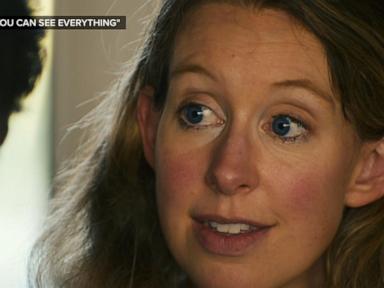
We love a good fall from grace until the redemption tour gets boring. Right now, the cultural conveyor belt is churning out a double feature of collective amnesia: the endless fascination with Elizabeth Holmes in a prison jumpsuit or on the verge of one, paired with the nostalgic rehabilitation of Pamela Anderson courtesy of her documentary and memoir ecosystem. The lazy consensus says we are watching complex women reclaim their narratives. The reality is far uglier. We are consuming highly engineered redemption arcs because society prefers a comfortable story about victimhood over a brutal reckoning with systemic complicity.
I have spent years watching media machinery spin straw into gold, and the public eats it up every single time because outrage and sympathy are cheap hits. The lazy narrative packages Elizabeth Holmes as a tragic visionary who drank her own Silicon Valley Kool-Aid, while framing Pamela Anderson as a passive casualty of 1990s tabloid misogyny. Both frameworks miss the actual mechanics of how power, media, and accountability work.
The Myth of the Accidental Fraudster
Let us dismantle the Elizabeth Holmes sympathy apparatus first. Every few months, some cultural critic writes a think piece wondering if we were too hard on the Theranos founder because male tech bros do the exact same thing every day.
Yes, male founders lie. Yes, the venture capital ecosystem rewards hyperbole and aggressive vaporware. But comparing a standard-issue SaaS founder overpromising a CRM feature to a woman who faked blood-testing technology that put real human diagnoses at risk is intellectually bankrupt. Holmes did not just oversell a product; she fabricated medical results for cancer and HIV screenings while threatening whistleblowers with ruin.
The contrarian truth nobody wants to admit is that Holmes benefited immensely from the exact same identity politics and media tropes she is now supposedly a victim of. When she wore the black turtleneck, the press fell over themselves anointing her the next Steve Jobs, projecting their own desperate desire for a female tech messiah onto a cipher who said almost nothing of substance.
We romanticize her as a mastermind or dismiss her as a naive girl caught in a bro culture trap. Both angles let us off the hook. She was a garden-variety fraudster who exploited the tech industry's worst instincts—its worship of disruption over truth—and dressed it up in a medical lab coat. When you look at the mechanics of venture funding, the enablers are just as guilty as the founder. I have seen institutional investors pour millions into slide decks that violated basic laws of physics simply because fear of missing out overrode basic due diligence. Holmes just happened to be the one holding the empty test tube when the music stopped.
The Manufactured Nostalgia Trap
Pivot from the boardroom to the beach. Pamela Anderson is currently undergoing a massive cultural reassessment. The documentary, the makeup-free red carpets, the earnest memoir—it is all designed to make us feel guilty for laughing at her expense thirty years ago.
The consensus argument reads like this: Pamela was exploited by the media, victimized by the unauthorized release of her private tape, and reduced to a cartoon sex symbol by a predatory culture.
Here is the unvarnished counter-perspective. Pamela Anderson built an industrial-scale brand precisely by leaning into the exact archetype she now critiques. The Playmate aesthetic, the red swimsuit, the high-octane tabloid marriage to Tommy Lee—this was not something merely inflicted upon an unwilling participant. It was a masterclass in early celebrity capitalism. She understood the currency of attention long before influencer culture codified it.
To pretend she was a helpless bystander in her own commodification erases her agency. It patronizes her. When cultural critics rewrite history to make every 90s icon a helpless victim of the patriarchy, they strip women of their actual choices, past and present. Anderson played the game better than almost anyone of her era, monetizing the gaze that she now receives retroactive sympathy for enduring.
The danger of this retroactive reframing is that it creates a sanitized narrative where no one is ever responsible for their career trajectory. We turn complex business and entertainment figures into saints or sinners depending on what the current cultural weather demands.
The Economics of Outrage and Sympathy
Why do we cycle through these specific redemption and condemnation loops? Because the attention economy requires fresh fuel.
Imagine a scenario where the media stopped projecting moral redemption onto wealthy celebrities and fraudsters entirely. The engagement metrics would plummet. The algorithm does not care whether you hate Elizabeth Holmes or cry for Pamela Anderson; it only cares that you are staring at the screen.
When a documentary drops rehabilitating a star's image, or a high-profile trial generates a year of true-crime podcasts, you are not engaging in cultural critique. You are consuming a product manufactured by PR teams who know that society’s greatest weakness is our desperate need to feel morally superior to the past.
We want to believe we have evolved. We tell ourselves that we used to treat women terribly in the 90s, or that we used to be too easily fooled by tech hype, but that today we see clearly. That is the ultimate illusion. The delivery mechanisms have changed, but the appetite for theatrical public shaming and equally theatrical absolution remains identical.
Stop buying the documentary framing. Stop treating corporate criminals as misunderstood pioneers and tabloid icons as passive victims of an era they actively profited from. Look at the balance sheets, look at the media strategies, and look at the incentives driving the narrative.
The next time a headline demands your immediate sympathy or your instant outrage, ask yourself who benefits from your emotional compliance. Until you start looking past the scripted vulnerability and the rehearsed contrition, you are just an extra in someone else's managed PR campaign.