The United States military has abruptly hit the brakes on its high-profile mission to safeguard commercial shipping in the Strait of Hormuz, effectively abandoning the "Project Freedom" escort initiative just forty-eight hours after its launch. While the White House frames the suspension as a strategic pause to facilitate a peace deal with Tehran, the reality on the water suggests a far more complex entanglement of regional pressure and logistical impossibility. By shifting from active "escorts" to mere "guidance," the administration has signaled a reluctance to commit the American Navy to a direct, sustained confrontation in a waterway that handles 20% of the world's oil.
This pivot is not a simple change in tactical terminology. It is a calculated retreat. For weeks, the rhetoric from Washington suggested a return to the "tanker war" era of the 1980s, where American destroyers would form a steel wall around merchant vessels. Instead, the administration has opted for a "look but don't touch" policy that leaves shipping companies holding the bag.
The Saudi Influence and the Price of Protection
Behind the closed doors of the Oval Office, the primary driver for this U-turn appears to be a dual-pressure campaign from Riyadh and Islamabad. While Saudi Arabia remains a fierce rival of Iran, the House of Saud has grown increasingly wary of a full-scale maritime war that would inevitably lead to the destruction of its own coastal infrastructure. The memory of the 2019 Abqaiq–Khurais attacks, which temporarily halved Saudi oil production, looms large.
Riyadh’s logic is cold. If the U.S. Navy begins a formal escort program, Iran will likely view every tanker—regardless of its flag—as a legitimate target of the "Great Satan." By convincing the Trump administration to scale back, the Saudis are attempting to keep the temperature just below the boiling point. They want American protection, but they don't want the American presence to be the very thing that triggers a regional inferno.
This creates a paradox for American interests. The U.S. is currently spending millions of dollars per day to keep carrier strike groups in the region, yet it is refusing to use them for their stated purpose.
The Logistical Nightmare of the Escort Myth
Beyond the diplomacy lies a brutal physical reality that the Pentagon rarely admits in press briefings. The U.S. Navy, despite its technological superiority, is not built to babysit 1,500 stranded commercial vessels.
To provide a true escort for the volume of traffic currently backed up in the Persian Gulf, the Navy would need to divert assets from every other global theater. A single transit through the Strait takes hours, and a convoy is only as fast as its slowest member.
- The Drone Threat: Traditional destroyers are designed to fight other ships and aircraft. They are ill-equipped to handle swarms of low-cost, one-way attack drones launched from the Iranian coastline.
- Asymmetric Costs: A single SM-2 interceptor missile costs over $2 million. The Iranian drone it shoots down costs less than a used sedan. This is an economic war of attrition the U.S. is currently losing.
- The Mine Factor: The recent withdrawal of traditional anti-mine vessels has left the fleet vulnerable. The newer Littoral Combat Ships (LCS) assigned to the region have yet to prove their mine-clearing capabilities in a live combat environment.
Project Freedom vs. Epic Fury
The confusion stems from the overlapping missions of "Operation Epic Fury"—the offensive campaign against Iranian targets—and "Project Freedom." Secretary of State Marco Rubio declared Epic Fury "concluded" this week, claiming objectives were met. However, the maritime reality contradicts the diplomatic victory lap. If the goal was to secure the Strait, the mission has failed. Commercial vessels are still being struck by "unknown projectiles," and insurance premiums for Gulf transits have reached prohibitive levels.
The administration’s sudden interest in "mediation" via Pakistan is a convenient exit ramp for a policy that was rapidly becoming a quagmire. By pausing the escorts, the U.S. avoids the embarrassment of a failed protection mission while maintaining the optics of a peacemaker.
The Commercial Fallout
For the global energy market, this U-turn is a disaster of uncertainty. When the U.S. announced escorts, oil prices dipped on the hope of stabilized supply. When the mission was "paused" a day later, the volatility returned.
Shipping executives are no longer looking to Washington for leadership. They are looking to their own risk-assessment teams. Many have already diverted their fleets around the Cape of Good Hope, a move that adds ten days to a journey and thousands of tons in fuel costs. The "guidance" offered by the U.S. Navy is essentially a radio frequency to call when things go wrong—a far cry from the "Freedom" the project's name promised.
The U.S. has effectively told the world that while it can bomb Iranian infrastructure into the stone age, it cannot, or will not, ensure that a barrel of oil safely makes it from Ras Tanura to the open ocean.
The pivot from escorts to "guidance" isn't a strategy. It's a confession.
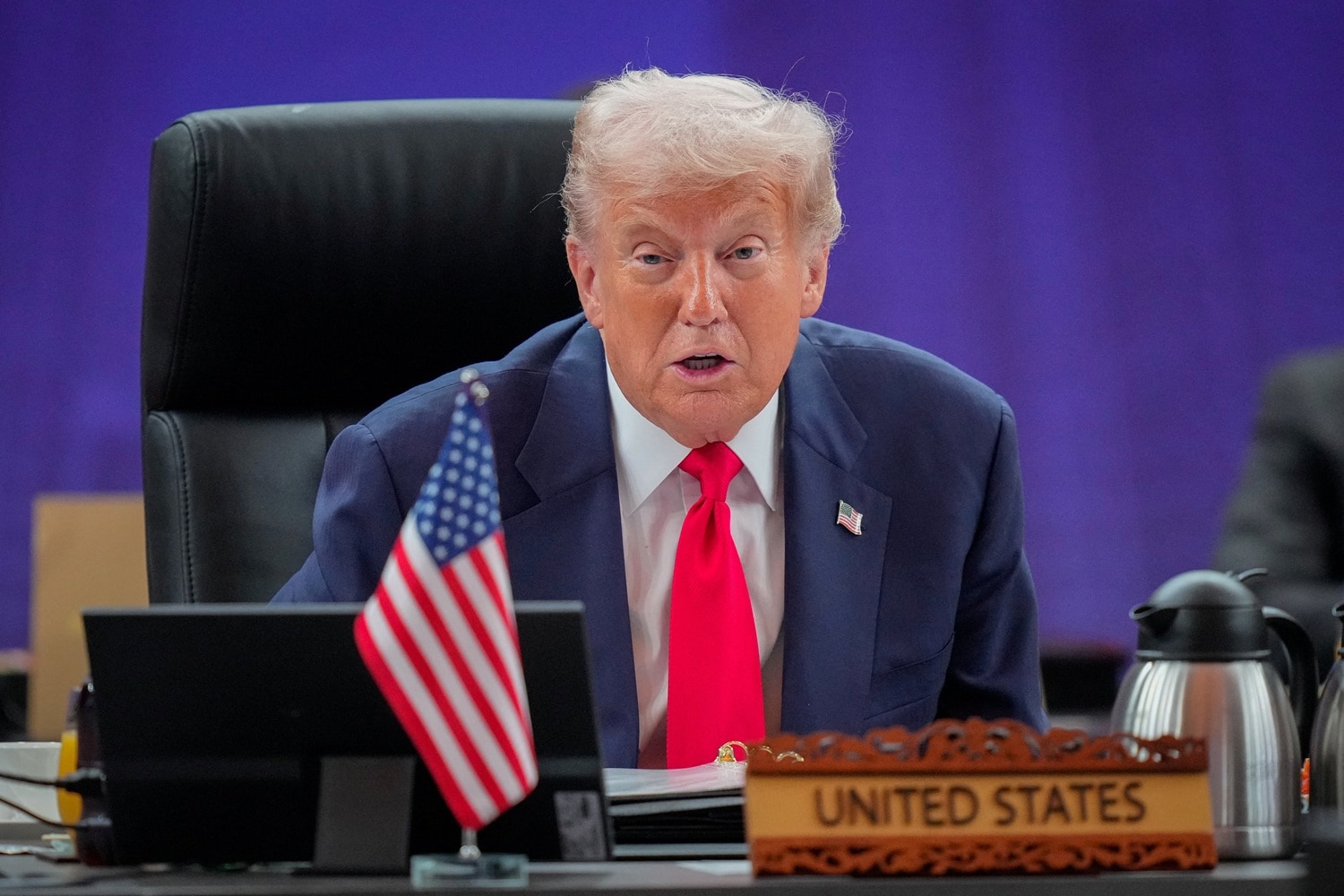
Trump says US will guide trapped ships through Strait of Hormuz, shipping execs wary
This video provides a direct look at the official announcement of Project Freedom and the immediate, skeptical reaction from the global shipping industry that forced the administration's hand.