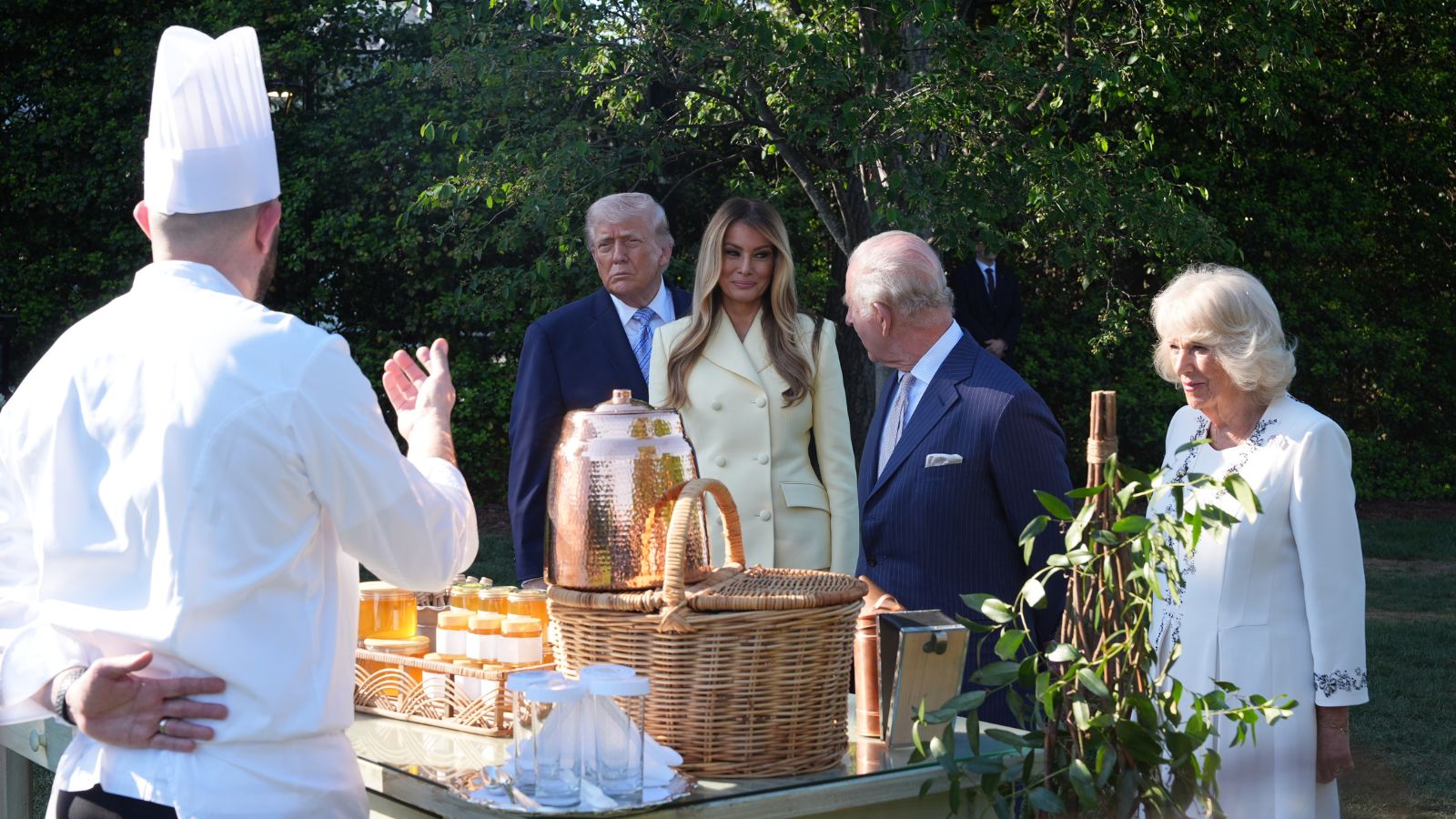
King Charles III did not travel to Washington to talk about insects. Yet, as the British monarch met with American officials against a backdrop of trade stagnation and shifting military alliances, it was the humble beehive that took center stage. The press was fed a steady diet of "sweet diplomacy" narratives—stories of the King gifting rare Cornish honey and discussing urban pollination with the First Lady. This curated focus on environmentalism is more than a personal hobby. It is a calculated, soft-power smokescreen designed to mask the absence of a meaningful post-Brexit trade deal and the cooling of the "Special Relationship."
While the cameras captured the King inspecting white-painted hives on the South Lawn, the real friction remained behind closed doors. For decades, the United Kingdom has relied on the monarchy to act as a lubricant for diplomatic gears that have become rusted by policy disputes. This visit, however, reveals a growing gap between the symbolic gestures of the Crown and the hard-nosed economic reality of a United States administration that has little interest in prioritizing British market access. The honey is a distraction from the fact that the jar is empty.
The Royal Hive as a Geopolitical Tool
The choice of honey as a diplomatic gift is not accidental. It carries a specific set of connotations: industriousness, ecological stewardship, and a shared concern for the planet’s future. By centering his visit on the "harmony of nature," King Charles attempts to find common ground in a political climate where actual policy agreement is scarce.
Historically, royal visits to the U.S. served as the victory lap for successful treaty negotiations or the precursor to major defense pacts. Today, the Crown is being deployed to maintain the appearance of relevance. When the King discusses the intricacies of the Buckfast bee or the importance of wildflower corridors, he is engaging in a form of "environmental statecraft." This allows both governments to claim a successful summit based on shared values while ignoring the stalled negotiations on the Atlantic Declaration.
The symbolism is heavy-handed. Bees represent a functioning society where every member knows its place and works for the collective good. It is a nostalgic image of order that the British government is desperate to project at a time when its domestic politics are characterized by upheaval. But a gift of honey cannot offset the 25% tariffs on British steel or the complexities of the Northern Ireland Protocol that continue to irritate Washington’s power brokers.
Why the Special Relationship is Losing its Sting
The narrative of a "Special Relationship" has always been more precious to London than to Washington. In the current geopolitical landscape, the U.S. is looking toward the Indo-Pacific and inward toward domestic industrial policy. Britain, having severed its primary tie to the European market, finds itself in a precarious middle ground.
- Trade Paralysis: Despite the fanfare, a comprehensive Free Trade Agreement (FTA) remains a distant dream. The U.S. is focused on the Inflation Reduction Act, which heavily subsidizes American-made green tech, effectively freezing out British competitors.
- Defense Diversification: While AUKUS remains a strong pillar, the U.S. is increasingly looking at bilateral deals with EU members, signaling that the UK is no longer the sole "bridge" between America and Europe.
- Climate Contradictions: King Charles’s focus on the environment clashes with the UK government’s recent backtracking on Net Zero targets. This creates a disjointed message where the Monarch promotes one vision while the Prime Minister enacts another.
These frictions are precisely why the "honey and hives" narrative was pushed so aggressively. It provides a non-controversial, visually appealing story that fills the void left by a lack of substantive policy announcements.
The Mechanics of Soft Power Inflation
Soft power only works when backed by hard power. The monarchy is the UK’s most potent soft power asset, but its value is being diluted through over-reliance. When the King is sent to discuss hives because there is nothing else to talk about, the prestige of the institution begins to erode.
Investigative analysis of the travel itineraries shows an increasing density of "lifestyle" and "environmental" stops compared to the 1980s or 90s, when royal visits often included high-level briefings with business titans and industrial leaders. The shift toward "awareness-raising" indicates a retreat from the halls of economic influence.
The British public is often told these visits are about "opening doors." In reality, the doors are open, but the people behind them are increasingly distracted. American legislators are more concerned with semiconductor supply chains and the rise of AI than they are with the King’s views on organic farming. The honey is a polite curiosity, a footnote in a briefing book that is otherwise dominated by the threat of global recession and the war in Ukraine.
The Hidden Cost of the Bee Narrative
There is a biological irony in using bees to represent this diplomatic effort. In a hive, if the queen cannot produce, she is replaced. The British monarchy is currently in a "production" crisis. It needs to produce a sense of national importance that the country’s economic data simply does not support.
By leaning so heavily into the "Green King" persona, the palace also risks alienating the very American political factions they need to woo. While the current administration may nod politely at talks of biodiversity, a significant portion of the U.S. legislature views these topics as secondary to energy independence and traditional manufacturing. The King’s message is tailored for a specific, liberal-leaning American audience, leaving the other half of the country feeling that the "Special Relationship" has become a partisan affair.
The Breakdown of Symbolic Value
- Diminishing Returns: The novelty of a royal visit wears off faster in a 24-hour news cycle dominated by domestic American scandals.
- Resource Allocation: The millions spent on security and logistics for these tours are increasingly difficult to justify when no measurable trade metrics improve as a result.
- The "Hobbyist" Perception: There is a danger that the King will be viewed as a well-meaning hobbyist rather than a head of state representing a serious global power.
Reality Check on the South Lawn
During the visit, much was made of the "Pollinator Partnership," a symbolic agreement to share research on bee health between British and American scientists. While scientifically valid, this is a minor technical cooperation framed as a major diplomatic win. It is the equivalent of two neighbors agreeing to share a lawnmower because they cannot agree on where to build the fence.
The honey gifted to the First Lady came from the hives at Highgrove. It is, by all accounts, excellent honey. But in the world of high-stakes diplomacy, a gift is never just a gift. It is a message. The message here is that Britain is leaning on its heritage, its tradition, and its natural beauty because its industrial and political leverage has softened.
Moving Beyond the Hives
If the UK wants to revitalize its standing in Washington, it needs to move beyond the garden. Soft power must be the wrapper, not the product. The focus on hives and honey is a symptom of a broader lack of strategic direction in British foreign policy. We are watching a nation try to charm its way out of a structural economic decline.
The "Special Relationship" requires more than shared history and mutual affection for the environment. It requires a hard-nosed assessment of what each side actually brings to the table in 2026. Britain brings intelligence sharing, a seat on the UN Security Council, and a significant (though shrinking) military. These are the tools that matter. The honey is just sugar.
The next time a royal aircraft touches down on American soil, look past the gifts and the photo ops with local school children. Look at the passenger manifest. Look at the side meetings between trade ministers that aren't being televised. If those meetings aren't happening, the honey is just a funeral rite for an era of influence that has already passed. Stop looking at the bees and start looking at the ledger.