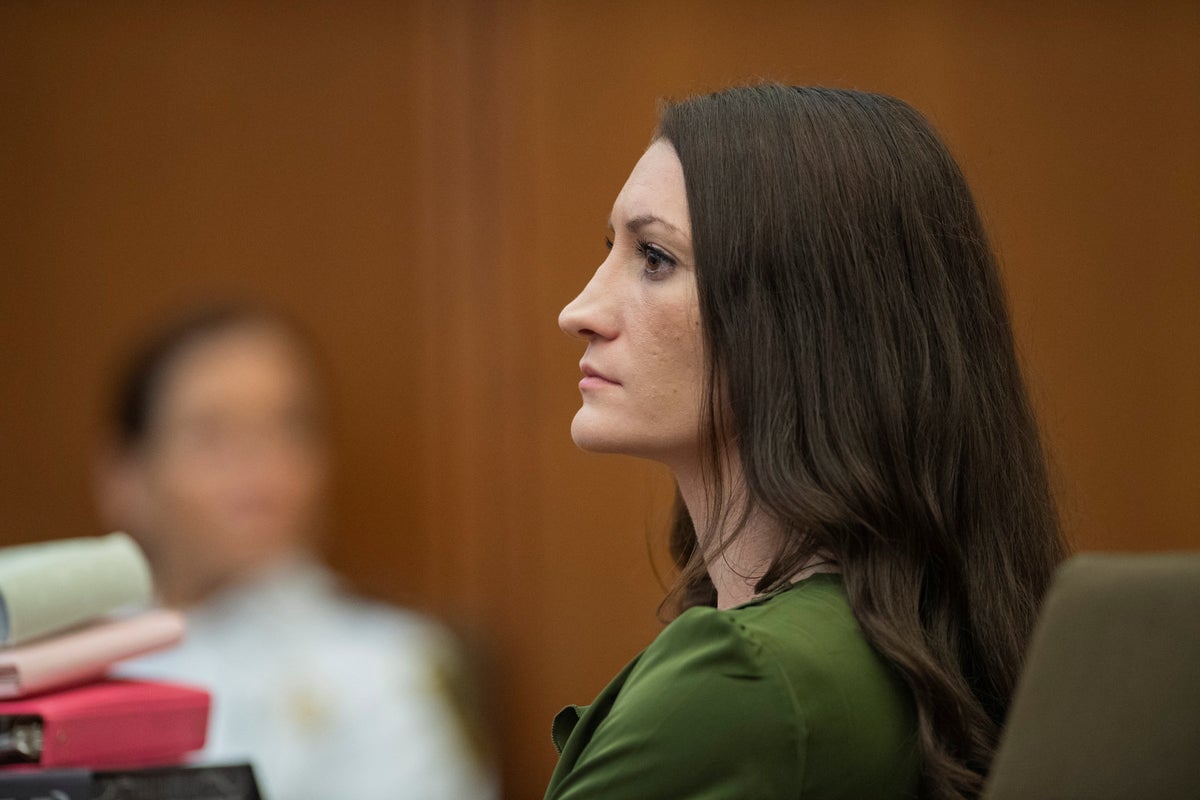
In the sterile confines of a Massachusetts courtroom, the murder trial of Lindsay Clancy has reached a flashpoint. Defense experts argue that Clancy, a former labor and delivery nurse, lacked the mental capacity to understand the wrongfulness of her actions when she strangled her three young children in 2023. At the center of this argument sits Dr. Paul Zeizel, a psychologist who asserts that Clancy’s judgment was obliterated by postpartum psychosis, a rare but cataclysmic psychiatric emergency. By claiming she could not conform her behavior to the rule of law, the defense is attempting to shift the narrative from a calculated act of violence to a tragic medical failure.
The law rarely grapples comfortably with the distinction between a mind broken by biology and a mind driven by intent. For decades, the legal system has struggled to parse the mechanics of criminal responsibility when psychiatric conditions collide with the visceral, often horrifying, nature of infanticide. Prosecutors in the Clancy case offer a starkly different perspective, one grounded in the mundane actions of the accused on that January day. They point to the evidence of a functioning adult: someone who ran errands, engaged with her children, and manipulated circumstances to ensure she was left alone with them.
The prosecution’s case rests on the observable. If the defense insists that psychosis is a total eraser of reality, the state counters by highlighting the persistence of daily executive function. Can a person be simultaneously deep in a psychotic break and capable of navigating the complex logistics required to execute a plan? This is the central tension of the trial. While experts often cite symptoms like hallucinations, delusions, and paranoia as hallmarks of postpartum psychosis, they acknowledge that these states are not always marked by visible, cartoonish detachment from reality. A person can appear coherent, even functional, while their internal world is disintegrating into a series of terrifying, fixed beliefs.
The medical community emphasizes that postpartum psychosis is a psychiatric emergency that demands immediate intervention. It involves a rapid decline that often leaves family members baffled, as the mother’s behavior shifts from recognizable anxiety to profound confusion or paranoia. Yet, the legal system demands a binary outcome: guilty or not guilty by reason of mental illness. This necessitates a forensic inquiry into a moment that can never be fully reconstructed. How does one accurately map the internal state of a person during a fugue of mental illness that occurred years prior?
Witnesses have painted a picture of a woman in steep, visible decline. Family members recounted her increasing terror regarding her own medication, her inability to sleep, and her vocalized thoughts of self-harm. These were not hidden fears; they were communicated to healthcare providers in the months leading up to the tragedy. The defense highlights this as evidence of a systemic failure, pointing to fragmented treatment plans and the repeated prescription of psychiatric drugs that may have exacerbated her condition. This narrative suggests that the tragedy was not an isolated act of malice, but the terminal point of an unmanaged medical collapse.
However, the courtroom is not a medical clinic. It is a place where specific actions are measured against the weight of the law. Prosecutors have been relentless in stripping away the veneer of the medical defense. They read reports from the psychiatric facility where Clancy is currently held, noting that she often engages in routines and social interactions that do not suggest a person lost in a permanent state of psychosis. They challenge the very experts who testify on her behalf, pointing to errors in their reports and questioning the objectivity of professionals who have also acted as her personal therapists.
The reality of postpartum psychosis is that it is both objectively severe and notoriously difficult to define in a legal context. While the condition can manifest with extreme symptoms, it does not follow a uniform path. Some women experience delusions about their children being in danger, a distorted logic that might lead them to believe that death is a form of protection or salvation. This warped perception is the core of the defense’s argument: that Clancy did not perceive her actions as murder, but as an inescapable, even necessary, outcome.
This reasoning creates a profound discomfort in the public sphere. It forces us to confront the possibility that the most fundamental social contract—a parent’s duty to protect their child—can be utterly severed by physiological failure. If the jury accepts the defense’s argument, they are effectively validating that certain medical conditions render the standard concepts of moral and legal wrongfulness obsolete. It is a proposition that demands a high bar of proof, one that the defense is struggling to meet against the cold, hard evidence of the children’s deaths.
We are left with an uncomfortable reality. Whether the jury finds that Clancy was a victim of a cruel biological anomaly or a perpetrator of premeditated violence, the underlying tragedy remains unchanged. Three children are dead, and the system tasked with determining justice is forced to operate in the gray area between clinical pathology and criminal accountability. There is no outcome that mends the damage, and the verdict will likely serve less as a resolution and more as a final, bitter punctuation on an unresolved national conversation about maternal mental health.
The trial continues to demand answers to questions that may not have satisfactory solutions. As the defense and prosecution trade blows over the meaning of a mother’s thoughts and the validity of a psychologist’s diagnosis, the focus remains narrow. Each day of testimony acts as a diagnostic attempt on a life already shattered, looking for a sign—a message, a missed appointment, a change in mood—that could have altered the path toward the end of January. By searching for a clear motive or a definitive proof of insanity, the court is essentially trying to impose logic on a situation that, by definition, exists outside the bounds of rational behavior.
The trial of Lindsay Clancy: Was it psychosis or premeditation?
This video provides an overview of the ongoing legal arguments surrounding the definition of postpartum psychosis and its impact on the criminal trial of Lindsay Clancy.
http://googleusercontent.com/youtube_content/1