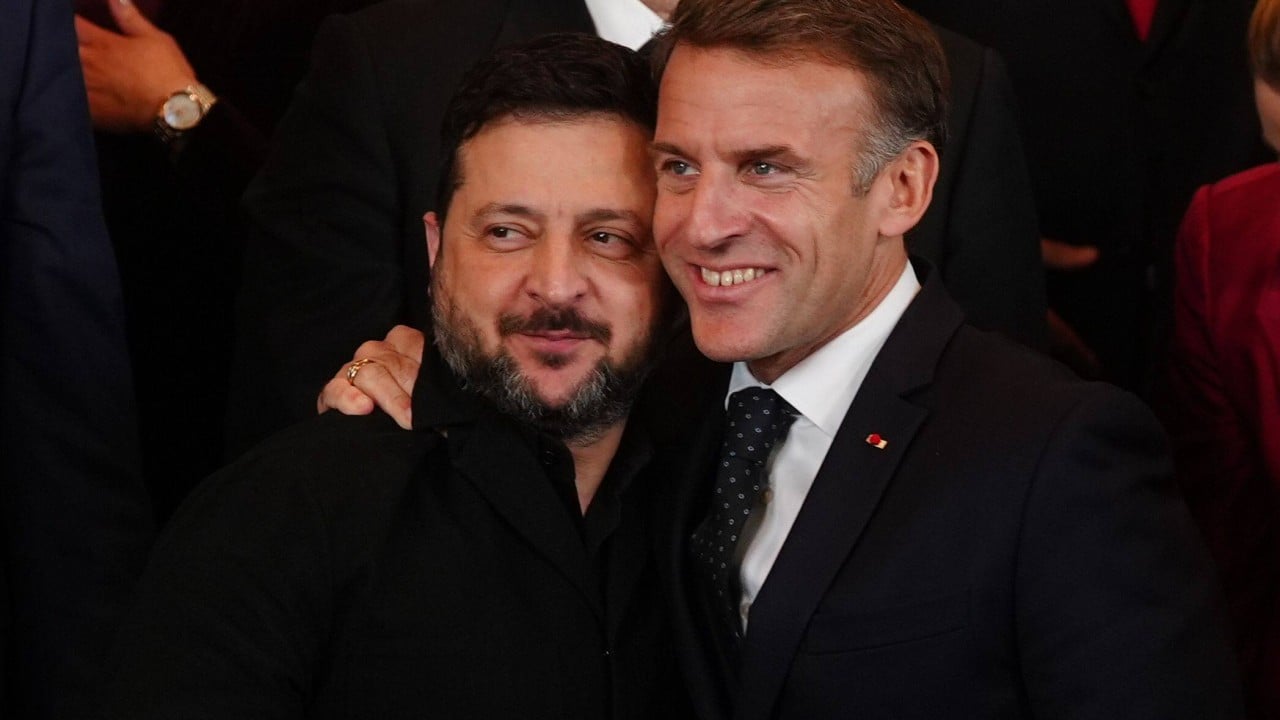
Every few months, a predictable headline cycles through international media. President Volodymyr Zelenskyy announces new talks with American and European officials regarding "peace prospects." Commentators immediately begin speculating about imminent ceasefires, territorial compromises, and diplomatic breakthroughs.
That reading misunderstands what modern wartime diplomacy actually accomplishes.
When wartime leaders convene high-level summits with their primary military backers under the banner of "peace prospects," they are rarely drafting an exit ramp. In geopolitical reality, these meetings serve a much more pragmatic function: aligning long-term security guarantees, managing domestic political fatigue among Western allies, and establishing the diplomatic architecture required to sustain a protracted conflict.
To understand what is actually happening behind closed doors when Kyiv meets Washington and Brussels, you have to look past the press releases and examine the mechanics of coercive diplomacy, alliance management, and deterrence theory.
The Myth of the Imminent Breakthrough
Mainstream coverage of diplomatic talks between Ukraine, the United States, and European nations often treats negotiations as a binary switch. Either the parties are fighting, or they are talking peace.
International relations scholars and veteran diplomats recognize this as a false dichotomy. According to Thomas Schelling’s foundational work on bargaining and conflict, diplomacy during an active war is not an alternative to military strategy—it is an extension of it. Negotiations are used to signal resolve, lock in coalition commitments, and shift the diplomatic burden onto the adversary.
When Zelenskyy engages Western officials on peace frameworks—such as Ukraine’s 10-point Peace Formula or subsequent bilateral security agreements—the primary audience is not Moscow. Russia is rarely even at the table during these specific consultations. The primary audience is the Western coalition itself, alongside key non-aligned states in the Global South.
By actively shaping the definition of "peace," Kyiv prevents its allies from fracturing over competing visions of how the war should end. If Ukraine does not define the terms of a settlement, external actors facing electoral pressures or economic headwinds will eventually define those terms for them.
What "Peace Prospects" Actually Means in Diplomatic Speak
In diplomatic terminology, discussing "peace prospects" with allies accomplishes three specific objectives that have little to do with an immediate armistice.
1. Institutionalizing Long-Term Military Aid
Talks about the post-war order inevitably force Western capitals to answer a hard question: How do we prevent the war from restarting two years after a ceasefire?
The answer is always the same: multi-year commitments to weapons production, intelligence sharing, air defense integration, and financial stabilization. By framing discussions around securing a durable peace, Ukrainian diplomats successfully convert short-term emergency aid packages into decade-long bilateral security treaties. Ironically, preparing for peace becomes the exact mechanism used to guarantee the hardware needed to keep fighting.
2. Neutralizing Western "War Fatigue"
Domestic voters in the United States and Europe consistently poll in favor of diplomatic solutions to foreign conflicts. When Western leaders can tell their parliaments and electorates that they are actively engaged in high-level peace discussions with Kyiv, it buys them political capital at home. It demonstrates that their governments are not blindly funding an endless stalemate, even if the concrete outcome of those meetings is another round of defense industrial coordination.
3. Controlling the Narrative in the Global South
Countries like Brazil, India, South Africa, and Saudi Arabia have repeatedly called for negotiated settlements, often viewing the conflict through the lens of global food and energy security rather than European territorial integrity. When Kyiv holds structured talks on peace frameworks, it neutralizes the narrative—frequently promoted by Russian state media—that Ukraine and NATO are obstinately rejecting diplomacy.
The Structural Barriers Nobody Wants to Quantify
Analysts who predict an imminent negotiated settlement based on these meetings usually gloss over the structural deadlocks that make a traditional peace treaty nearly impossible under current conditions.
- The Verification Problem: In any negotiated freeze along current front lines, how is a ceasefire monitored across hundreds of miles of fortified terrain? Past agreements, notably the Minsk I and Minsk II accords negotiated in 2014 and 2015, collapsed largely because monitoring mechanisms lacked enforcement power and violations occurred daily without meaningful consequence.
- The Deterrence Deficit: A ceasefire without ironclad security guarantees—such as NATO membership or an equivalent mutual defense pact—creates a strategic asymmetry. A pause in fighting allows an aggressor to reconstitute depleted forces, replenish artillery stockpiles, and fix logistical bottlenecks, only to resume operations at a time of its own choosing.
- Constitutional and Political Realities: For Kyiv, formally ceding sovereign territory is not merely politically unpopular; it violates the Ukrainian Constitution and creates an existential precedent for any state bordering a nuclear-armed neighbor. Conversely, for Moscow, withdrawing from annexed territories represents a catastrophic domestic political failure for the Kremlin.
When two sides hold mutually exclusive minimum requirements for survival, diplomatic summits among allies are not about splitting the difference. They are about ensuring the coalition does not blink first.
Rethinking the Questions Around Ukraine Diplomacy
Public discourse around these summits tends to revolve around the wrong questions. Looking at the structural realities shifts the focus entirely.
Are Ukraine and the West secretly planning to pressure Kyiv into territorial concessions?
While individual voices within Western policy circles occasionally float the idea of trading land for peace, official policy across Washington, Brussels, and Kyiv has consistently moved in the opposite direction: codifying long-term defense integration. Furthermore, diplomatic history shows that external powers cannot easily force a motivated state to surrender core territory while that state still possesses the will and capacity to resist.
Why hold peace talks if Russia isn't invited?
In coalition warfare, internal alignment must precede external negotiation. During World War II, the Allied powers held numerous conferences—such as Tehran and Yalta—to align their strategic objectives and post-war frameworks long before negotiating terms with the Axis powers. You cannot negotiate effectively with an adversary if your own coalition disagrees on what constitutes an acceptable outcome.
Does talking about peace signal weakness on the battlefield?
Quite the opposite. Historically, states refuse to discuss end-states when they are in acute panic, as doing so invites predatory demands. Engaging in structured diplomatic planning while holding defensive lines signals institutional stability and strategic patience. It tells the adversary that the defending coalition is planning on a multi-year horizon.
The Risks of the "Long-Game" Diplomatic Strategy
Framing alliance management as peace talks carries real strategic risks, even when executed skillfully.
First, it creates an expectation gap among the public. When citizens repeatedly read headlines about "new talks on peace prospects" followed by months of continued attrition, cynicism sets in. Public trust in both diplomatic institutions and media coverage erodes when the stated framing does not match the observable reality on the ground.
Second, diplomatic ambiguity can occasionally breed friction between allies. While Washington, Berlin, Paris, and London share the broad goal of preventing a Russian victory, their risk tolerances regarding escalation and their timelines for industrial mobilization differ. High-level summits often paper over these divergences with carefully worded communiqués rather than resolving the underlying resource bottlenecks.
Third, relying on prolonged diplomatic and military attrition carries immense human and economic costs for Ukraine. Infrastructure destruction, demographic displacement, and the daily toll on frontline personnel mean that time is not a neutral variable—it is an actively depleting resource.
How to Read the Next Headline
The next time a news alert announces that Ukrainian, American, and European officials have met to discuss peace prospects, ignore the speculative commentary about imminent truces. Instead, look at the deliverables attached to the meeting.
Watch for announcements regarding joint defense manufacturing agreements, air defense battery deliveries, long-term financial tranches, and bilateral security compacts. Look at which countries from outside the Euro-Atlantic sphere attended or endorsed the communiqué. Check whether the language shifts from "supporting Ukraine for as long as it takes" to concrete, multi-year budgetary commitments.
Those details reveal the true purpose of the room. Diplomacy in wartime is rarely about ending the conflict tomorrow; it is about deciding who holds the leverage when the fighting eventually stops.