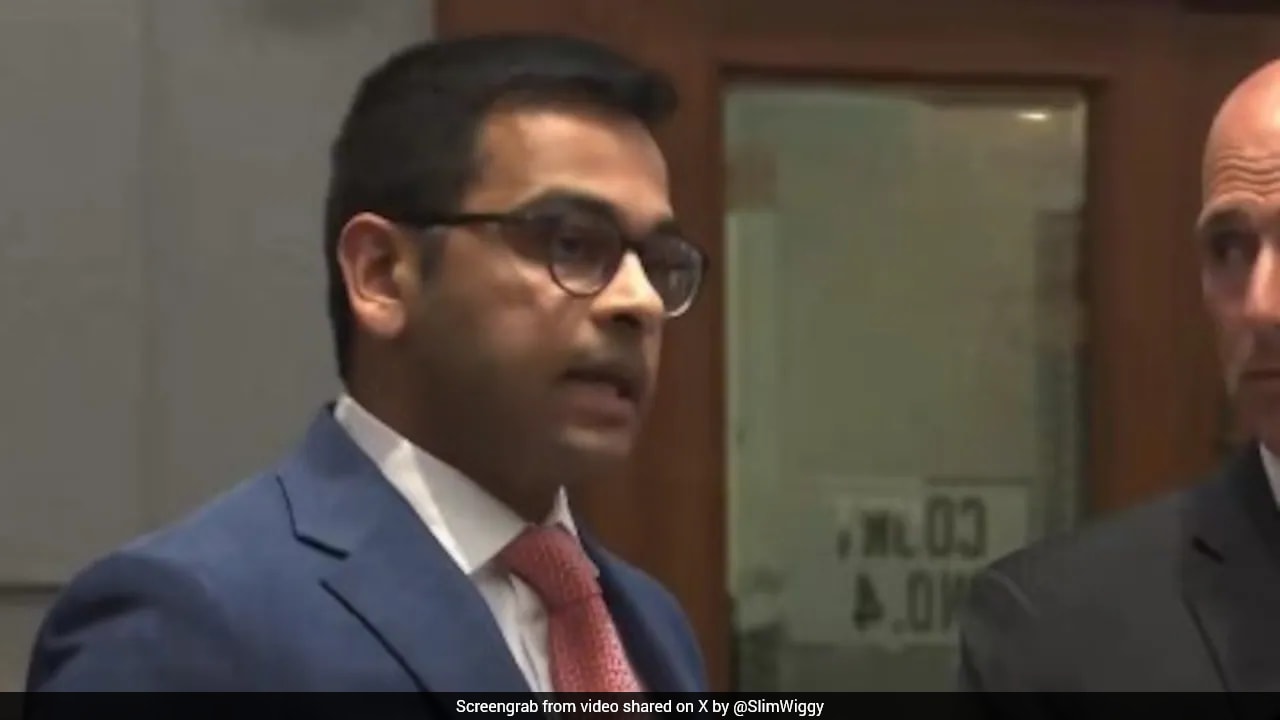
When an employee at ProMedica Toledo Hospital reached into a small cardboard box inside a unisex staff restroom in June 2025, they expected trash or medical supplies. Instead, they pulled out a active smartphone position to record. Before the witness could alert security, Dr. Advait Deshmukh, a third-year resident in endourology and urologic oncology, lunged forward and snatched the device back, claiming ownership.
That sudden altercation unspooled a law enforcement investigation that uncovered 82 illicit images taken across four months, ensnaring at least six identified hospital employees who had no idea their private moments were being captured.
The case concluded in Lucas County Common Pleas Court when Judge Michael Goulding sentenced Deshmukh to six months in jail, three years of probation, and 15 years on the sex offender registry following guilty pleas to voyeurism and attempted evidence tampering. Yet the six-month custodial sentence has left victims and workplace safety advocates questioning whether institutional responses to internal surveillance are fundamentally flawed.
The Anatomy of an Intra-Hospital Breach
Hospitals are heavily fortified environments designed to keep bad actors out. Keycard readers guard wings, closed-circuit security cameras monitor corridors, and visitor logs track every footstep.
Yet that security infrastructure operates on an implicit assumption: the real danger comes from the outside.
When the perpetrator holds institutional authority, the traditional defenses collapse. Medical residents, attending physicians, and senior clinicians possess unfettered access to non-public areas, including private break rooms, call quarters, and staff-only restrooms. Their presence in these spaces never triggers an alert because they belong there.
Deshmukh exploited this exact trust. For months, he planted hidden recording equipment inside employee-only facilities without raising suspicion. Had a vigilant staff member not stumbled upon the concealed phone, the operation might have continued unchecked indefinitely.
This is not an isolated malfunction in Toledo. Across North America, similar cases reveal a repeatable blueprint. In Peoria, Illinois, a neurosurgery resident received five years in prison after installing hidden cameras in employee restrooms over 50 times. In West Virginia, a physician was arrested for concealing recording hardware under sinks and inside toilet assemblies in staff restrooms.
The technical execution of these violations requires almost no specialized skill. Off-the-shelf smartphones, cheap pinhole lenses, and magnetic mounts make installation effortless. The real barrier to entry is psychological, not technological. Once a trusted insider decides to cross that line, physical facility audits rarely catch them until a physical mistake occurs.
Psychological Trauma and the Myth of Erased Data
During the sentencing hearing in Toledo, one victim took the stand to articulate the permanent fallout of workplace voyeurism. Lindsay, a Toledo Hospital staff member, described how her former sanctuary had turned into a source of perpetual hypervigilance. She now inspects every fixture, vent, and container before using any restroom.
"Not knowing what was done with the photos is enough to keep me up at night," Lindsay told the court. "Nothing is truly ever deleted."
Her statement highlights a critical dimension of digital voyeurism that trial courts often struggle to address: the secondary violation of the legal process itself.
To investigate, prosecute, and adjudicate these crimes, law enforcement officers, forensic analysts, prosecutors, defense attorneys, and judges must view the seized imagery. The victims know that dozens of strangers have examined intimate images taken without their consent.
Furthermore, once digital files hit a drive or cloud storage, absolute destruction is difficult to prove. Victims live with chronic anxiety that lost files will surface on obscure online forums years later. That psychological burden far outlasts any six-month jail sentence.
Institutional Silos and the Residency Loophole
When medical centers confront insider misconduct, their primary response is rapid administrative severance. ProMedica barred Deshmukh from its facilities, while the University of Toledo placed him on leave before letting his residency contract expire.
While legally necessary, this reaction often obscures systemic questions regarding supervisory oversight and facility management:
- How frequently are non-public staff areas physically audited for unauthorized hardware?
- What behavioral protocols govern the reporting of suspicious conduct among medical peers?
- Does the intense hierarchy of residency programs discourage staff from confronting senior or specialized personnel?
Medical residents occupy an unusual position in healthcare systems. They are employees of academic institutions while performing clinical labor inside hospital networks. This dual status can create jurisdictional blind spots. Human resources departments in healthcare institutions frequently focus on patient safety risks, leaving employee-on-employee non-clinical misconduct under-monitored until criminal law enforcement steps in.
When a hospital frames these events strictly as the rogue actions of a single bad actor, it avoids inspecting its own physical security oversights. Placing an unmonitored box containing a phone inside a shared restroom represents a failure of routine environmental sweeps.
Fixing the Privacy Void in Healthcare Facilities
Solving internal voyeurism demands a total shift in how healthcare administrators treat private staff zones. Passive reliance on keycards and professional courtesy is no longer sufficient.
First, facilities management must institute standardized, routine sweeps of non-public restrooms, call rooms, and changing areas. These inspections should include thermal imaging and radio-frequency detection equipment designed to spot hidden electronic transmitters or active battery packs.
Second, legal penalties for workplace digital voyeurism require recalibration. In many jurisdictions, recording someone without consent remains classified as a misdemeanor unless evidence of distribution emerges. Short custodial sentences fail to reflect the severe psychological damage inflicted on victims, nor do they provide a sufficient deterrent to individuals willing to abuse high-level medical access.
Finally, hospital systems must establish clear, anonymous internal reporting channels dedicated specifically to physical privacy breaches. Staff members who notice strange hardware, tampered fixtures, or suspicious behavior by colleagues in non-clinical areas need an immediate pathway to trigger security intervention without fear of professional pushback.
Without these structural adjustments, healthcare facilities will remain vulnerable to internal predators who exploit professional trust to turn private staff spaces into surveillance targets.
To learn more about the court proceedings and victim impact statements from the Toledo case, watch this 11 Investigates report on Toledo Hospital doctor sentencing. This news coverage directly documents the court statements made by victims and details the full legal outcome of the case.