Every evening at dusk, an invisible current connects a modest apartment in the dense concrete grid of Ap Lei Chau to a jagged crater thousands of miles away in the Arabian desert.
When seventy-two-year-old retired seamstress Wong Mei-ling presses the switch to illuminate her small living room, she does not think about geopolitics. She thinks about her budget. For decades, the electricity keeping her fans turning against Hong Kong’s suffocating summer humidity was a background certainty, as reliable as the tides in Victoria Harbour. For a different look, see: this related article.
But light is never truly a local matter.
The cold truth arrived on Sunday when HK Electric managing director Francis Cheng Cho-ying made an announcement that, stripped of its corporate dialect, reads like a dispatch from a fracturing world. For the residents of Hong Kong Island and Lamma Island, the cost of keeping the lights on is about to jump. Starting in July, the fuel surcharge will spike by nearly 34 percent, climbing to 41.9 HK cents per unit of electricity. Related coverage regarding this has been shared by The Motley Fool.
To a multinational conglomerate, a few cents is a rounding error. To Mei-ling, whose fixed income is stretched thinner by the month, it is the difference between a cool night’s sleep and a stifling evening spent counting the minutes until the sun goes down.
The Fire in the Gulf
To understand why a monthly utility bill in Hong Kong is skyrocketing, one must trace a line across the ocean map to Ras Laffan, a sprawling industrial city on the northeast coast of Qatar.
For twenty years, long-term contracts signed in a more stable era guaranteed that super-chilled liquefied natural gas (LNG) would flow reliably from the Persian Gulf straight to the Lamma Island power plant. Natural gas drives about 70 percent of HK Electric’s total power generation capacity. It is the clean-burning backbone of the city’s grid.
Then came March.
A barrage of missile and drone strikes targeted Qatari production facilities. The physical damage to the infrastructure was severe, but the geopolitical shockwaves were instantaneous. For the last sixty days, not a single Qatari gas tanker has navigated the heavily guarded, narrow waters of the Strait of Hormuz. Force majeure notices were issued to international buyers. The pipeline of predictable, affordably contracted energy evaporated overnight.
Consider what happens next: a massive utility company cannot simply allow the grid to go dark. When the long-term, low-cost supply line snaps, the company is forced to enter the spot market.
Think of the spot market as a frantic, real-time auction room where desperate buyers bid against each other for the remaining uncommitted energy floating on the world's oceans. In this arena, prices do not fluctuate gently; they explode. Global spot prices surged by roughly 65 percent following the Middle East disruptions.
“The impact has been very significant,” Cheng told reporters, defending the decision to pass these ballooning costs directly to consumers. “We cannot afford to gamble on fuel. If there is truly no supply and it affects electricity generation, the cost to Hong Kong will be bigger.”
The Squeeze on Both Fronts
The tragedy of a globalized supply chain is that vulnerability rarely strikes just once. While the Middle East conflict choked off Hong Kong's primary source of gas, the city's secondary lifeline was already fraying.
Australia, the other pillar of HK Electric’s energy portfolio, has been repeatedly tightening its own natural gas exports to prioritize its domestic market. Long-term agreements signed two decades ago are being tested by modern protectionism and shifting national priorities.
Caught between a closed strait in the West and tightening taps in the South, the utility company has been left with no choice but to absorb the astronomical premiums of the spot market—and then hand the bill to the public.
While the company claims it derives zero financial profit from the fuel surcharge itself, acting merely as a conduit for the global market's volatility, that distinction matters very little to the people looking at their mailboxes.
The company has introduced a temporary shield for its most vulnerable users. Residential customers who use 450 kilowatt-hours or less between August and October will receive a special subsidy, a measure expected to assist roughly half of HK Electric's customer base.
Yet, even this cushion feels temporary. The mechanism that determines electricity prices suffers from a built-in delay. The bill hitting doormats this July reflects the market's chaos from months prior. Because of this deferred effect, the utility has already explicitly warned that even steeper prices lie ahead if the embers of the Middle East conflict continue to burn.
A System Without Margins
We have built a world of exquisite efficiency and terrifying fragility.
When a factory or an extraction facility burns in one hemisphere, air conditioners groan under the financial strain in another. The long, peaceful era that allowed businesses to assume resources would always move smoothly across oceans has given way to an age of stark friction.
There is a faint glimmer of hope on the horizon. Qatari suppliers are reportedly attempting to reroute alternative natural gas resources from other global portfolios to resume deliveries to Hong Kong by mid-July. But variables remain entirely out of local hands. No one can predict when marine insurance rates will fall, when the tankers will safely pass through the strait, or when international fuel markets will find their floor.
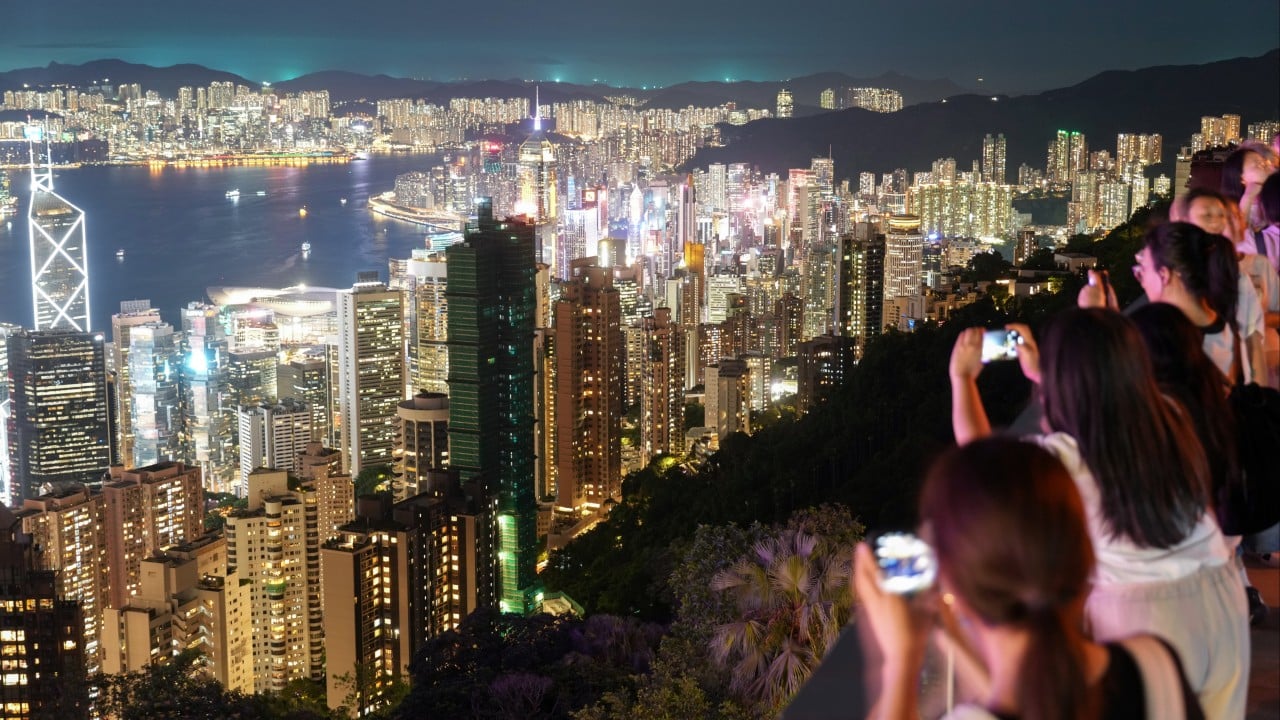
Back in her kitchen, Mei-ling turns off the electric kettle a moment before it boils, an instinctive new habit born of the quiet anxiety that accompanies a changing world. The light from her window shows the glittering skyscrapers of Central across the water, ablaze in brilliant blue and white LEDs.
Those grand towers will keep shining, their corporate balance sheets absorbing the shockwaves of distant regional wars as the cost of doing business. But on the steep slopes of the city’s residential neighborhoods, the cost of that cold light is measured in the small, quiet sacrifices of everyday life.