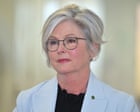
Independent MP Helen Haines is out of Melbourne's Alfred hospital. That sentence alone carries weight that hits right in the chest.
On October 19, 2026, the member for Indi was struck outside her Murphy Street electorate office in Wangaratta. Police allege it was a deliberate attack involving a Toyota LandCruiser. For days after the incident, she remained in critical condition at The Alfred, and doctors had to amputate both of her legs to save her life. By late October, her condition moved to serious but stable. By early November, hospital officials reported further improvement to stable condition. And in mid-November, nearly four weeks after that terrifying afternoon in regional Victoria, she left the hospital to begin the next phase of rehabilitation.
Anyone watching Australian politics knows this isn't just a medical update about one lawmaker. It's a gut check for how regional democracy works when ordinary offices become flashpoints for violence.
What Happened In Wangaratta And At The Alfred
Let's keep the timeline straight because early breaking-news threads often mash together rumours and court filings. Police allege that around 3.30 pm on October 19, 2026, a 43-year-old Tarrawingee man, Brendan Nugent, struck Haines twice with a Toyota LandCruiser outside her Wangaratta office on Murphy Street.
Emergency care brought her to Melbourne's Alfred hospital, a major trauma centre known across Victoria for handling severe vascular and limb-threatening injuries. Losing both legs in life-saving surgery changes everything about a person's daily reality overnight. In the first days, her husband Phil spoke about her fighting spirit and shared that her heart and mind were in good shape despite the catastrophic trauma.
Hospital updates tracked a slow, hard-won climb. Moving from critical to serious-but-stable on October 24 gave her community in north-east Victoria a moment to breathe. When she left hospital in November, she thanked Australians for thousands of warm messages and donations directed toward Save the Children.
Meanwhile, the legal process is moving on its own track. Police charged Nugent with offences including dangerous driving causing serious injury, intentionally causing serious injury, and causing harm to a Commonwealth public official, with court documents also noting cannabis cultivation and possession charges. He appeared in court on October 21 without entering pleas and remains in custody at Melbourne Assessment Prison ahead of a February court appearance. Reports have also noted family ties stretching back more than two decades, which adds an extra layer of grief and complexity that local residents are still processing.
Why Regional Electorate Offices Are So Vulnerable
If you spend time around country electorates, you know how accessible local offices are supposed to be. A constituent walks in off the main street to ask about Medicare wait times, aged care beds, flood recovery grants, or telecommunications blackspots. There isn't—and shouldn't be—an airport-style security wall between an MP and the people they represent.
Honestly, that openness is the whole point of regional representation. In huge rural seats like Indi, an MP isn't some distant figure seen only on television; they're someone you run into at the local show, the footy ground, or right outside the shopfront on a weekday afternoon.
Yet that exact visibility creates a blind spot. City parliament buildings have layers of physical security, protective guards, and controlled entry points. Regional storefronts sit right on public footpaths and car parks. When political anger spills offline or personal grievances collide with public frustration, a quiet street outside a local office stops feeling safe.
After the Wangaratta incident, lawmakers and security agencies moved quickly to talk about protection. Federal police began rolling out additional security briefings for politicians, and police and ASIO engaged with MPs on personal safety measures. Still, there's a real tension here. Harden every office too much, and politicians risk cutting themselves off from the public square. Leave them exposed, and staff and MPs carry risk every single day.
The Bigger Debate Around Political Threats
You can't talk about the attack on Helen Haines without looking at the broader climate around public life. Leaders across parties offered tributes, including Prime Minister Anthony Albanese, Foreign Minister Penny Wong, and fellow independent Allegra Spender, alongside local figures like former Indi MP Cathy McGowan at a Wodonga community vigil.
At the same time, the reaction wasn't all quiet unity. There were sharp arguments over tone, rhetoric, and how leaders speak when tensions run high. Some warned that MPs could pull back from public events out of fear, while police leaders and commentators pointed to the link between heated political hostility and real-world harm.
Here's where I think people sometimes miss the mark: blaming every act of violence on a single speech or slogan is lazy, while pretending toxic rhetoric has zero impact on unstable people is denial. Real-world accountability belongs in the courts—and in Australia, criminal proceedings must run fairly without prejudice. Political leaders, though, still have a choice every day about whether they turn the volume up or down.
A cross-party women's network also emerged in the wake of the attack, reflecting a practical reality: women in public office frequently face disproportionate abuse, intimidation, and safety concerns. Supporting staff welfare and building practical safeguards matter just as much as parliamentary speeches.
What Recovery Looks Like After Bilateral Amputation
Leaving the hospital is a major milestone, not the finish line. Bilateral leg amputation demands months—often years—of physical therapy, wound and stump care, pain management, prosthetic fitting, and home adjustments.
Even someone with strong family backing, sharp focus, and top-tier medical care faces exhausting days. Rehabilitation isn't linear. Some weeks bring noticeable gains in mobility or independence; other days bring fatigue, setbacks, or frustration.
For anyone following her progress, patience matters. A hospital discharge headline makes people want a neat "she's back" story. Real recovery doesn't work on a news cycle. It happens quietly in rehab gyms, physiotherapy sessions, and family living rooms.
Practical Steps For Following And Supporting Responsibly
If you're following this story—whether you live in north-east Victoria, work in public life, or just care about keeping local democracy intact—a few grounded habits make a real difference:
- Stick to verified updates: Rely on official hospital statements from The Alfred, statements from Haines's office, and court-reported facts rather than social media speculation while criminal proceedings remain before the courts.
- Give her rehabilitation space: Celebrate the milestone of her leaving hospital, and keep expectations realistic as she focuses on long-term recovery rather than rushing back to public appearances.
- Check how local offices operate: If you run, work in, or visit a community or electorate office, review basic incident-response plans, sightlines, and staff check-in routines without turning public spaces into fortresses.
- Channel support into constructive action: Rather than fuelling online pile-ons, support credible community initiatives or charities highlighted through official channels, and push for calm, fact-based public debate.