The sun hasn't even cleared the horizon when Marcus starts the engine. It is 4:45 AM on July fifth. While most of the country sleeps off a hangover of grilled meats, cheap beer, and the sulfurous smoke of backyard pyrotechnics, Marcus is staring down the barrel of the longest shift of his year. He is a sanitation worker, a man who tracks the rhythm of American life not by the calendar, but by the weight of its discarded remains.
Every holiday has its own specific fingerprint. Thanksgiving is heavy with wet food waste and grease. Christmas is a avalanche of cardboard boxes and glossy wrapping paper.
But the Fourth of July is different. The Fourth is explosive, plastic, and profoundly scattered.
Marcus drives his truck toward the city’s premier waterfront park, a place where just eight hours earlier, thousands of families gathered to watch the sky light up in brilliant shades of crimson and gold. He remembers hearing the distant booms from his own porch, feeling a faint sense of national pride. Now, pulling up to the park's entrance, that pride evaporates into a familiar, crushing fatigue.
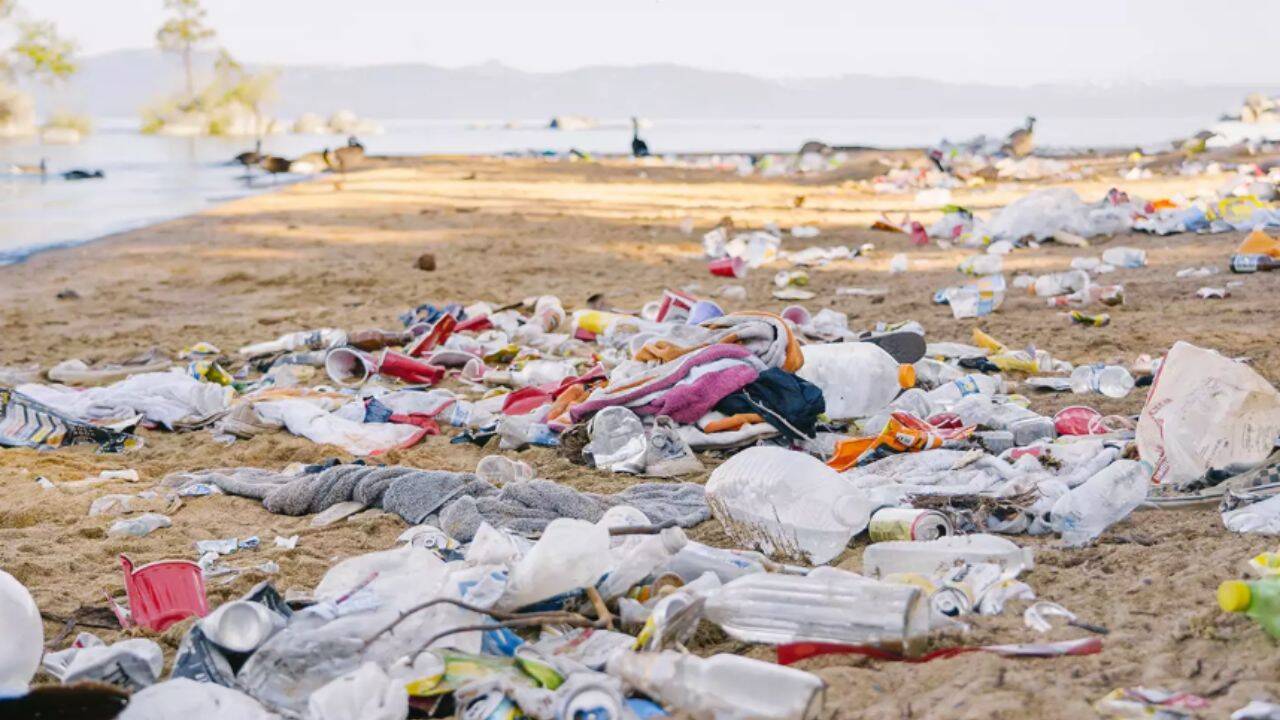
The grass is gone. In its place lies a shimmering, multi-colored carpet of red plastic Solo cups, half-eaten hot dog buns turning soggy in the morning dew, aluminum cans crushed flat by thousands of retreating boots, and the charred, skeletal remains of consumer fireworks.
It looks like a festival occurred, if the festival's primary objective was to cover the earth in polymer.
The Invisible Tax on Celebration
Consider a hypothetical family of four. Let’s call them the Millers. They are patriotic, hardworking, and deeply invested in creating summer memories for their kids. They pack a cooler, head to the beach, and set up camp for the day. Over the course of twelve hours, they consume eight hot dogs, six sodas, four bags of chips, and a dozen juice boxes. They use paper plates backed by plastic holders, plastic forks, and wet wipes to clean sticky fingers.
By the time the last firework fizzles out, the Millers are exhausted. The kids are crying. The parking lot is a bottleneck. In the darkness, the trash bag they carefully tied to the leg of their canopy rips. A few cups spill out. A breeze catches a handful of plastic wrappers. The Millers pick up what they can see by the light of their smartphones, shrug, and leave the rest behind.
They are not bad people. They love their country. Yet, multiplied by the millions of families doing the exact same thing across the United States, this collective shrug transforms into an ecological crisis of staggering proportions.
The numbers are difficult to comprehend when stripped of their human context. Every year, Americans eat roughly 150 million hot dogs on the Fourth of July alone. If you laid those hot dogs end-to-end, they would stretch from Washington, D.C., to Los Angeles more than five times. But think about what contains those hot dogs. The plastic sleeves. The Styrofoam trays at the grocery store. The condiment bottles squeeze-dried and tossed into the nearest overflowing bin.
The ocean conservancy groups report that the days following the Independence Day weekend see some of the highest spikes in coastal litter of the entire calendar year. On beaches from California to Maine, volunteers collect tons of debris in mere hours.
Most of it is single-use plastic. It is a material designed to last for centuries, manufactured to be used for exactly twelve minutes.
The Archaeology of a Cookout
Marcus steps out of his cab, heavy work boots crunching on an aluminum can. He bends down to pick up a discarded plastic American flag, its tiny wooden staff snapped in half. It feels wrong to leave it in the dirt, even if its ultimate destination is the same landfill as the half-eaten watermelon rinds.
The real problem lies elsewhere, hidden in the sheer velocity of our consumption. Over a single holiday weekend, the United States generates millions of tons of additional waste above the daily average. This is not just regular garbage; it is highly mobile garbage. Because so much of the celebration happens outdoors, a significant percentage of this trash never makes it to a landfill. It blows into rivers. It drifts into storm drains. It washes out to sea.
Think about the aluminum can. It is perhaps the most perfectly recyclable object humans have ever invented. A soda can tossed into a recycling bin can be melted down and back on a grocery store shelf as a brand-new can in as little as sixty days. Yet, on July Fourth, millions of these cans are tossed into standard trash bins because the recycling containers are either nonexistent or buried under a mountain of food scraps. Once an aluminum can is contaminated with barbecue sauce and grease, its economic value drops to zero. It becomes just another piece of buried history.
Then there are the fireworks. We rarely think about what happens to a rocket after it explodes in a beautiful shower of green sparks. The cardboard casing, the plastic caps, the chemical residues of copper, barium, and strontium—all of it has to land somewhere. Much of it falls directly into waterways or onto beaches, where the next high tide sweeps it into the marine food chain. Fish eat the plastic caps. Birds line their nests with the toxic cardboard shreds.
The Human Cost of Cleanliness
It is tempting to view this as a purely environmental issue, an abstract equation of carbon footprints and ocean gyres. But for people like Marcus, it is a physical assault.
By 9:00 AM, the temperature is already climbing past eighty degrees. The smell begins to change. The sweet aroma of spilled soda and charcoal smoke curdles into the sour, putrid stench of rotting meat and sun-baked dairy. Marcus and his crew work in a synchronized, grueling dance, lifting heavy bags that frequently burst, showering them in warm, mysterious liquids.
Injuries spike during this week. Broken glass hidden inside plastic bags slices through heavy canvas gloves. Unexploded fireworks, thrown into trash cans by nervous parents, can detonate inside the compactor mechanism of the truck, causing catastrophic fires or sending shards of metal flying toward the operators.
The financial cost is equally staggering, though largely hidden from the average taxpayer. Municipalities spend millions of dollars in overtime pay and specialized cleanup equipment in the first week of July. That is money pulled directly from road repairs, library funds, and public school budgets. We pay for our fireworks twice: once at the roadside tent, and again on our property tax bills.
Turning the Tide Without Losing the Joy
Change does not require us to abandon the celebration. Nobody is suggesting we swap the backyard barbecue for a somber day of fasting and reflection. The solution lies in shifting our relationship with the convenience we take for granted.
Imagine a different July Fourth.
The Millers pack their cooler again, but this time, they swap the single-use plastic cups for stainless steel tumblers brought from home. They buy condiments in bulk rather than individual squeeze packets. Instead of buying cheap, disposable plastic decorations made across the ocean, they invest in a few high-quality fabric flags that they store in the attic and bring out year after year, creating a tradition their children recognize.
When they leave the beach, they carry out everything they brought in, recognizing that the local sanitation department is not their personal maid service.
These small, seemingly insignificant changes, when adopted by a neighborhood, a city, or a nation, possess a massive compounding effect. We can celebrate our freedom without enslaving the future to our garbage.
Marcus finishes his route at 3:30 PM. His uniform is soaked with sweat and stained with grease. His back aches from lifting thousands of pounds of American celebration. As he drives the truck back to the depot, he passes a neighborhood park where a few kids are still playing catch with a football. The grass there is clean.
For a moment, he smiles. The beauty of the holiday isn't found in what we leave behind on the ground, but in the spaces we keep clean for the people who come after us.


