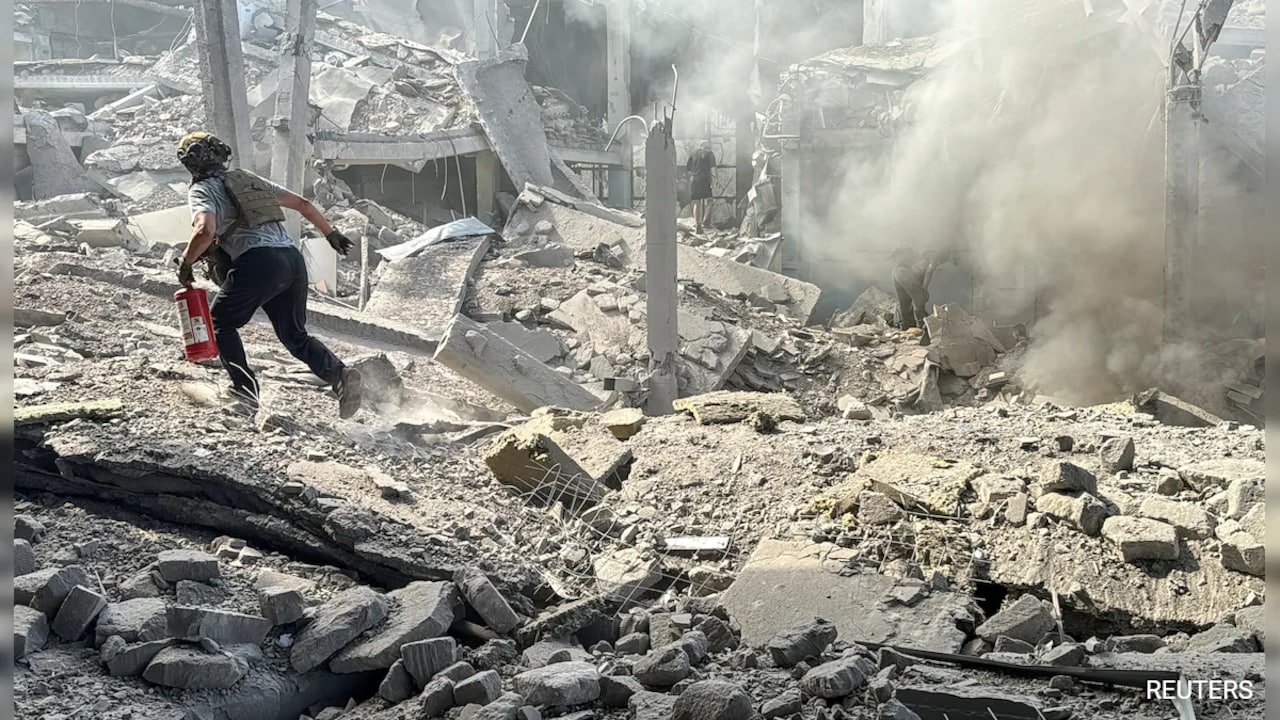
Sympathy is cheap. Analysis is hard.
When a headline announces that Russian strikes in Ukraine's Kharkiv killed an infant in a stroller along with five others, the standard media reflex is predictable. Outrage. A tragedy frame. A tally of dead bodies paired with a moral verdict. Millions of readers scroll past, shake their heads, and feel like they have understood the event. You might also find this related story interesting: The Mechanics of Alien Electoral Offenses: Analyzing the 2026 Federal Prosecutions in California.
They haven't.
A headline built around a stroller death captures real human horror, yet it treats modern urban warfare as a series of isolated moral outrages rather than a calculated system of pressure, attrition, and spatial control. By focusing almost exclusively on the most heartbreaking casualty in the frame, conventional reporting flatters the reader's empathy while starving them of operational reality. As highlighted in latest articles by Reuters, the results are widespread.
That is the lazy consensus. And it keeps people misreading almost every escalation on the northeastern front.
The Wrong Question Everyone Keeps Asking
When news breaks of deadly strikes in Kharkiv, the reflexive search query is simple: Why do Russian forces keep hitting civilian areas in Kharkiv?
That question assumes a clean binary—either a strike is aimed at a pure military target, or it is a random act of cruelty meant solely to shock. In real conflicts, that binary breaks down fast. Urban combat zones are dense, overlapping environments where military logistics, command nodes, repair bays, energy infrastructure, residential blocks, and public streets sit blocks—or sometimes meters—apart.
Even more importantly, asking "Why hit civilians?" treats violence as an emotional tic rather than a coercive instrument. Military planners do not operate out of cartoon villainy; they operate out of friction, target sets, munitions availability, intelligence lags, and strategic pressure. When an attack kills an infant in a stroller alongside five others, moral condemnation is completely warranted under international humanitarian law—especially given the duty to distinguish combatants from civilians and avoid disproportionate harm. Yet moral condemnation explains what the act violates, not how the campaign functions.
If you want to understand why Kharkiv remains under recurring threat despite years of adaptation, air-defense upgrades, and hardened civil routines, stop asking why headlines shock you. Start asking what kind of pressure a city thirty kilometers from the border is engineered to absorb.
What Standard Coverage Misses About Kharkiv
Standard coverage tends to flatten every strike into the same story: missile or glide bomb hits city, people die, officials condemn it. That template hides three mechanics that actually shape life and warfare in Kharkiv.
1. Proximity Changes the Geometry of Threat
Kharkiv's geography has always been unforgiving. Sitting close to the Russian border compresses flight times and complicates defense envelopes. When cheap, high-payload glide bombs or rapid-launch systems enter the mix alongside long-range drones or missiles, reaction windows shrink from minutes to seconds. A parent pushing a stroller on a city street does not have the luxury of a long warning siren when a weapon is released close to the line of contact.
Treating a strike in Kharkiv as identical in mechanics to a long-range strike hundreds of miles west ignores basic ballistics and geography. Distance dictates warning time, interception odds, and which weapon systems are economically viable at scale.
2. Urban Density Turns Imprecision Into Tragedy
Modern precision is never absolute, and high-tempo warfare often relies on systems with wider circular error probable, electronic warfare interference, or imperfect intelligence. Add shrapnel blast radii, secondary debris, and crowded sidewalks, and a strike aimed near a logistics node, warehouse, transformer, or transit route can tear through ordinary civilian life in an instant.
Pointing this out does not excuse reckless or unlawful targeting. It explains why civilian casualties are a structural feature of fighting in and around populated cities, not a mystery requiring a melodramatic explanation.
3. Attrition Targets Morale Through Exhaustion, Not Just Shock
Single atrocities grab global attention for twenty-four hours. Sustained pressure is what wears down a society over months and years. Repeated strikes on a major industrial and university hub like Kharkiv test housing, power, municipal services, business confidence, and psychological stamina.
When an infant dies in a stroller, the emotional shock is immediate and piercing. The strategic calculus behind recurring strikes, however, usually aims at something colder: keeping the city tense, forcing resources into air defense and emergency response, and reminding residents that normal life remains conditional.
Battle Scars From Reading Conflict Through Headlines
I have watched analysts, executives, and policy teams blow millions of dollars on risk assessments, supply-chain models, and political forecasts because they read the world through breaking-news headlines instead of operational mechanics. Time and again, smart people treat a viral tragedy as a turning point while ignoring slow-moving shifts in munitions supply, air-defense coverage, or frontline logistics—or they treat a quiet week as stability right before a shift in tempo.
In geopolitical and security analysis, precision of language matters. Terms like proportionality, distinction, glide munitions, and air-defense saturation are not academic jargon designed to sound detached. They are the exact concepts that separate serious assessment from emotional noise.
A common misunderstanding is assuming that every deadly strike represents a brand-new strategic doctrine or an imminent collapse of local defenses. Often, it reflects the grinding continuity of an existing campaign: probing defenses, punishing proximity, and exploiting gaps between alerts and impacts.
Serious observers of modern conflict—from military historians like Lawrence Freedman and Sir Hew Strachan to defense analysts studying contemporary European warfare—have spent years emphasizing the same hard lesson: wars are shaped by logistics, industrial capacity, geography, and friction far more than by single dramatic incidents. Moral outrage tells you what kind of world you wish we lived in. Operational analysis tells you what is actually happening on the ground.
Where This Contrarian Lens Can Trip You Up
Let's be candid about the downside of stripping away headline emotion to look at mechanics.
Go too far in the analytical direction, and you start sounding callous. Worse, you can blind yourself to the political and human consequences of horrific events. A child killed in a stroller is not a "statistical artifact." Events like that harden public resolve, shape international aid debates, trigger diplomatic fury, and influence how local communities react to evacuation pressures or governance strain.
There is a real trap here. If your contrarian posture turns you into a cold board-game strategist who ignores human shockwaves, your analysis becomes brittle. Real-world strategy has to account for both physical mechanics and human reactions. Ignoring the human impact is just a different kind of blindness.
"People Also Ask" — Dismantled
Does a strike killing civilians automatically prove the target was purely civilian?
No—and assuming that simplifies reality in a way that hurts accurate analysis. A strike can hit civilians because a military objective was nearby, because intelligence or guidance failed, because blast effects spilled over, or because the attacker disregarded civilian risk. Determining legal responsibility requires examining targeting choices, precautions, and proportionality—not guessing from the headline alone.
Why haven't air defenses stopped every strike in a major city?
Because air defense is an economics and geometry problem, not a magic shield. Interceptors cost money, take time to reload, and must be rationed across competing priorities. Against fast, low-altitude, or high-volume threats near a border, intercepting a high share of incoming munitions is already a major achievement; intercepting one hundred percent is rarely realistic.
Do high-casualty civilian strikes change the military balance on the ground?
Usually less than people expect, and more than strategists admit. Tactically, a strike on a street rarely decides a ground engagement unless it hits command, troop concentrations, or critical supply lines. Politically and psychologically, however, repeated civilian loss shapes morale, domestic politics, and external pressure—factors that slowly feed back into how long a war lasts and how it is fought.
What Actually Works When Tracking a Conflict Like This
If you are following events in Kharkiv—whether as a researcher, an investor, a journalist, or simply someone trying to stay informed without getting played by outrage cycles—change how you read the feed:
- Separate the human loss from the tactical event. Honor the gravity of lives lost, especially children, while keeping your analytical assessment clean and unsentimental.
- Look for patterns over single incidents. One strike tells you a weapon landed; ten strikes over a month tell you what target set, corridor, or pressure tactic is active.
- Track enablers, not just impacts. Watch air-defense deliveries, interceptor stocks, electronic warfare adaptations, municipal repair speed, and border dynamics. Those move the needle far more than a single news cycle.
- Imagine a scenario where two identical casualty counts are reported on consecutive days: one from a long-range drone hitting an apartment block far behind the lines, and one from a short-range munition near a contested logistics corridor. Treating both as the exact same operational event guarantees sloppy thinking.
Stop confusing emotional clarity with analytical insight. Look at the geometry, the friction, and the pattern.


