Hurricane Lala did not just bring wind and rain to the islands. It exposed the fragile scaffolding holding together modern Hawaiian infrastructure. When the storm made landfall, leaving one dead and widespread destruction in its wake, official reports pointed squarely at meteorological fury. Natural disasters are convenient scapegoats. They allow authorities to frame catastrophic failures as acts of God rather than failures of planning.
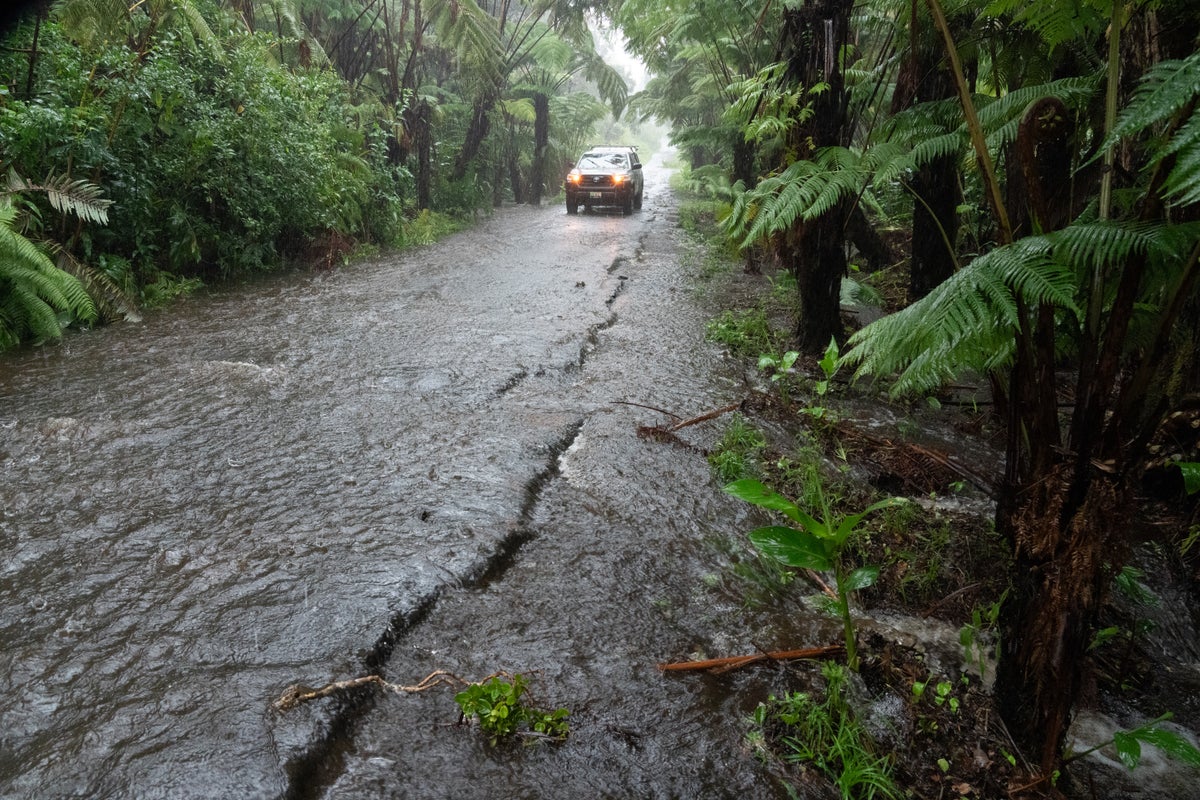
The storm packed powerful gusts and triggered torrential flash flooding that paralyzed major roadways, flooded neighborhoods, and cut off entire communities. Yet, looking only at the wind speeds misses the point. Emergency management systems struggled under pressure. Evacuation routes bottlenecked immediately. Aging utility grids failed long before the worst bands arrived.
Journalists covering severe weather events often fall into a predictable trap. They rely on emergency press releases, aggregate local casualty reports, and repeat meteorological statistics about barometric pressure. They treat the event as an isolated meteorological anomaly.
This is lazy reporting.
Hurricanes in the central Pacific are becoming more frequent and erratic due to warming ocean temperatures. Island ecosystems operate under strict physical constraints. Supply chains are narrow. Evacuation options are fundamentally limited by geography. When a Category-level threat approaches, the margin for error shrinks to zero.
Consider the logistical reality of the Hawaiian archipelago. Nearly all food, medical supplies, and fuel arrive via container ships. Ports on Oahu and the neighbor islands are the literal lifelines of the state. When high surf and fierce winds shut down harbors, the state has roughly a one-week buffer before essential goods run critically low. Hurricane Lala brought port operations to a grinding halt. While officials focused media attention on water rescue operations in flooded valleys, the broader economic and logistical vulnerability remained largely unexamined.
Power distribution represents another systemic flaw. Hawaiian Electric has faced mounting scrutiny over the resilience of its grid. Overhead lines snake through dense vegetation and across steep terrain vulnerable to landslides. When Hurricane Lala tore through, thousands lost power instantly. In many rural districts, repair crews could not even access damaged transformers because swollen rivers washed out single-lane access bridges.
Building codes present a third dimension of the crisis. Much of the housing stock in lower-income areas consists of older structures built decades before modern wind-mitigation standards took effect. Roof-to-wall connections on these older homes routinely fail when sustained winds exceed baseline thresholds. Homeowners face prohibitive insurance costs, forcing many to go without adequate windstorm coverage. When a storm hits, the financial devastation falls heaviest on families least equipped to absorb it.
Emergency communication during Hurricane Lala also revealed deep fissures in public trust. Wireless emergency alerts sounded on mobile phones, but translation services for non-English speakers lagged behind. In a diverse state with significant immigrant and non-native-speaking populations, failing to deliver immediate, multi-lingual evacuation directives is indefensible. Residents in inland valleys reported receiving conflicting instructions from county versus state emergency apps. Confusion kills.
Tourism compounds the equation. Millions of visitors crowd coastal resorts at any given time. Hotels have shelter-in-place protocols, but rental cars clog local evacuation corridors as tourists attempt to flee to higher ground without local geographic knowledge. Destination marketing organizations push hard to keep the pipeline full, yet evacuation infrastructure is rarely scaled to support transient populations alongside permanent residents.
The single fatality recorded during Hurricane Lala highlights the grim human cost of these systemic oversights. A motorist attempting to cross a notoriously flood-prone bridge was swept away by a sudden wall of runoff. Local residents had petitioned the county transportation department for years to elevate that specific span. Budget constraints and bureaucratic inertia stalled the project. The bridge remains low, the waters rose, and a life was lost to a known hazard that municipal planners chose to ignore.
Weather forecasting models are improving. Meteorologists can track storm tracks with remarkable precision days in advance. But data is useless if it is not matched by structural preparedness.
Insulating an isolated island state against severe weather requires massive capital investment. It demands underground power lines, hardened port facilities, upgraded drainage basins, and uncompromising zoning laws that restrict development in low-lying coastal zones and flash-flood pathways. Developers push back against these restrictions, citing housing shortages and economic growth. Politicians fold under pressure from real estate lobbies.
Hurricane Lala should serve as a wake-up call, but history suggests it will be filed away as bad luck. The infrastructure deficit across the islands will remain unaddressed until the next system forms in the eastern Pacific, gathers strength over anomalous warm water, and turns its sights toward the coast. When that happens, the same evacuation bottlenecks will choke traffic, the same aging grids will plunge neighborhoods into darkness, and officials will express profound shock that nature once again broke the rules they refused to write.