Every retrospective on Harold Shipman makes the exact same fatal error.
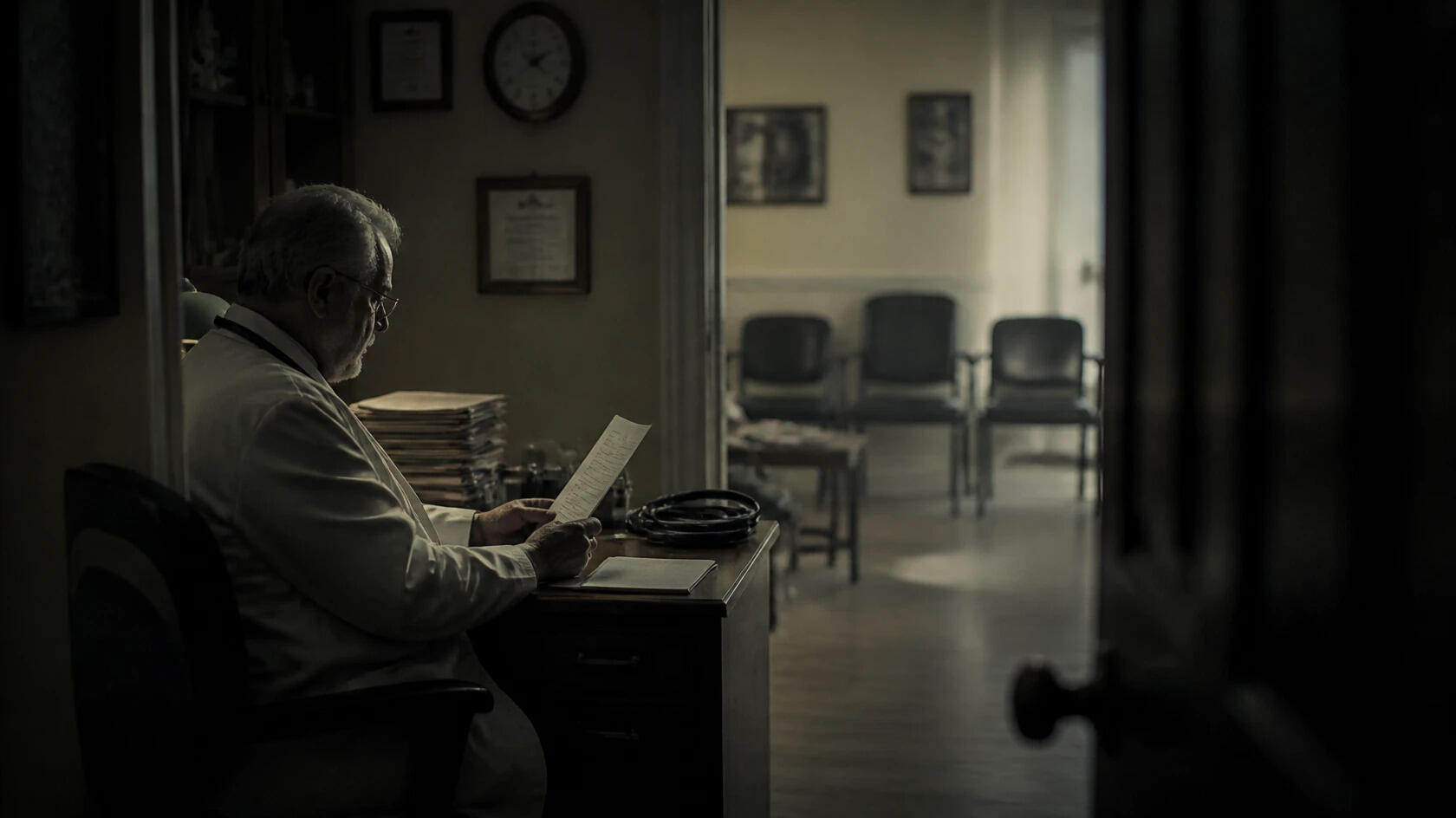
The standard media narrative paints the British general practitioner—convicted in 2000 of murdering 15 patients, though the subsequent inquiry estimated his actual body count at roughly 250—as a uniquely monstrous aberration. A rogue wolf in a white coat. An inexplicable black swan event in the otherwise pristine history of modern medicine.
That framing is comfortable. It lets the healthcare establishment, regulators, and patients sleep soundly at night believing that once Shipman died in his Wakefield prison cell in 2004, the threat evaporated.
It is also dead wrong.
Shipman did not succeed because he was a criminal mastermind. He was sloppy. He forged a will with a cheap typewriter so poorly that it immediately triggered a police investigation. He hoarded diamorphine in amounts that defied basic pharmaceutical logic. He signed death certificates at a rate that made him a statistical outlier in Hyde, Greater Manchester, for decades.
He got away with mass murder not because he was brilliant, but because the architecture of primary care was practically begging someone to exploit it. When you look closely at the mechanics of the Shipman case, you realize he wasn't an anomaly. He was simply the first person sociopathic enough to stress-test a system built entirely on blind trust and zero structural friction.
The Myth of the Uncatchable Monster
Lazy true-crime reporting loves a genius villain. It flatters the investigators who finally caught him and excuses the institutions that missed him for twenty-four years.
Let's dismantle that fairy tale immediately.
In 1998, Shipman killed Kathleen Grundy, an 81-year-old former mayor of Hyde, and then crudely forged her will to leave himself £386,000. Grundy's daughter, Angela Woodruff, happened to be a solicitor. She took one look at the typing, the phrasing, and the sheer absurdity of her wealthy, lucid mother leaving everything to her local GP, and went straight to the police.
Before that moment of breathtaking stupidity, Shipman had murdered hundreds of elderly patients—mostly women—by injecting them with lethal doses of diamorphine (medical-grade heroin) during routine house calls.
How does a single practitioner execute 250 people in a small English town without raising an alarm?
Not through cunning. Through institutional inertia.
In the 1980s and 1990s, a single-handed GP in the UK operated as an unchecked sovereign. There were no electronic prescribing audits flagging massive spikes in controlled substances. There was no cross-referencing of mortality rates across local practices. A doctor could walk into a local pharmacy, collect enough diamorphine to sedate a small army under the guise of palliative care for a single terminal patient, pocket the vials, and walk out. Nobody checked the vials. Nobody audited the patient's chart against the pharmacy ledger.
Even more damning was the cremation certification process. Under British law at the time, if a patient was to be cremated, a second, independent doctor had to sign Form C—a confirmatory medical certificate—to ensure no foul play had occurred before the body was turned to ash.
In theory, this was a fail-safe. In practice, it was a rubber stamp.
Local doctors in Hyde routinely signed each other's cremation forms without examining the bodies or scrutinizing the clinical notes, treating the process as an administrative courtesy—and a nice little fee-for-service side hustle. Shipman knew this. He actively encouraged families to choose cremation, knowing his peers would sign off on his handiwork without asking a single uncomfortable question.
What Everyone Gets Wrong About Medical Trust
If you ask the average person what lessons were learned from the Shipman Inquiry—chaired by Dame Janet Smith—they will tell you that background checks got stricter and controlled drug logs got tighter.
That misses the entire point.
The core vulnerability exposed in Hyde wasn't a paperwork gap. It was a cultural pathology: the conflation of clinical authority with moral infallibility.
In medicine, deference is baked into the training, the hierarchy, and the patient-doctor dynamic. Nurses do not question senior physicians. Junior doctors do not report erratic behavior from partners. Pharmacists do not challenge a respected GP's opioid orders. Coroners take a doctor's word on a cause of death as gospel, especially when the deceased is over 75 and lived alone.
I have spent years analyzing systemic failures across high-reliability industries, from aviation to hospital administration, and the pattern is always identical. Catastrophes rarely happen because a bad actor breaks through a fortress. They happen because the people guarding the gates assume no one inside the castle would ever set it on fire.
Look at the warning signs that were actively ignored in Hyde:
- The Funeral Director's Suspicions: Alan Massey, a local undertaker, noticed that Shipman's patients were dying at an astonishing rate, almost always fully clothed, sitting upright in chairs, during the afternoon, with Shipman conveniently present. Massey actually confronted Shipman about it. Shipman brushed him off. The matter was dropped.
- The Neighboring Practice's Alarm: Dr. Linda Reynolds, a GP at a neighboring surgery, became so disturbed by the sheer volume of cremation forms she was being asked to countersign for Shipman's elderly patients—and the suspiciously uniform nature of their deaths—that she reported her concerns to the local coroner, John Pollard, in March 1998.
- The Botched Investigation: Greater Manchester Police conducted a cursory review, failed to check Shipman's criminal record—which included a 1976 conviction for forging pethidine prescriptions to feed his own opioid addiction—and closed the inquiry for lack of evidence.
Between the closure of that half-hearted police check and his eventual arrest, Shipman murdered three more people.
When you examine that timeline, calling Shipman a "mastermind" becomes offensive. He was hiding in plain sight, surrounded by professionals who saw the smoke, smelled the burning, and collectively decided it would be rude to pull the fire alarm.
The Uncomfortable Truth About Healthcare Murderers
People often ask: Why did he do it? What was his motive?
Stop looking for a Hollywood answer. You won't find one.
Forensic psychologists, criminologists, and Dame Janet Smith herself spent years dissecting Shipman's psyche, and the most terrifying conclusion is the total absence of a conventional motive. Except for the botched Grundy will at the very end, he didn't steal from his victims. He didn't sexually assault them. He didn't take trophies.
He killed because he was addicted to the ultimate form of control: deciding who lived and who died, and then playing the compassionate, grieving healer to the bereaved family ten minutes later.
This is the profile of what criminologists call an Angel of Death—a healthcare serial killer—and it is far more common than hospital boards want you to believe. Think of Charles Cullen, the American nurse who murdered dozens (potentially hundreds) of patients across New Jersey and Pennsylvania over sixteen years. Think of Niels Högel, the German nurse convicted of killing 85 patients by inducing cardiac arrest just so he could thrill himself by attempting to resuscitate them.
Notice the common thread?
None of them were operating in the dark. All of them were bounced from facility to facility, or operated within tight-knit medical communities, shielded by institutional cowardice.
When a hospital suspects a nurse or doctor of harming patients, the default administrative instinct is rarely to call homicide detectives. The default instinct is risk management. Quietly accept their resignation. Write a neutral reference letter. Make them someone else's liability.
In Shipman's case, his 1976 conviction for drug offenses should have permanently barred him from handling controlled substances, if not practicing medicine altogether. Instead, the General Medical Council (GMC) sent him a warning letter, let him complete a brief rehab stint, and allowed him to set up a solo practice where he had unrestricted access to lethal narcotics. The system prioritized the rehabilitation and reputation of the practitioner over the physical safety of the public.
Why Modern Reforms Still Leave the Door Open
Following the six reports of the Shipman Inquiry, the UK overhauled its medical regulatory framework. The GMC introduced mandatory revalidation every five years. Controlled drug monitoring became digitized and subject to strict Accountable Officer oversight. The medical examiner system was eventually rolled out to provide independent scrutiny of all non-coronial deaths.
On paper, another Harold Shipman is impossible.
In reality, we have merely traded analog blind spots for digital ones.
Let's look honestly at the downsides of the post-Shipman regulatory apparatus—because pretending the fix is airtight is just another form of lazy consensus.
First, surveillance creates compliance theater, not vigilance. Modern doctors spend up to half their working hours feeding data into electronic health records (EHRs) and ticking revalidation boxes. When you bury clinicians under mountains of bureaucratic verification, scrutiny becomes mechanical. Reviewers look for missing checkboxes, not clinical patterns. A savvy bad actor today doesn't need to forge a paper prescription; they just need to know how to code an EHR entry so it looks statistically unremarkable to an algorithm.
Second, the global shortage of healthcare workers has resurrected the exact same deference problem. When a clinic or hospital ward is chronically understaffed, administrators become desperate to retain warm bodies with licenses. Whistleblowers who raise concerns about a high-performing or indispensable colleague are routinely ostracized, retaliated against, or silenced through non-disclosure agreements. Look at the Lucy Letby case in the UK—a neonatal nurse convicted in 2023 of murdering seven infants and attempting to kill several more. Senior doctors raised alarms for months, and hospital executives repeatedly forced those doctors to apologize to Letby rather than call the police, terrified of reputational damage to the trust.
The machinery changed. The human psychology protecting the machinery did not.
How to Actually Protect Yourself and Your Family
If you are waiting for a government regulator or a hospital compliance department to protect your elderly parents from negligent or malicious care, you are gambling with their lives. Systems protect themselves first and patients second.
You have to introduce your own friction into the medical process. Here is what that actually looks like in practice:
- Eliminate the Solo-Practitioner Monopoly. Never allow an elderly or vulnerable relative to rely exclusively on a single, isolated primary care doctor for chronic management or palliative care. Insist on multi-disciplinary oversight. Ensure at least two independent clinicians—such as a specialist, a nurse practitioner, or a secondary consultant—review medication lists every six months.
- Audit Every Narcotic and Sedative Prescription. If a doctor prescribes strong opioids, benzodiazepines, or sedatives for home use, verify the exact dosage, the pharmacy dispensing log, and the administration schedule yourself. Never let a clinician administer an injectable medication during a home visit without stating the exact drug name, milligram dose, and clinical indication in front of a family member—and writing it down immediately.
- Demand a Medical Examiner Review and Autopsy for Any Unexpected Death. "Old age" is not a cause of death; it is a lazy convenience. If an elderly relative dies suddenly when they were stable hours earlier, do not accept a vague certification like "heart failure" or "natural causes" without question. Refuse to authorize cremation until an independent medical examiner has reviewed the full clinical record and answered why the death occurred at that exact moment.
- Trust Your Pattern Recognition Over a White Coat. Families in Hyde noticed things felt wrong. One daughter couldn't understand why her mother's sleeve was rolled up when she wasn't due for blood work. Another wondered why her father had died with a teacup still warm beside him, while Shipman claimed he had passed away hours earlier. They suppressed their instincts because he was the doctor. If a clinician's timeline, demeanor, or explanation defies basic common sense, treat it like a crime scene, not a bedside manner quirk.
The Real Lesson of Hyde
Harold Shipman died by suicide in his cell on January 13, 2004—one day before his 58th birthday, ensuring his wife would still receive his full NHS pension. Even in death, he played the system like a fiddle.
Stop viewing his story as a grim piece of British true-crime trivia. View it as an engineering stress test. Shipman proved that when you combine unchecked authority, isolated environments, opaque record-keeping, and a culture that punishes skepticism, a single individual can operate a quiet assembly line of death for a quarter-century.
The white coat is not a halo. Start treating medicine like any other high-risk industry: trust nothing that isn't verified, question every outlier, and never assume someone won't abuse power just because they took an oath.