Diplomacy rarely looks like a polite tea party. More often, it resembles a high-stakes poker game played with live ammunition. When Washington and Tehran step back from the brink of total war only to sit down at a negotiating table hours later, observers often experience whiplash. But if you look past the theatrical headlines and fiery public declarations, a much more pragmatic, cynical machinery starts to show. Leaders don't issue threats of annihilation just for fun. They do it to shift the baseline of every conversation that follows.
Understanding modern international relations requires abandoning the naive notion that leaders mean everything they shout on a global stage. Words are weapons. They are designed to soften an adversary, fracture domestic opposition, and extract concessions before a single diplomat even opens a briefing folder. When harsh ultimatums meet quiet backchannel talks, it's not a contradiction. It is standard operating procedure for nations operating on the edge of catastrophe.
The Dangerous Theater of High Stakes Ultimatums
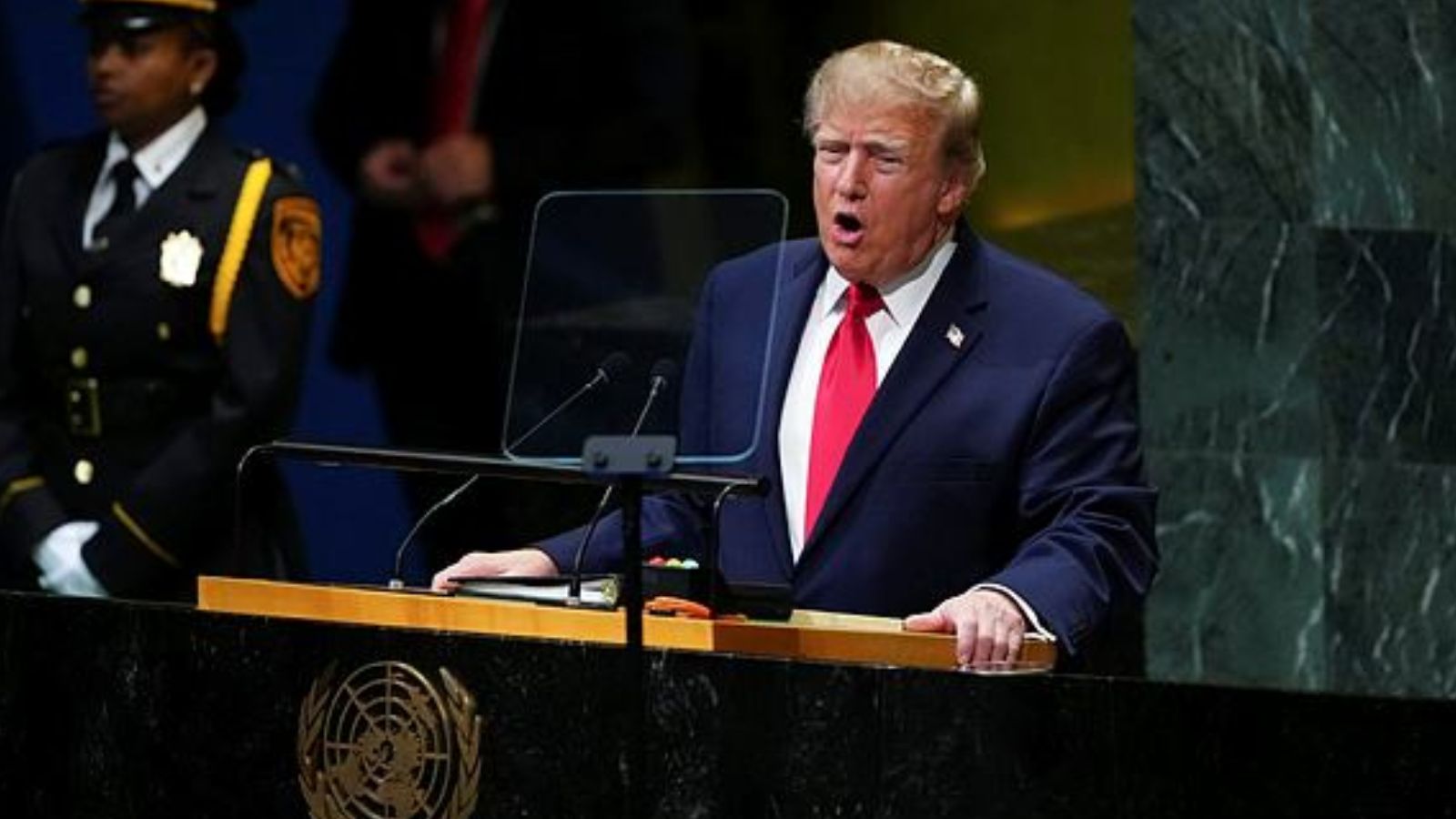
Public posturing has a specific function in modern statecraft. When a president stands before the United Nations General Assembly or fires off an aggressive social media post warning of total destruction, the target audience is rarely just the foreign leader sitting across the ocean. It's everyone. Domestic voters, nervous regional allies, international financial markets, and military commanders all need to hear strength.
Nobody wants to look weak. That creates a vicious cycle where every escalation demands a louder counter-escalation. Iran vows to defend its sovereignty and refuses to surrender its nuclear material, while Washington threatens severe military consequences if a comprehensive deal isn't reached on American terms. This back-and-forth creates a tense environment where minor miscalculations can trigger massive regional fallout.
Why Rhetoric Keeps Escalating
Why do leaders choose public threats over quiet diplomacy? Simple. Pressure works. At least, that is the theory. By threatening severe economic or military penalties, a superpower attempts to shrink the negotiating space available to its opponent. Tehran is forced to calculate whether holding firm on its nuclear enrichment program or maritime restrictions in the Strait of Hormuz is worth the risk of crippling strikes.
Yet, this strategy carries immense danger. When you paint yourself into a corner with grandiose warnings of annihilation, backing down becomes politically toxic. If a leader threatens total destruction and then accepts a modest compromise, domestic critics smell blood. This reality traps both sides in a rigid stance, making genuine compromise exceedingly difficult to achieve without losing face.
Behind Closed Doors Where the Real Bargaining Happens
Public bluster hides the frantic behind-the-scenes activity. While politicians scream at each other through microphones, intermediaries and special envoys are busy shuttling between hotel rooms, trying to find a compromise. Mediation is messy. It involves quiet trade-offs, creative ambiguities, and deliberate leaks designed to test public reaction.
Take the recent diplomatic dance around New York and other diplomatic hubs. While public statements suggested an unbridgeable chasm, diplomatic teams were quietly working through intermediaries to establish a framework for dialogue. Negotiators understand that a deal cannot be struck in front of television cameras. Public spaces breed posturing; closed rooms breed compromises.
The Role of Mediators and Backchannel Diplomacy
When two nations cut off direct diplomatic ties, third-party states step into the void. Oman, Qatar, and various European or regional brokers often play the role of political shock absorbers. They carry messages back and forth, translating fiery rhetoric into manageable policy options.
A mediator's job is to find the hidden overlap in two opposing positions. When Washington insists on absolute denuclearization and Tehran demands the removal of all sanctions without giving up its core technological gains, the gap looks impossible to bridge. Mediators look for creative phasing. They try to break a massive, unsolvable dispute into tiny, manageable steps. Can we agree on opening a shipping lane today? Can we discuss monitoring equipment next month? Breaking the logjam requires ignoring the public noise and focusing entirely on procedural mechanics.
The Nuclear Deadlock That Refuses to Break
At the heart of the entire conflict sits the nuclear issue. It's the core grievance that won't go away. Washington wants a permanent freeze and rollback of nuclear enrichment capabilities, viewing any indigenous enrichment cycle as an existential threat to regional stability. Tehran views its nuclear program as a matter of national pride, scientific achievement, and ultimate strategic leverage.
Neither side is willing to surrender on this point. Iranian security officials have made it clear that yielding on enriched materials is a non-starter, viewing it as capitulation to foreign coercion. Meanwhile, American officials view any agreement that leaves breakout capabilities intact as a failure. This fundamental disagreement turns every diplomatic encounter into a game of chicken.
Red Lines and Unacceptable Conditions
When politicians talk about red lines, they are drawing boundaries in wet sand. Conditions that sound entirely reasonable to one capital look utterly ridiculous to the other.
When American leadership dismisses Iranian proposals as unworkable or extreme, it signals that the current gap in expectations is wider than ever. Conversely, when Iranian councils issue rigid prerequisites for talks—such as demanding the complete lifting of economic restrictions before a single concession is made—they guarantee a stalemate. Diplomacy fails when both sides treat their own maximalist positions as sacred texts rather than opening bids in a negotiation.
Economic Pressures and the Real Cost of Conflict
Geopolitics is fundamentally tethered to economics. Sanctions, trade restrictions, and military expenditures drain resources from societies that desperately need infrastructure, jobs, and stability. Ordinary citizens bear the heaviest burden of this high-stakes standoff. Inflation spikes, currency values plunge, and the cost of daily life spirals out of reach.
Yet, leaders often calculate that economic pain can be managed or blamed on external enemies. Authoritarian systems can absorb significant economic punishment before public unrest threatens regime survival, while democratic leaders face constant pressure from voters sensitive to inflation and energy prices. This asymmetry distorts calculations. Washington expects economic strangulation to force a capitulation, while Tehran banks on the resilience of its population and the fatigue of western electorates.
The Realities Driving Every Move
The persistent cycle of threats followed by reluctant talks isn't going away anytime soon. It is the defining rhythm of modern statecraft in a fractured world. Leaders rely on this volatility because it keeps adversaries off-balance and commands global attention.
Solving this crisis requires more than clever slogans or tactical airstrikes. It demands a willingness to accept smaller, imperfect agreements that lower the temperature without solving every historical grievance. Until both Washington and Tehran realize that total victory is a fantasy, the world will continue watching them dance on the razor's edge between annihilation and accommodation.


