Silence.
That is the first thing you notice when a man who speaks to over a billion people suddenly cannot catch his breath on a Sunday afternoon. Also making news recently: What Burns Inside a Base When the Sirens Start.
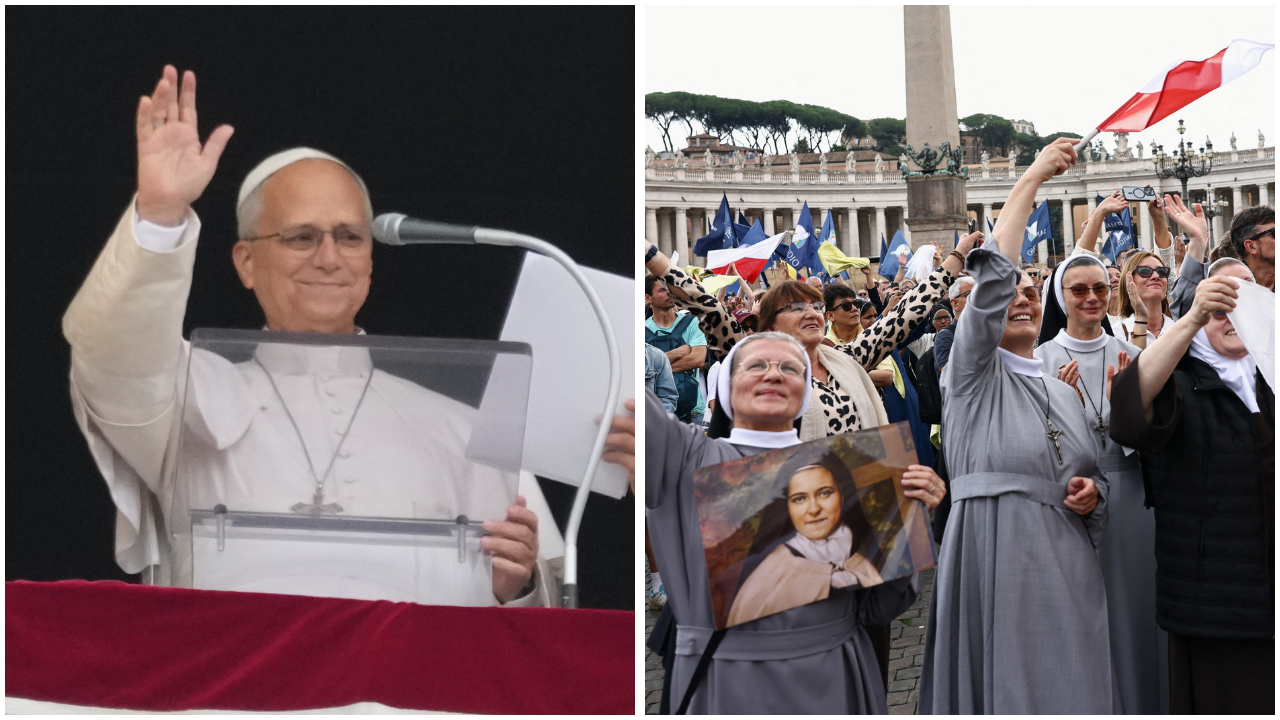
In Rome, morning bells usually carry a rhythm that feels almost architectural—bronze on stone, predictable as the sun hitting the travertine colonnades of St. Peter’s Square. Yet when an elderly leader goes under the scalpel, the rhythm fractures. Wire dispatches arrive in clipped, clinical tones: post-operative recovery, stable vitals, prayers requested. A headline boils months of dread and physical vulnerability down to a single catchphrase about God’s help and the faithful’s prayers.
Read that headline again. It sounds like a routine church bulletin. More details into this topic are covered by Al Jazeera.
It isn't.
When a public figure whose entire vocation is presence steps back into view after major surgery, we rarely watch with neutral eyes. We project. If you have ever sat in a hospital waiting room with cold coffee going stale in a paper cup, watching a loved one blink slowly against fluorescent glare, you know what that moment actually costs. You know that recovery is not a neat line on a chart. It is a series of small, exhausting negotiations with your own body—getting out of bed without grimacing, breathing without a sharp catch in the ribs, swallowing pride along with morning pills.
To understand why a post-surgery public appearance carries such heavy emotional weight, we have to look past the ceremonial white cassock and the television cameras. We have to look at the human being inside the frame, and at the quiet bargain between faith, medicine, and mortal frailty.
The Weight Beneath the White Robe
Imagine a hypothetical parishioner named Clara, sitting on a folding chair in a damp courtyard in southern Italy while rain taps a steady drum against a corrugated roof. (Note: Clara is a composite, hypothetical character created to illustrate common emotional responses to public health scares among believers and observers alike.) Clara has never been to Rome. She does not know the internal politics of the Vatican or the exact surgical protocol used for abdominal or thoracic procedures in older patients.
What Clara knows is her own brother, who underwent major surgery two years ago at seventy-eight.
When Clara sees news reports of a pope reappearing after surgery—saying he is pressing on with the help of God and the prayers of the people—she doesn't hear a political statement. She hears an echo of her brother’s raspy voice on the phone the week he came home, insisting he was "fine" while leaning heavily against a kitchen counter.
That is where standard news coverage often misses the mark. Dispatches tell us that an appearance happened, where the crowd gathered, and what phrase was spoken. They rarely linger on the gap between public duty and private stamina.
Think of a public institution like a suspension bridge. The cables are steel, engineered to carry thousands of tons of traffic day after day. For years, commuters drive across without thinking about metallurgy or wind shear. Then a storm hits, or a maintenance crew closes a lane, and suddenly everyone stares at the expansion joints. A bridge isn't just concrete and cable; it is trust made visible. When the figure at the center of a global faith community is recovering from surgery, the symbol itself is being tested against biology.
And biology does not care about titles.
Anesthesia clouds short-term memory. Surgical incisions pull when you laugh or turn too fast. Even in a world-class hospital or private suite with round-the-clock medical supervision, healing requires time that public life rarely grants. When a leader steps out to wave, pray, or speak a few words, every tremor in the hand or pause between sentences becomes a Rorschach test for millions of watchers. Some see resilience. Others see fragility. Most feel a sudden, sharp reminder that nobody—not monarchs, not presidents, not popes—is exempt from the ledger of age.
Prayers, Scalpel, and the Paradox of Hope
Why does a phrase like "with the help of God and your prayers" resonate so deeply, even among people who don't attend weekly mass?
Because human beings hate helplessness.
When someone we care about—or someone whose voice has anchored our routines for years—enters an operating room, our hands are tied. We cannot steady the surgeon’s wrist. We cannot speed up tissue repair. Offering a prayer, lighting a candle, or simply holding a quiet wish in our chest gives helplessness somewhere to go. In psychology, that impulse bridges the gap between uncontrollable risk and active care: we do what we can with the tools our culture gives us.
Yet there is a tension here that deserves honesty.
Hope is not a guarantee of a frictionless recovery. Throughout history, major illnesses in popes—from John Paul II’s 1981 assassination attempt and later intestinal surgery to Benedict XVI’s gradual physical decline—have forced the faithful to confront a hard truth: divine grace and human medicine operate side by side, not as magic tricks that erase pain overnight. A surgeon still has to close the wound cleanly. Physical therapy still hurts. Rest still has to be taken, even when duty calls.
Admitting that uncertainty doesn't cheapen faith or courage. If anything, it makes courage real. Anyone can look strong on a sunny morning when energy is high. Showing up when you are winded, moving slower than you used to, and still choosing to greet people who came hoping to see you—that requires a different kind of grit.
Let’s be candid about what we can and cannot know from a brief public appearance. A wave from a window or a short address tells us the patient was well enough and cleared enough to be seen. It does not tell us every medical detail behind closed doors, nor does it predict how next month will feel. Anyone who claims certainty from a two-minute clip is guessing.
Still, audiences are remarkably good at reading human truth. We notice whether someone looks genuinely comforted by a crowd or merely enduring it. We hear whether a voice carries warmth even when it is thin.
Why Frailty Changes How We Listen
There is an old habit in media and politics of treating aging and illness like a flaw to hide. We airbrush. We stage-manage. We pretend that strength means never needing help.
A post-surgery appearance turns that script upside down.
When a leader says, openly, that they rely on God and the prayers of others, they are doing something countercultural in a hyper-individualistic age: they are admitting interdependence. They are saying, I am not an island, and I am not invincible.
Consider what happens when a parent or mentor finally admits they are tired. At first, it can feel unsettling—like the ground shifted an inch. Then, often, something softer takes root. People listen closer when words aren't dressed up as omnipotence. A blessing or a greeting lands differently when it comes from someone who has just stared down a hospital ceiling and walked back out into the daylight.
In moments like that, the crowd in the square or the viewer on a couch isn't just consuming a news event. They are participating in a shared recognition of mortality. We are all on the same timeline, even if our seats in life look nothing alike.
Rain still falls on stone courtyards. Hospital corridors still smell faintly of antiseptic and quiet determination. And when a recovering figure steps back into public view, leaning on faith, medicine, and the goodwill of strangers, the story isn't really about headlines or protocol.
It is about a frail human body stepping into the light anyway, raising a hand to say: I am still here.