Salt sits on the tongue before you even reach the water in San Pedro. Diesel follows close behind, drifting from giant cranes and steel hulls across the channel while gulls scream over pilings that have outlasted three generations of dockworkers.
Walk along the edge of the port on a Tuesday afternoon and you feel two worlds pressing against each other. Behind you rise hills dotted with bungalows, murals, and old-school diners where regulars nurse coffee from ceramic mugs. Ahead lies working industrial muscle—massive container ships, chain-link perimeters, stretches of concrete where footsteps echo off empty warehouses like gunshots.
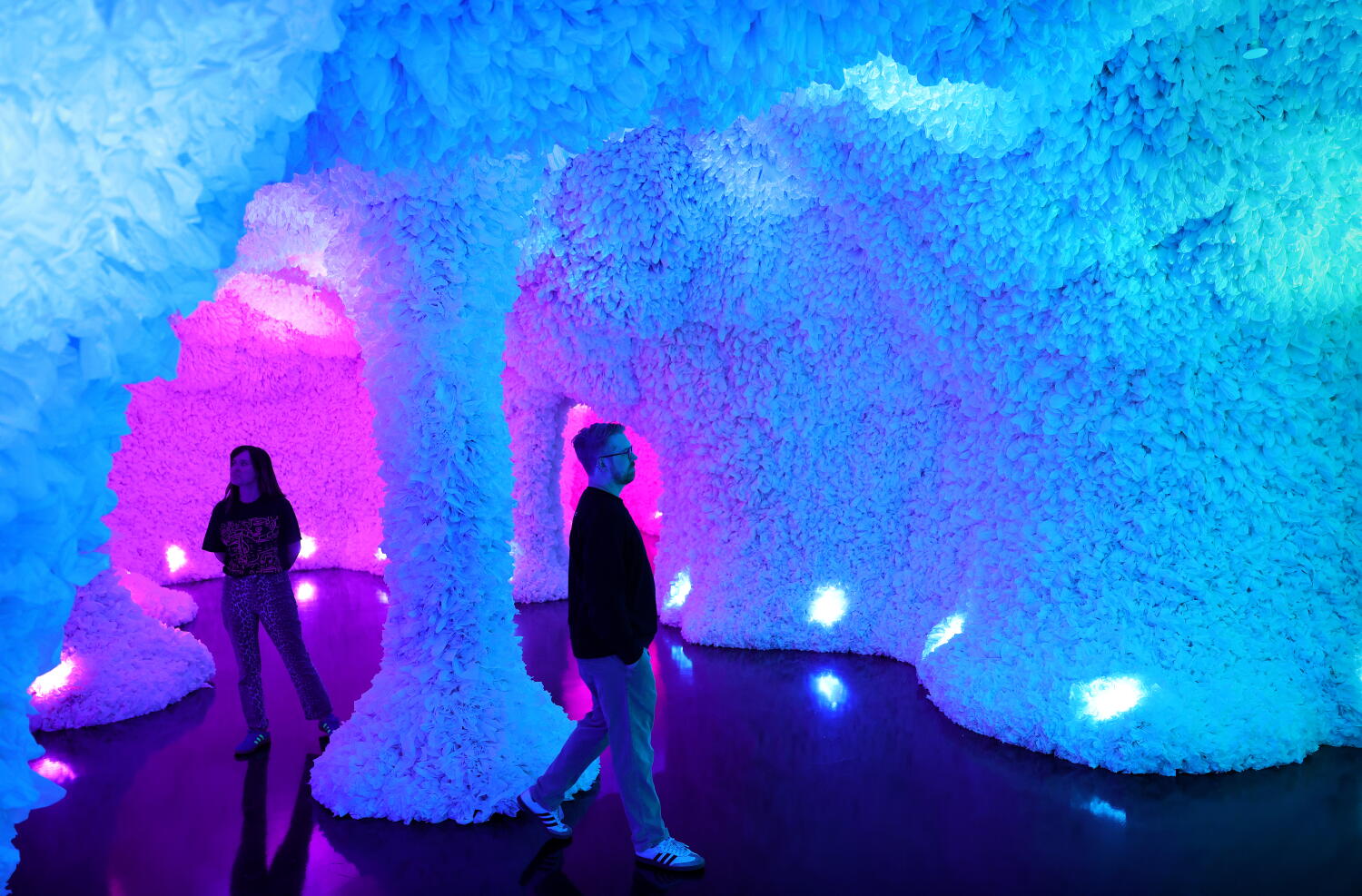
Now a large-scale immersive art experience named Hopscotch is preparing to move into this waterfront space.
On paper, the news reads like a standard tourism note. A curated exhibition of interactive rooms, light installations, and walk-through art arrives at the harbor. Visitors buy tickets. Foot traffic rises. A quiet stretch of coastline gets a fresh coat of cultural energy.
Easy to skim. Easy to forget.
Yet anyone who has spent late evenings watching empty docks swallow the fog knows that waterfronts do not sleep peacefully. They sit in limbo. They wait to see whether they will become postcard malls for out-of-towners or living parts of the neighborhood again.
I have stood in rooms where projections turned cold concrete into breathing rivers, and I have also stood in half-empty developments built with grand promises and zero soul. That tension is why Hopscotch arriving in San Pedro matters far more than a press release suggests.
The Quiet Ache of an Unfinished Edge
Harbor towns carry a peculiar weight. They are built for arrivals and departures, yet locals often feel left behind when redevelopment starts.
Consider a hypothetical local resident named Mateo, a retired machinist whose father worked the docks and whose niece teaches high school art two miles up the hill. When Mateo walks past shuttered harbor buildings, he does not see blank canvas. He sees years of sweat, union halls, cannery shifts that ended decades ago, and long stretches where the waterfront felt fenced off from everyday life.
Mateo's skepticism is earned. Across coastal cities from Baltimore to Oakland, waterfront revitalization has too often followed a predictable script: glossy renderings, chain restaurants with overpriced calamari, and seasonal crowds that vanish once the novelty fades. Residents watch prices climb or streets clog while the place still fails to feel like home.
Here is a metaphor to keep in mind as you read on: a waterfront district without genuine cultural roots is like a lighthouse with a cracked lens. The tower stands tall. The bulb burns bright. Still, the beam scatters instead of guiding ships safely home.
That is the real test waiting for Hopscotch. Can an experience built around projection, sound, and walk-through rooms honor a gritty working port without turning it into a theme-park caricature?
Why Immersion Feels Different When You Are Tired
Modern life trains our eyes to slide across glass. Thumb flicks. Feed refreshes. Another square of color disappears before our nervous system even registers why we looked.
Walk-through art works because it demands your whole body. You cannot pinch-to-zoom a room filled with shifting light and low-frequency sound. You have to step across the threshold. Your pupils adjust. Your breathing slows down—or speeds up when a hallway narrows and pulses with color.
Psychologists and museum researchers have spent years studying how multisensory environments shape memory and mood. When sight, sound, and physical movement line up, attention locks in differently than it does during passive scrolling. People linger longer. Strangers standing inches apart in a darkened room start talking because neither has a phone screen to hide behind.
Still, I will admit something honest: immersive art makes me wary, too.
Sometimes these spaces rely on cheap tricks—mirrors everywhere, neon tubes bent into predictable shapes, rooms engineered purely so visitors can snap a photo and leave. When an exhibition prioritizes camera angles over human feeling, the magic evaporates in ten minutes. You walk out with a folder of bright pictures and a hollow feeling in your chest.
San Pedro deserves better than hollow glitter. It is a place with real grit, real history, and a fierce local pride that spots phoniness a mile away.
What Visitors Actually Want When They Step Inside
People searching for an immersive art experience in San Pedro usually ask practical questions first. Where is it? How long does a visit take? Is it worth driving across Los Angeles traffic on a Saturday? What happens with kids, or on a date night, or when you just need to get out of your own head?
Those questions are fair. Nobody wants to burn two hours in traffic only to feel rushed through a noisy warehouse.
Imagine a hypothetical Saturday afternoon visit by two friends, Nadia and Devon, who live inland and rarely make it down to the harbor. They park near the water, step out into cool coastal air, and walk into a space where industrial walls meet floor-to-ceiling light and sound. For ninety minutes, their phones stay in their pockets. Nadia stops in front of a piece that reacts to footsteps, watching ripples of light stretch across the floor as she shifts her weight. Devon stands quietly near a sound installation, listening to layered tones that feel almost like wind moving through ship rigging.
When they step back outside into the late afternoon glare, the harbor looks slightly different. Not transformed into a fantasy world. Just noticed.
That shift—noticing what is already around you—is the quiet superpower of good art. A room full of projections does not erase the cranes or the salt air. Instead, it sharpens your senses so you walk back toward the water paying closer attention to the light on the channel, the architecture of old buildings, and the people sharing the sidewalk.
The Invisible Stakes for the Waterfront
A single attraction cannot fix decades of urban planning puzzles overnight. Let us be clear-eyed about that. Parking bottlenecks, transit gaps, economic shifts, and long-term neighborhood needs require sustained work far beyond any exhibition run.
Yet culture does something infrastructure cannot do on its own. It changes how people imagine a place.
Look at how neighborhood momentum builds in cities that get waterfronts right. First comes a reason to cross the threshold—an exhibition, a studio space, a gathering spot that feels alive rather than sterile. Next comes conversation. Local artists see possibilities in vacant corners. Small coffee shops and independent makers notice foot traffic that feels curious rather than transient. Slowly, a forgotten edge starts acting like a front porch.
Of course, the opposite can happen if newcomers treat the neighborhood like a backdrop. If visitors treat San Pedro merely as a photo stop on the way to somewhere else, friction grows. Respect has to run both ways: the experience must invite locals in as true participants, not merely spectators watching outsiders tour their backyard.
Standing at the Edge of Change
Listen.
Foghorn in the distance. Tires humming on coastal asphalt. Laughter rising from a group stepping out of a dim gallery into open air.
San Pedro has spent years standing between what it was and what it might become next. Bringing an immersive art showcase like Hopscotch to the waterfront does not settle that story in a single stroke, nor does it wash away the hard questions around growth and identity. It opens a door.
Whether that door leads to genuine connection or fleeting spectacle will be decided one visitor, one conversation, one evening at a time—right where the tide meets the concrete.