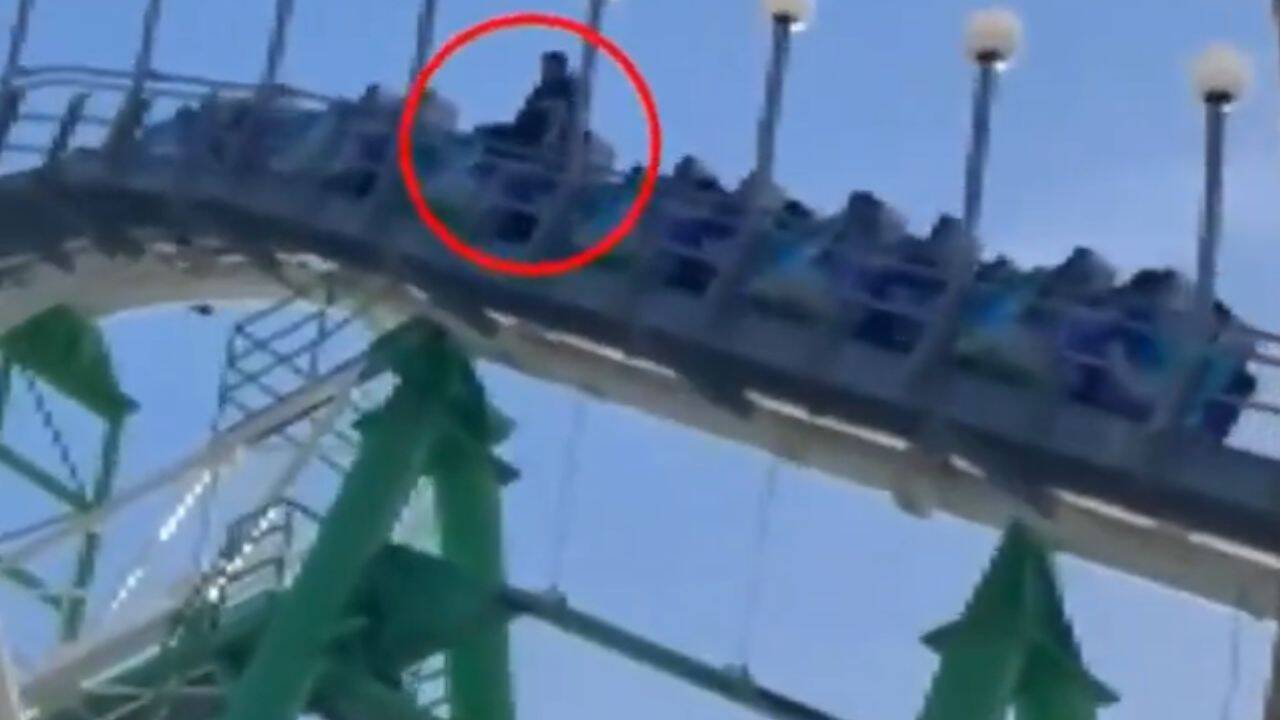
Screams.
That is the sound most people expect at an amusement park, folded into cotton candy, clattering chain lifts, and the rush of warm air against sunburned arms. We buy tickets for controlled terror. We stand in winding switchbacks, trading twenty dollars and an hour of patience for thirty seconds of weightlessness, trusting that steel, bolts, and human oversight will catch us when the track bends straight down.
Except when they do not.
When a rider falls from a roller coaster and dies in front of dozens of witnesses, the shock does not stay contained inside the park gates. It ripples outward into every quiet Sunday afternoon, every family outing, every moment you pull a lap bar down over your hips and hear that reassuring click. A headline can reduce a tragedy like that to shock value in five seconds flat. Gore sells clicks. Blood splatters on a screen make people pause their scrolling thumb.
Shock fades. Grief stays.
To understand why a fatal fall from a roller coaster hits so hard—and why it leaves bystanders, families, and riders feeling so profoundly unsettled—we have to look past the morbid hook. We have to trace the chain of human moments that turn a machine built for exhilaration into an instrument of irreversible loss. Because there is no verified incident detail supplied in this brief beyond a fatal fall from a roller coaster ride in the United States, I will treat the specific park, ride name, and rider identity as unverified and instead examine the real mechanics, bystander trauma, and safety realities that govern these rare tragedies.
The Promise Inside the Restraint
Step onto a coaster platform on a bright afternoon and watch the faces around you. Some people are grinning with nervous energy. Others are gripping the sides of the car before the train even moves, knuckles white, breath shallow.
For a rider, trust is physical. You sit down, slide your legs in, and pull a restraint—a lap bar, a clamshell, an over-the-shoulder harness—across your body. You listen for the ratchet clicks. You might even tug on it once, a small private ritual that says, Hold me in.
Most of the time, those restraints work with astonishing reliability. Modern amusement rides operate under strict engineering tolerances, routine inspections, and redundant safety systems. Statistically, the odds of suffering a fatal injury on a fixed-site amusement ride in the United States remain remarkably low compared to everyday activities like driving a car.
Statistics do not comfort a parent watching a train return without someone who climbed aboard.
Numbers measure averages across millions of rides. A fall measures a single broken threshold—whether through rider behavior, restraint fit or mechanical failure, operator error, or an unexpected force acting on a human body at high speed. When that threshold breaks, gravity does not negotiate. Physics has no mercy, no pause button, and no memory of how excited you were five minutes ago when you stepped through the turnstile.
Let me use a hypothetical scenario to make the scale of that shift concrete. Suppose a hypothetical rider named David—mid-thirties, wearing sneakers, smiling as the lift hill clicks upward—sits in a middle row on a warm Saturday. In his mind, the bargain is simple: the coaster provides the speed and height, and his seat holds him tight until the brake run brings everything gently to rest. If something goes wrong on a track a hundred feet up, the drop is measured in seconds, yet the consequence is permanent. Even if you have ridden coasters a hundred times without a single issue, a single failure in containment changes the equation in an instant.
When Bystanders Become Witnesses to the Unthinkable
A roller coaster does not operate in a vacuum. It runs in plain view of families eating fries on benches, teenagers filming on phones, and strangers standing ten feet away near the exit ramp.
Think about what happens to those bystanders when a fatal fall occurs.
One second, the day feels ordinary—sunlight glinting off steel rails, music playing faintly over speakers, children arguing over who gets the front seat. The next second, people are shouting, hands are flying to mouths, and strangers are forced into an involuntary intimacy with violence and death. Witnessing a fatal accident in a public place can leave onlookers with acute shock, intrusive memories, guilt over not being able to stop what happened, and a lingering dread that safety is an illusion.
People often ask how anyone could keep going after seeing something that horrific, or how parks handle the immediate aftermath. The honest answer is that there is no clean script for sudden public tragedy. Rides shut down. Emergency crews arrive. Crowd barriers go up. Yet emotional aftershocks linger long after the yellow tape is cleared. A witness does not have to know the victim to carry the image home with them. Empathy makes strangers feel the weight of another person's ending.
Consider what happens next: rumor moves faster than verified facts. Within minutes of a serious incident, social media fills with conflicting accounts, shaky videos, and graphic descriptions. That rush of raw detail can compound trauma for witnesses and families alike, turning a real human loss into a spectacle before investigators have even finished documenting the scene.
How Investigations Unravel a Split-Second Tragedy
When a rider falls from a coaster, investigators do not rely on guesses or sensational headlines. They work backward from the final moment.
Safety inspectors, engineers, and local authorities look at everything:
- Restraint and seating mechanics: Did the lap bar or harness lock properly, or was there a gap, wear, or latch issue?
- Rider dimensions and posture: Did the restraint fit securely across the rider's body, or did shifting or standing occur while the train was in motion?
- Ride telemetry and maintenance logs: What do sensors, cameras, inspection records, and prior fault reports show?
- Operational procedures: Were ride attendants following dispatch and check protocols consistently?
It is easy from the outside to want an immediate, tidy answer—one villain, one broken bolt, one clear mistake. Reality is often messier. Sometimes investigators uncover a clear mechanical flaw or procedural lapse. Sometimes rider action or body proportions play a critical role. Sometimes multiple small factors line up in a way nobody anticipated.
And let's be candid: waiting for official findings is agonizing. When people read about a fatal fall, they want to know right away whether a specific ride is dangerous or whether it was a freak occurrence. Uncertainty breeds fear. Without verified facts, people fill the silence with their worst assumptions.
To see why systems fail even when rules exist, picture a simple analogy. Think of a safety net stretched beneath a tightrope walker. As long as the net is taut, anchored, and clear, a slip is scary, not fatal. A tragedy happens when the net sags, tears, or misses the spot where the walker falls. Engineering and inspection standards are meant to keep that net intact—yet every link in the chain has to hold at the exact moment stress hits.
What Every Rider and Parent Should Weigh
Reading about a coaster death naturally makes you question whether stepping onto a ride is worth the risk. Should you swear off amusement parks forever? Should you scrutinize every click of a harness until the fun evaporates?
You do not need panic to be prudent. You do need clear eyes.
Before riding any roller coaster, a few grounded habits help you make an informed choice rather than running on blind trust or pure fear:
- Check the fit before the train dispatches. Make sure the restraint sits snugly and securely, not loose with room to slip, and speak up to the attendant immediately if anything feels off.
- Follow height, weight, and posture rules. Those rules are not arbitrary red tape; they exist because restraints and G-forces are engineered around specific body geometry and seated positions.
- Pay attention to how you feel. If you have medical conditions, dizziness, or anxiety around heights and speed, sitting a ride out is a smart boundary, not a failure of nerve.
- Look for calm, attentive operations. Well-run attractions emphasize clear safety checks over rushing trains out of the station.
None of these steps make life risk-free. Nothing can promise zero risk in a world governed by physics and human fallibility. Still, paying attention puts agency back in your hands instead of leaving you feeling helplessly swept along.
Beyond the Clickbait Headline
Why do stories like this stay lodged in the mind long after you close the browser tab?
Because they collide two truths we hold at once. On one hand, we build astonishing machines that let ordinary people fly through the air and laugh at gravity. On the other hand, we are fragile creatures made of bone, skin, and heartbeat, never truly separate from risk no matter how polished the steel looks.
When a competitor leads with gore, they treat a human death like seasoning for a headline. That approach gets attention for a moment and leaves nothing behind worth keeping. Real respect for a tragedy means looking honestly at the human cost—the life cut short, the family left behind, the bystanders shaken to their core, and the duty to understand what went wrong so fewer people ever have to endure it.
Picture the park gates at dusk after a day like that—empty benches, quiet paths, steel tracks cooling under a pale sky where laughter used to echo—and ask yourself what stays with you when the noise stops: not the spectacle of a fall, but the fragile, precious weight of every life that climbed aboard expecting to come back down safe.



