Rain smells different in Tokyo than it does in Yangon. In Tokyo, even when the sky turns the color of wet slate and the commuter trains hiss along elevated tracks, the pavement still feels engineered to stay clean. In Yangon, monsoon rain hits warm dust, red earth, and diesel exhaust all at once, rising up in a sharp, metallic scent that clings to your clothes for hours.
I have walked both cities during heavy rain. Years ago, sitting in a tea shop near Sule Pagoda with a notebook full of half-finished quotes and a glass of sweet milk tea cooling beside my elbow, I watched a young man in a faded shirt try to read the morning headlines on a cracked phone screen. He kept refreshing the page. Nothing changed except the battery percentage dropping toward red. Even then, information in Myanmar moved like water forced through a narrow pipe—slow, pressured, and shaped long before it reached the people drinking from it. Meanwhile, you can find similar developments here: Why Trump and the GOP's billion-dollar midterm blitz couldn't save the majority.
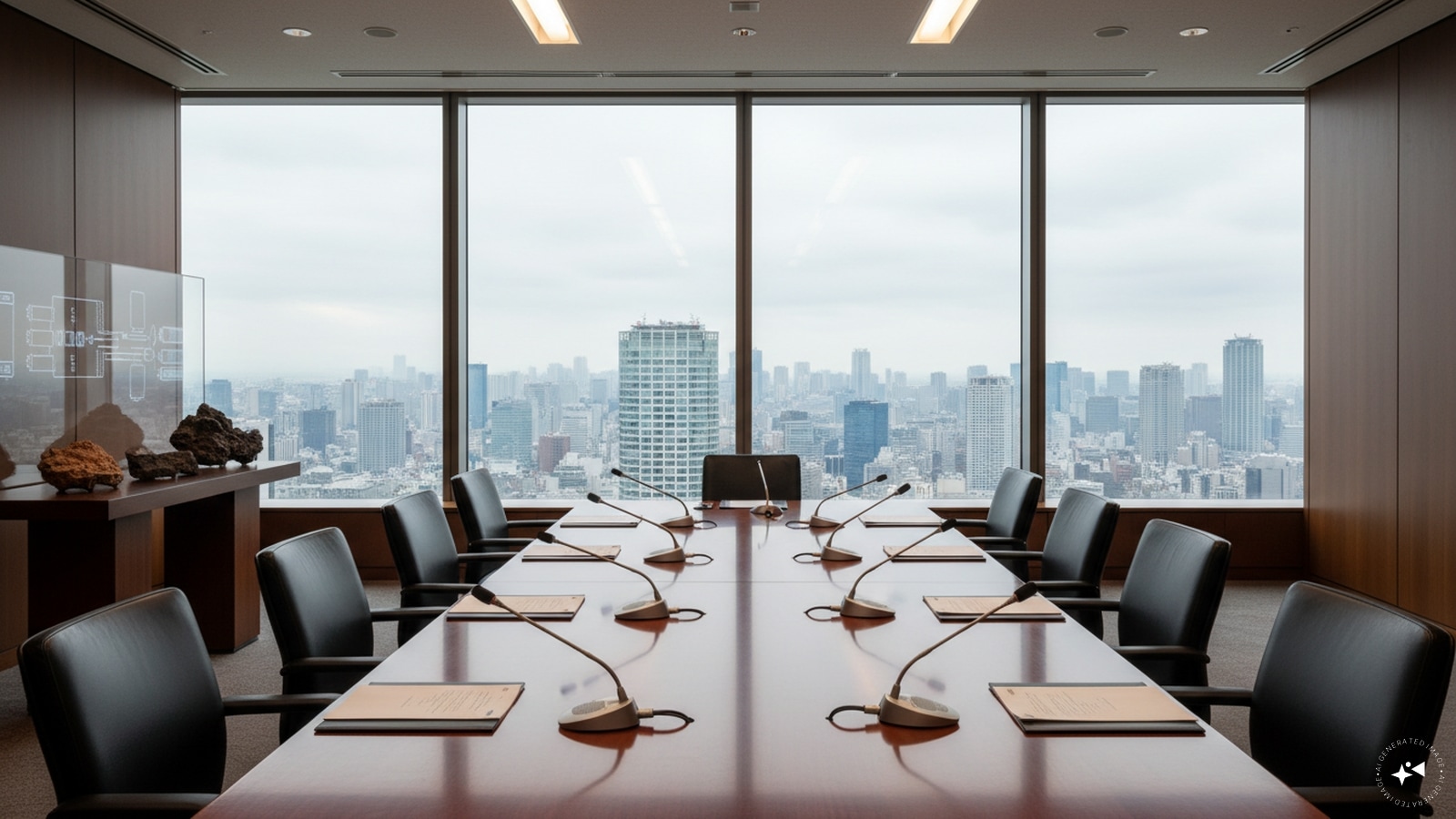
Now consider what happens when diplomats meet quietly in a city like Tokyo, far from the checkpoints, curfews, and burned-out villages that define daily life back home. Reports that Washington has held more secret talks with Myanmar's military-backed rulers in Tokyo land on a wound that has never stopped bleeding since the February 2021 coup. For ordinary people watching from inside the country or from exile across the border, a quiet meeting in a Japanese hotel room does not sound like routine statecraft. It sounds like someone adjusting the lock on a door while you are still on the outside.
Why Tokyo? Why secrecy? And what does a whispered conversation between a superpower and a junta have to do with a mother buying rice in Mandalay or a student hiding in a safe house near the Thai border? To see the full picture, we recommend the excellent article by NPR.
I do not claim to sit inside those rooms. Nobody outside the delegation cars does. When reports surface about undisclosed or low-profile contacts between US officials and representatives of Myanmar's military-backed authorities in Tokyo, much of the detail stays locked behind diplomatic protocol. That uncertainty is exhausting. It makes people fill in the blanks with their worst fears—or with a fragile, desperate hope that someone in power finally sees a way out of a grinding war.
The Weight of an Unannounced Room
Diplomacy rarely looks dramatic in real time. There are no cameras flashing on the steps of a embassy, no joint press conferences, no neat communiqués promising peace by Friday. Often, it is just beige walls, pitchers of ice water, interpreters leaning forward over legal pads, and two sides testing how much pressure the other can bear before flinching.
To make sense of why that matters, picture a hypothetical character—let us call her Ma Hnin, a former schoolteacher now living in a crowded displacement camp in Kayah State. She is not a real person, and her story here is a composite illustration built from years of reporting and human rights accounts rather than a single individual's file. Still, her routine is familiar to millions. She wakes before dawn to the sound of distant artillery or the hum of a reconnaissance drone overhead. She teaches children under a tarpaulin using chalk on a piece of painted plywood because regular schools have been fractured, militarized, or abandoned.
When Ma Hnin hears rumor or news that American officials have met quietly with representatives of Myanmar's military-backed administration in Tokyo, she does not think about grand geopolitical theory. She thinks about legitimacy. A handshake—even a discreet one—can feel like oxygen to a regime that has spent years fighting resistance forces, ethnic armed organizations, and a stubbornly defiant public across much of the country.
Every time a powerful outsider sits across from a military regime in secret, the regime gets something precious without having to earn it: the appearance of inevitability.
That is the emotional core of the backlash whenever reports of Tokyo talks emerge. Since seizing power in 2021 and overturning the results of the November 2020 election, Myanmar's military—the Tatmadaw—has relied on brute force, mass arrests, air strikes, and economic strangulation to hold onto control. Millions have been displaced. Economy and healthcare have buckled under conflict, sanctions, and inflation. When Washington, long one of the loudest critics of the junta and a backer of sanctions and humanitarian aid, engages quietly in a third country, critics ask a piercing question: Are we talking to end the violence, or are we normalizing the people causing it?
Yet diplomacy is rarely a moral purity test. It is usually a collision of competing necessities.
Why Tokyo Keeps Showing Up on the Map
Tokyo is not a random pin on a globe. Japan has long occupied a distinct, complicated space in Myanmar's modern history. Unlike Western powers that leaned heavily on sweeping sanctions after the coup, Tokyo historically maintained closer channels with Myanmar's military and business networks, arguing that quiet engagement gave Japan leverage to push for dialogue, humanitarian access, and the release of detainees.
Over the past few years, that approach has been tested severely. Violence intensified across wide swaths of Myanmar, resistance coalitions seized territory, and the junta's hold weakened in several border areas even as it clung to power and leaned on lethal air power. Japan's own stance hardened in places, with aid adjustments and sharper rhetoric, yet Tokyo remained a practical crossroads—neutral enough on the surface, well-connected to regional actors, and far removed from the immediate chaos of Yangon or Naypyidaw.
Think of a diplomatic backchannel like a pressure-relief valve on a boiler. A boiler without a valve does not become virtuous; it explodes. A valve does not fix the fire underneath, either. It simply lets steam escape so the metal does not tear apart all at once.
When US officials meet with Myanmar's military-backed rulers in Tokyo, several practical motives usually sit on the table at once, even when officials keep quiet about the exact agenda:
- Humanitarian access and aid: Getting food, medicine, and relief to displaced communities often requires navigating bureaucratic and security chokepoints controlled by the military, whether directly or through local intermediaries.
- Detained citizens and hostages: Foreign nationals or specific detainees of concern to Washington sometimes become the immediate focus of quiet negotiations.
- Regional spillover and security: Cross-border crime, cyber-scam compounds, narcotics, refugee flows, and great-power rivalry—especially China's deep influence along Myanmar's northern border—force major powers to talk to unpleasant actors whether they want to or not.
- Testing boundaries: Quiet contact lets diplomats probe what the military is willing to concede, refuse, or signal without making a public spectacle of it.
None of those motives cancels out the outrage felt by pro-democracy activists or ethnic resistance groups. Both truths can exist in the same room. A diplomat can be trying to pry open a humanitarian corridor or secure a detainee's release while a village in Sagaing is still waking up to fear. Recognizing that tension does not make the violence acceptable. It just makes the world honest.
The Gap Between Washington and the Ground
Sit for a moment with the sheer distance between a conference room in Tokyo and a clinic running low on antibiotics in Karen State.
In policy circles, people talk about "leverage," "incentives," "de-escalation," and "re-engagement." Those words sound clean. Almost architectural. You can stack them neatly in a memo. On the ground in Myanmar, there is nothing neat about the conflict. It is a multi-sided war involving the military, the National Unity Government, ethnic armed organizations that have fought for autonomy for decades, and local People's Defense Forces. Shifting alliances, contested supply routes, and harsh terrain turn every outside assumption upside down.
I remember talking to a displaced worker near the border years ago who stared at a map drawn in the dirt with a stick. He pointed to a river bend and said, "Everyone outside thinks this is a line. To us, it's where the boat sinks if the water rises." Maps make borders look settled. Lives make them fluid and perilous.
When secret talks happen in Tokyo, people inside Myanmar worry that outsiders are treating a deeply fractured national struggle as a bilateral puzzle between Washington and the generals. If outside powers negotiate primarily with the military-backed side, they risk overlooking the communities and resistance forces that actually hold territory and shape daily survival in huge parts of the country.
Worse still is the rumor mill. Secrecy breeds paranoia. In an environment where state media twists every headline and independent reporting faces severe repression, a brief report about secret talks in Tokyo can trigger waves of anxiety. Activists wonder if sanctions are about to be quietly softened. Communities wonder if international pressure is fading just as winter sets in and displacement grows worse.
A Hypothetical Conversation That Never Happened
Suppose—purely as a thought experiment, an invented scene meant to show how different realities collide—two people sit on a train platform in Tokyo after such a meeting wraps up.
One is a seasoned diplomat who has spent decades reading cables, weighing regional stability, and calculating how a single misstep could close a door for years. He is tired. His suit is slightly wrinkled from a long flight, and his phone buzzes with updates from capitals thousands of miles away. To him, refusing to speak at all can look like strategic blindness, especially when rivals are actively shaping events on the ground.
Standing a few yards away, in our hypothetical scene, is a young Burmese exile who left home with one backpack and a list of names of friends locked up or missing. To him, the military-backed rulers are not negotiating partners in good faith; they are the architects of his family's ruin. Every quiet meeting looks like a reward for endurance through cruelty.
Neither of them is a caricature. Both are reacting to real pressures. Yet they are speaking two different languages—one written in statecraft and risk management, the other written in grief and survival.
That is why stories about secret talks in Tokyo hit so hard. They expose the chasm between high-level maneuver and human consequence.
What Quiet Diplomacy Can—and Cannot—Do
History offers a sobering lesson about secret talks in entrenched conflicts: they rarely produce sudden miracles, and they often carry hidden costs.
Sometimes backchannels do quiet, unglamorous work. They clarify red lines. They move aid trucks a few miles closer to people who need insulin or clean water. They keep a line of communication open when public rhetoric turns purely performative.
Other times, secret talks backfire. They demoralize allies who were promised firm solidarity. They hand propaganda material to a regime eager to prove it is still indispensable. And when leaks or reports inevitably surface—because secrets in international politics almost always leak eventually—the backlash can leave trust even thinner than before.
If you are reading this from afar, it is easy to pick a side from a comfortable chair. Demand total isolation, or demand pragmatic engagement. Declare the talks a betrayal, or hail them as realism. Reality refuses to stay that tidy. A policy that sounds tough on paper can still leave civilians unprotected; a policy that sounds pragmatic in a briefing room can still embolden abusers if it trades away accountability too cheaply.
What matters most is scrutiny. Not knee-jerk cynicism, and not blind faith in behind-the-scenes deals. When powerful governments hold quiet talks with Myanmar's military-backed rulers in Tokyo, the public—both in the region and beyond—has every right to ask what is being traded, who is being consulted, and whether human rights and genuine civilian protection are treated as non-negotiable foundations rather than bargaining chips.
The Rain Keeps Falling
Back in Tokyo, the evening rush hour pulls thousands of people toward the exits, coats brushed against damp shoulders, umbrellas folded with a soft snap. Trains slide into stations on schedule. Lights glow warmly from office windows above quiet streets.
Thousands of miles away, night falls differently. Curfews tighten. Families listen closely to every sound outside thin walls. Mothers hold children a little tighter in the dark, wondering whether tomorrow will bring a supply truck, a rumor from abroad, or another siren in the distance.
A closed door in Tokyo can look very small from a distance. Inside Myanmar, its shadow can stretch across an entire life.