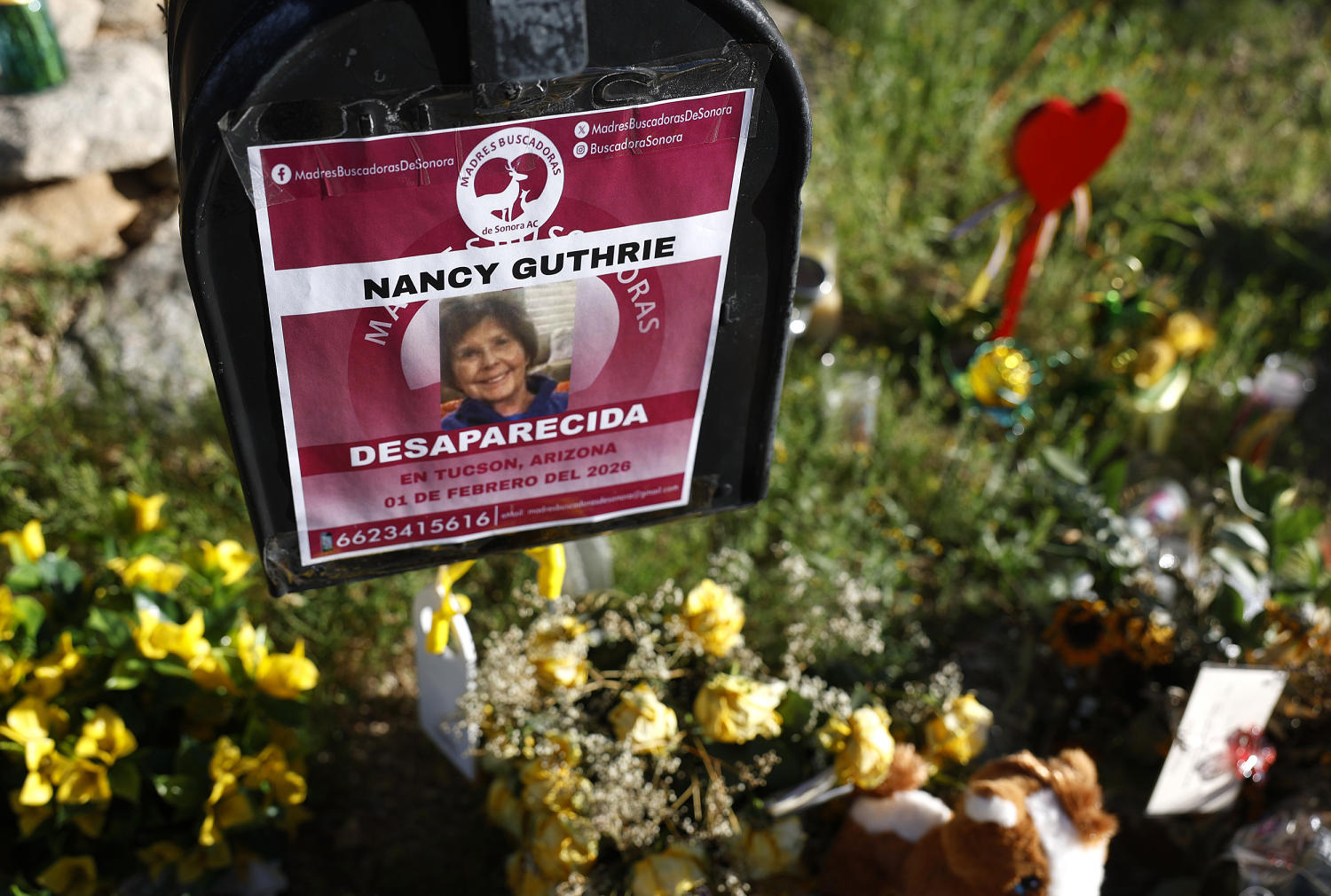
Nancy Guthrie was abducted from her Tucson home on January 31, 2026. Newly unsealed details from the federal investigation reveal that a second ransom note, sent from the same computer IP address as the first, explicitly told her family that the 84-year-old mother of NBC Today anchor Savannah Guthrie had died shortly after her abduction. This second digital transmission changed everything for investigators and the shattered Guthrie family. It shifted a high-stakes kidnapping investigation into a grim recovery operation, long before the public knew the truth.
For months, the public watched the frantic search for Nancy Guthrie through a filter of carefully managed optimism. We saw Savannah Guthrie and her siblings stand before cameras, pleading for their mother's return, offering a one-million-dollar reward, and promising to meet any financial demand. But behind the scenes, law enforcement officials were already holding a devastating piece of evidence. The investigation was never just a hunt for a missing person. It was a race against a clock that had already run out. Don't miss our recent coverage on this related article.
The First Digital Footprint and the Core Demands
The nightmare began over a chilly weekend in the Catalina Foothills of Tucson. Nancy Guthrie, who lived alone and possessed limited mobility but sharp cognitive health, vanished after being dropped off at her residence. By Sunday morning, when she failed to appear at her local church, the alarm was raised. Pima County Sheriff detectives found ominous signs inside the home. A small amount of dried blood was discovered near the front door mat, and another trace was located inside.
The first communication arrived on February 2, less than forty-eight hours after she was taken. Sent via online tiplines to two local Arizona television stations and the entertainment news outlet TMZ, the digital message demanded four million dollars in Bitcoin. If you want more about the context here, The Washington Post offers an informative breakdown.
To prove authenticity, the sender included highly specific details that only someone inside the residence could know. The note mentioned an Apple Watch with a white band lying on the bedroom floor. It noted that the back porch light bulb was broken. These details forced the FBI to take the communication seriously. This was no ordinary internet hoax. It came from the person or group who had physical control of the scene.
The Second Note and the Shift in Strategy
Four days later, on February 6, a second email landed. This is the document that fundamentally altered the trajectory of the case, the contents of which have only recently been confirmed by senior law enforcement sources.
The second message contained no new demands for money. Instead, it opened with a labored explanation. The writer claimed that Nancy Guthrie had died. The individual insisted the death was not intentional, stating that she was now buried with nature.
Federal cyber investigators traced the email back to the exact same IP address as the multi-million-dollar Bitcoin demand. The technical link established a terrifying continuity. The same individual who had itemized the broken light bulb on the porch was now reporting a casualty.
Timeline of Early February Communications:
- Jan 31: Nancy Guthrie dropped off at Tucson home.
- Feb 1: Reported missing after failing to attend church.
- Feb 2: First note demands $4 million in Bitcoin.
- Feb 6: Second note claims Guthrie died and is "buried with nature."
- Feb 7: Guthrie family broadcasts public response video.
The day after receiving this second note, Savannah Guthrie, alongside her siblings Annie and Cameron, posted a deeply poignant video message. The tone of that video, which puzzled some observers at the time, makes tragic sense in light of the newly revealed timeline.
The family stated they had received the message and understood it. They begged for the return of their mother so they could celebrate her life and find peace, reiterating that they would pay. They were speaking directly to an abductor who had already told them their mother was gone. The family was gambling on the slim hope that the note was a lie, or that a financial payout might at least buy the return of her remains.
Fractured Jurisdictions and the Media Vacuum
The management of these notes highlights the intense friction that often occurs between local law enforcement, federal agencies, and national media outlets during high-profile abductions. Pima County Sheriff Chris Nanos recently clarified his department's position, stating that the FBI has handled the numerous ransom demands from the very beginning. The local sheriff's office was kept at arm's length from the specific contents of the digital notes, a common tactic when federal behavioral analysts are attempting to manage a suspect through controlled media releases.
Meanwhile, the media environment became a battlefield of conflicting reports. While national outlets recently confirmed the existence of the death notification note, Harvey Levin of TMZ publicly clarified the specific communications his outlet received.
Levin revealed that while TMZ received the initial authentic ransom note, they did not receive the specific second note detailing the burial. Instead, TMZ was targeted by a separate, persistent emailer who claimed to have insider knowledge of the kidnappers' identities and location. This individual initially demanded a single Bitcoin, warning that time was of the essence. A day later, the same individual sent a follow-up stating that time was no longer of the essence, a phrase that forensic psychologists interpret as a coded admission of death. The FBI eventually authenticated this secondary informant as a figure of high interest, demonstrating how a single high-profile crime can attract multiple layers of predatory behavior.
The Opportunist Theory
Behavioral analysts working the case have developed a distinct profile of the perpetrator based on the language used across these messages. The working theory suggests the abductor was not part of an organized syndicate. An organized criminal group rarely panics and drops a multi-million-dollar extortion plot within ninety-six hours without attempting to collect.
The suspect appears to be a highly educated, ruthless local opportunist. This individual likely observed an vulnerable target in an affluent neighborhood and seized an opening for an unscrupulous windfall.
The entire scheme dissolved when Nancy Guthrie, who required daily critical medication, suffered a fatal medical event or succumbed to the physical trauma of the abduction. Faced with a body instead of a bargaining chip, the amateur captor panicked, sent a defensive message claiming the death was accidental, and attempted to retreat into the digital shadows.
The physical search has reflected this desperation. Acting on anonymous tips, volunteer teams recently conducted extensive searches in areas near Nogales, Mexico, looking for unmarked gravesites. The efforts yielded no results. The geography of the desert borderland offers millions of places to hide a secret, and without precise coordinates from the author of those IP-traced emails, the recovery remains an agonizing logistical challenge.
The tragedy of the Nancy Guthrie case lies in this quiet transition from rescue to recovery, hidden behind the necessary wall of an ongoing federal investigation. The family's continued willingness to pay underscores a brutal reality. In the cruel economy of kidnapping, sometimes the ultimate price is paid not for freedom, but simply for the closure of a grave.