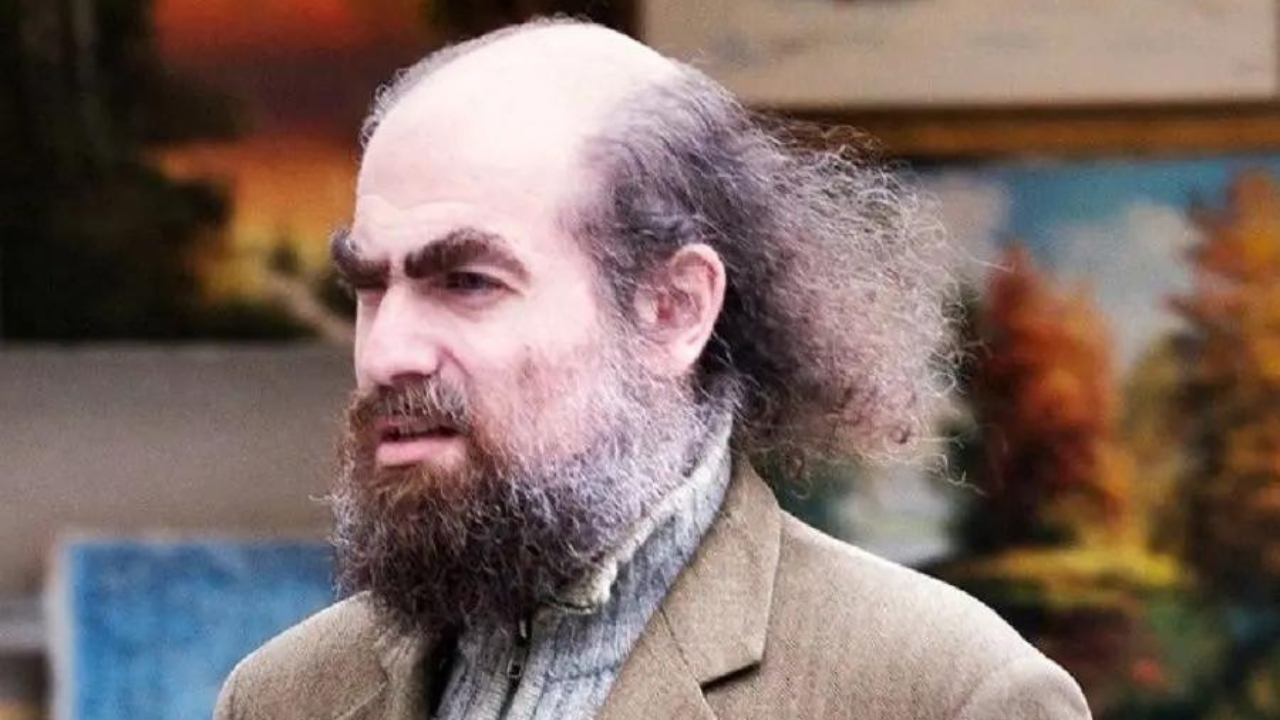
The media loves a secular saint. For twenty years, the narrative surrounding Grigori Perelman has been a sugary, predictable fairy tale about the "pure" mathematician who lived in a sparse apartment with his mother, solved the Poincaré Conjecture, and walked away from a $1 million Clay Millennium Prize because he was too noble for cash.
It is a comfortable lie. It protects the ego of the academic establishment by framing his exit as an act of eccentric monkhood rather than what it actually was: a stinging, calculated indictment of a corrupt intellectual system. Perelman didn't reject the money because he didn't want it. He rejected it because the organizations offering it were no longer qualified to judge his work.
If you think this is a story about a man who hates wealth, you have been reading the wrong reports. This is a story about the total breakdown of peer review and the death of the "lone genius" myth.
The Poincaré Conjecture is Not a Puzzle
Most journalists describe the Poincaré Conjecture as a "riddle" or a "100-year-old math problem." This is lazy shorthand. In reality, the conjecture is a foundational pillar of topology—the study of geometric properties that remain unchanged by continuous deformation.
Essentially, it asks if every "simply connected," closed 3-manifold is homeomorphic to a 3-sphere.
To solve this, Perelman utilized Richard Hamilton’s theory of Ricci flow. Think of Ricci flow as a process that smooths out the irregularities in a manifold, much like heat spreads through a room to equalize temperature. The problem was "singularities"—points where the math effectively broke or exploded into infinite density.
Perelman’s genius wasn't just "solving" the math; it was "surgery." He figured out how to cut out these singularities and glue the manifold back together without destroying the underlying topology.
$$\frac{\partial g_{ij}}{\partial t} = -2R_{ij}$$
This equation represents the Ricci flow. The establishment spent decades staring at it. Perelman moved past it while the rest of the field was still checking the ink on their tenure applications.
The Myth of the Reclusive Monk
The "lazy consensus" paints Perelman as a ghost. He wasn't. He was a highly visible researcher who spent years in the United States at institutions like NYU and Stony Brook. He was a known quantity. He stopped engaging not because he lost his mind, but because he saw the "sausage-making" of high-level mathematics and found it repulsive.
When Perelman posted his proofs to arXiv in 2002 and 2003, he bypassed the traditional peer-review process. He didn't submit to Annals of Mathematics. He didn't kiss the ring of the editors. He threw the work into the public square and told the world to deal with it.
The establishment’s reaction was pathetic. Instead of immediate validation, we saw years of "verification" where other mathematicians tried to claim a slice of the credit. Shing-Tung Yau and his students notably attempted to frame Perelman’s work as incomplete, suggesting their own contributions provided the "final" steps.
Perelman saw the vultures circling. When he said, "I'm not interested in money or fame; I don't want to be on display like an animal in a zoo," he wasn't being humble. He was being lethal. He was stating that the Clay Mathematics Institute and the International Mathematical Union had no moral authority to grant him prizes for work they didn't even understand until he explained it to them like children.
Why the Million Dollars Was an Insult
People ask, "Who turns down a million dollars?"
Someone who realizes that accepting the money validates the very people who tried to steal his light.
By accepting the Fields Medal or the Millennium Prize, Perelman would have been participating in a marketing campaign for academic institutions. These prizes exist to make the givers look prestigious, not the receivers.
Imagine a scenario where you invent a clean energy source in your garage. For five years, the Department of Energy calls you a crackpot. Then, once they realize you’re right, they offer you a trophy and a check, provided you stand on stage and thank them for their "support." You’d tell them to pound sand, too.
Perelman’s refusal was a tactical strike. By walking away, he ensured that the conversation stayed on the Poincaré Conjecture and the ethical rot of the math community, rather than his acceptance speech. He traded a million dollars for the permanent discomfort of every academic who ever doubted him. That is a bargain.
The Death of Peer Review
The Perelman saga exposed the "Proof by Authority" fallacy. For three years after his papers were posted, the brightest minds in the world couldn't confirm if he was right. They had to form "validation teams."
This proves that the traditional journal system is a bottleneck, not a filter. If the most important mathematical breakthrough of the century happened outside of a journal, then the journals are irrelevant.
- Fact: Perelman’s papers were never "officially" published in a peer-reviewed journal.
- Reality: The world’s geometry changed anyway.
We are told that peer review ensures quality. In reality, it often ensures conformity. Perelman used a "Holistic" approach—a word I hate, but here it means he combined thermodynamics with topology—that the specialists in the field were too narrow-minded to anticipate. He used entropy formulas from physics to solve a shape problem. He broke the silos.
Stop Asking if He's Crazy
The most common Google query about Perelman is some variation of "Is Grigori Perelman mentally ill?"
This is the ultimate cope for the mediocre. We cannot fathom a person who values the integrity of a logical truth more than the comfort of a bank balance, so we label them "insane" or "autistic" or "reclusive." It’s a way to dismiss his critique of our society. If he’s crazy, we don't have to listen to his reasons for quitting.
But if he’s sane? Then our entire system of status-seeking, credentialing, and prize-chasing is a joke.
Perelman realized that once the proof was complete, his job was done. The math exists independently of the mathematician. To hang around for the applause is a sign of insecurity. He had the ultimate confidence: the knowledge that he was right and the rest of the world was irrelevant.
The Actionable Order
We need more Perelmans, but not for the reason you think. We don't need more "recluses." We need more people willing to bypass the gatekeepers.
- Publish directly. If your work is world-changing, you don't need a middleman to tell people it's good. The internet is the peer-review board now.
- Reject the validation of the incompetent. If an organization didn't help you build it, don't let them take credit for "discovering" you.
- Recognize the "Surgery." In business and science, we often try to smooth over problems. Sometimes, you have to cut the singularity out and restart the flow.
The math community didn't lose Perelman because he went "mad." They lost him because they weren't good enough to keep him. He solved the problem, saw the ugliness of the humans behind the math, and decided he’d rather spend his time picking mushrooms in the woods.
The million dollars wasn't a prize. It was hush money. And he didn't take the bribe.
Stay out of the zoo.
The cage is still a cage, even if the bars are made of gold.