The global food supply chain is currently being throttled by a silent, strategic accumulation of resources that far exceeds traditional safety margins. While international markets reel from price spikes and supply disruptions, China has quietly consolidated more than half of the world’s maize and wheat stocks. This isn't just a matter of domestic security. By locking away massive quantities of grain and fertilizer, Beijing has effectively gained a veto over global price stability, forcing the World Bank and other international bodies to issue increasingly urgent pleas for market transparency.
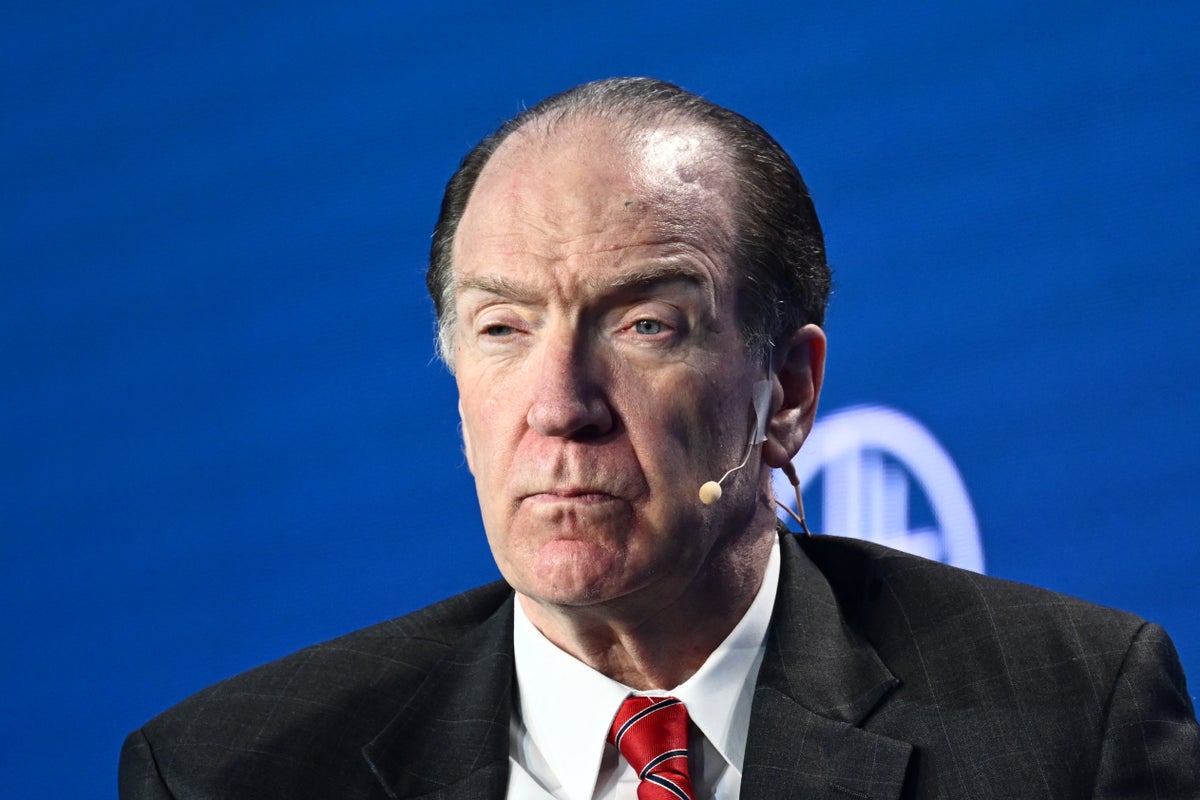
David Malpass, during his tenure as World Bank President, pinpointed this hoarding as a primary driver of artificial scarcity. When a single nation controls 50% of the planet’s edible reserves while representing less than 20% of its population, the equilibrium of the global market breaks. This is the new reality of "food power"—a geopolitical lever as potent as oil, used to insulate a domestic population at the direct expense of the world's most vulnerable developing nations.
The Architecture of the Grain Fortress
China’s strategy is not a sudden reaction to recent wars or climate shifts. It is a decades-long project designed to ensure that the Chinese Communist Party never repeats the famines of its past. However, the scale has reached a point where it creates a vacuum. By 2022, data from the U.S. Department of Agriculture indicated that China held roughly 69% of the world's corn reserves, 60% of its rice, and 51% of its wheat.
These are not just numbers on a balance sheet. They represent physical silos filled with grain that could otherwise be circulating in the open market to stabilize prices in Sub-Saharan Africa or the Middle East. When supply is tight, even a small release from these reserves could break a price rally. Instead, the grain remains behind a Great Wall of state-owned enterprises like COFCO and Sinograin.
The mechanism is simple. China buys aggressively during price dips and remains conspicuously absent during peaks, but they almost never sell back into the international market. This one-way flow of commodities creates a floor for prices that never drops, ensuring that food inflation becomes a permanent fixture of the global economy.
The Fertilizer Chokehold
Food is only half the story. To grow the crops of the future, you need nutrients, and China has clamped down on the export of phosphate and urea with a clinical precision that has left farmers from Brazil to India in a state of panic.
China is the world's largest exporter of phosphate. When they decided to restrict exports to ensure domestic supply and keep local prices low, they effectively exported their inflation to every other farming nation on earth. A farmer in the American Midwest or the Punjab region of India suddenly found their input costs doubling, not because of a natural shortage, but because of a policy shift in Beijing.
This is a classic "beggar-thy-neighbor" policy. By keeping fertilizer cheap at home, China ensures its own food security. By making it expensive everywhere else, they weaken the competitive advantage of other agricultural exporters. It is a brilliant, if ruthless, application of trade friction.
The Cost of Silence
The lack of transparency in these holdings is the most dangerous element. The World Bank and the IMF operate on the assumption of visible data. If the world knows how much wheat is in storage, markets can price risk accurately. China treats its grain levels as a state secret, categorized under national security.
This creates a "phantom supply" problem. Traders know the grain exists, but they don't know the quality, the age, or the conditions under which it might be released. This uncertainty breeds volatility. When markets trade on rumors rather than data, the resulting price swings are more violent, hurting the poor who spend upwards of 50% of their income on basic staples.
Why the World Bank's Plea Falls on Deaf Ears
Malpass and his successors argue from the perspective of global "public goods." They believe that in a crisis, those with the largest piles of wood should help put out the fire. Beijing operates on a different logic. To the Chinese leadership, the global market is an unreliable, Western-dominated system that failed them in the past and will likely be used against them in the future through sanctions.
Their hoarding is an insurance policy against a maritime blockade or a total breakdown in the rules-based trade order. They aren't hoarding because they want to starve the world; they are hoarding because they no longer trust the world to feed them. This shift from "trade-based security" to "possession-based security" is a fundamental rejection of the last forty years of globalization.
The Ripple Effect on Developing Economies
While the G7 can absorb higher food prices with some political grumbling, for countries like Egypt, Lebanon, or Pakistan, these price levels are existential threats. These nations are often "price takers" on the global market. They have no leverage. When China enters the market to top off its reserves, it drives the price up for everyone else.
The irony is that many of these nations are heavily indebted to China through the Belt and Road Initiative. They are paying back loans to Beijing while simultaneously struggling to afford food because of Beijing's market-distorting storage policies. It is a double-bind that is hollowing out the middle class in the Global South.
Breaking the Cycle of Accumulation
Can anything be done to force these reserves back into the light? Diplomatic pressure from the World Bank is a start, but it lacks teeth. Real change would require a coordinated effort by the major food-exporting nations—the "Cairns Group" including Australia, Brazil, and Canada—to demand transparency as a condition of future trade.
There is also the matter of waste. Keeping half the world's grain in storage for years leads to significant spoilage. Satellite imagery has often suggested that the sheer volume of China's storage might be exceeding their ability to manage it, leading to "dead stocks" that are unfit for human consumption but still counted in global totals. If these stocks are rotting, the global supply cushion is even thinner than we think.
The era of cheap, abundant food ended not because the earth stopped producing, but because the psychology of the major powers shifted from cooperation to survivalism. China’s grain fortress is the most visible monument to this new age of anxiety. Until the incentives for transparency outweigh the perceived security of a filled silo, the rest of the world will continue to pay a premium for the privilege of eating.
The global community must realize that food security is a zero-sum game when the largest player refuses to show its hand. We are no longer dealing with a simple supply and demand curve. We are dealing with a strategic stockpile that functions as a weapon of economic attrition. The silos stay full, the prices stay high, and the risk of a systemic collapse grows with every ton of grain that disappears into the dark.
Investors and policymakers should stop waiting for a return to the "old normal." The old normal relied on a China that was willing to integrate and share the burden of global stability. That China has been replaced by a state that views every bushel of wheat as a round of ammunition in a long, quiet war for self-sufficiency. If you want to understand the future of global inflation, look at the storage manifests of the Port of Tianjin, not the interest rate decisions of the Federal Reserve.
:max_bytes(150000):strip_icc():focal(708x236:710x238)/United-Airlines-First-Class-Cabin-041024-d7f929ad60ef4a9e95d6ebdeaf87d6a4.jpg)